Goal
Use high-energy resonant sound waves inside closed cavities to perform mechanical functions such as gas compression, cooling, and power generation without moving parts.
Problem
Conventional sound waves dissipate energy as shock waves, limiting usable energy density and preventing sound from being used as a practical power source or compressor.
Concept Summary
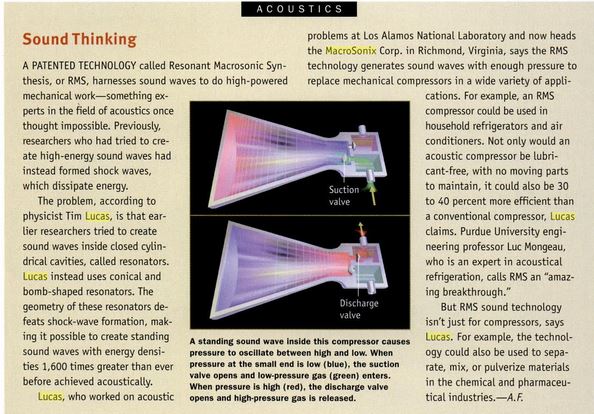
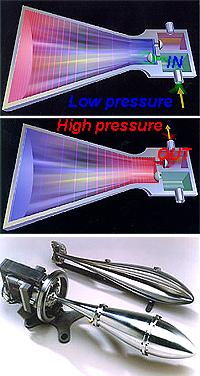
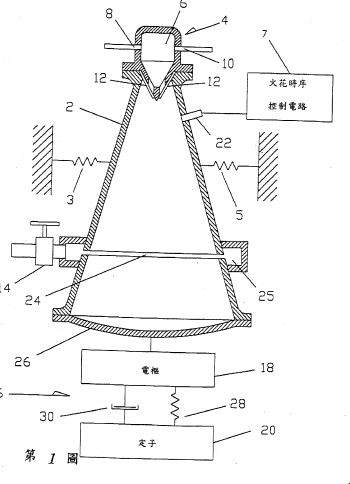
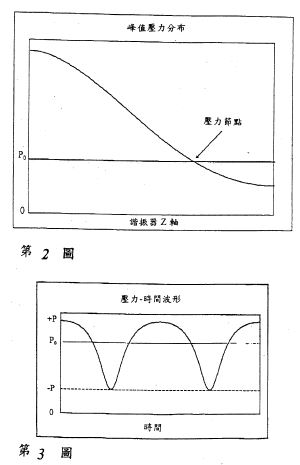
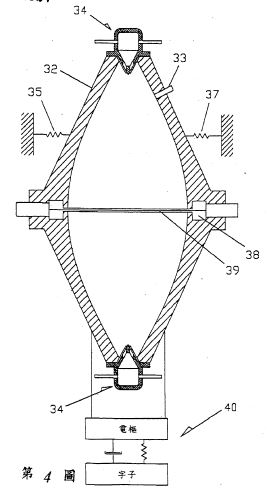
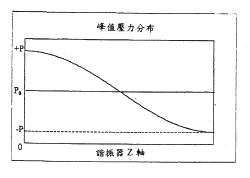
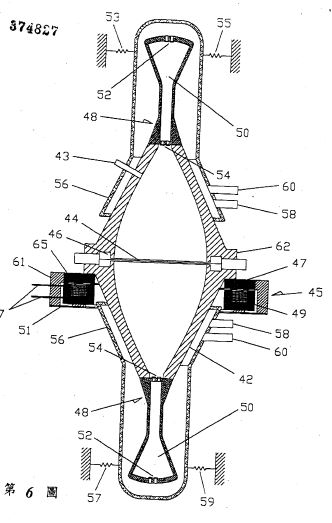
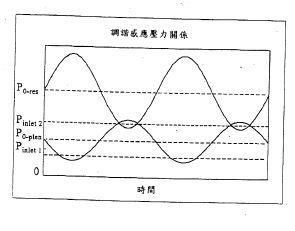
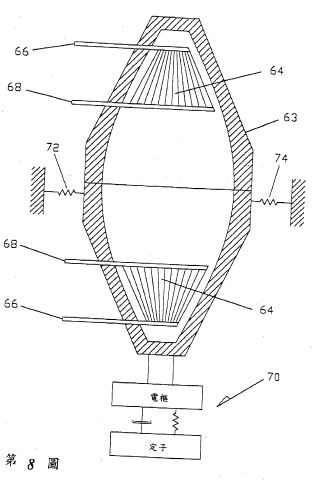
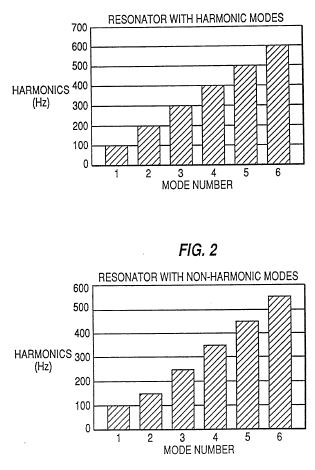
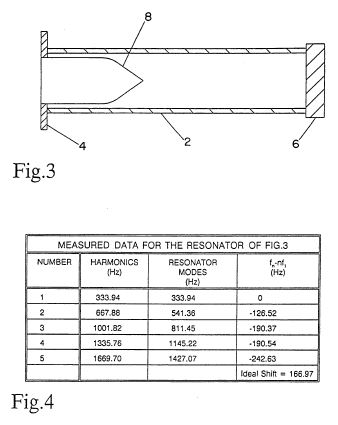
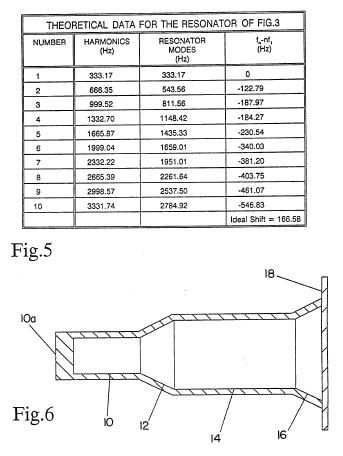
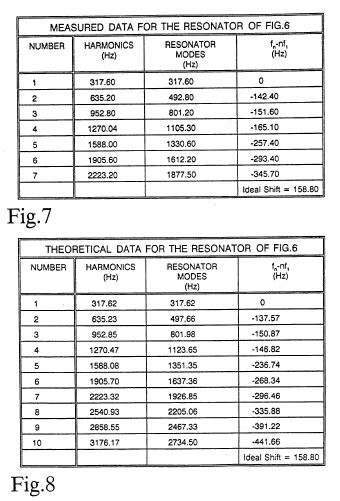
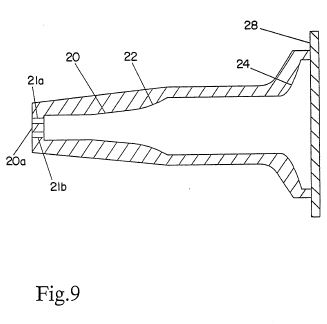
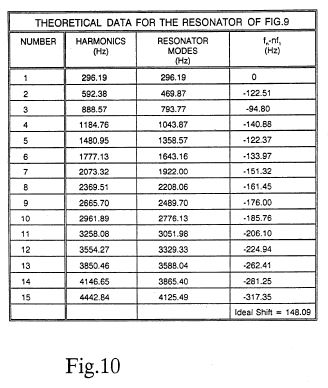
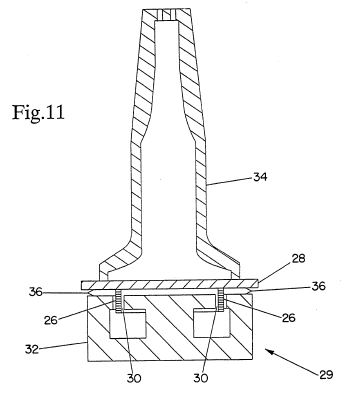
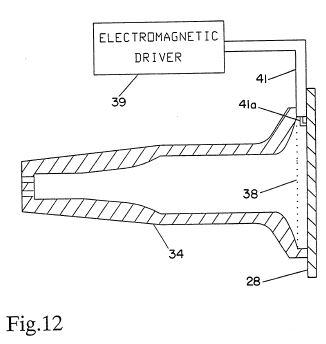
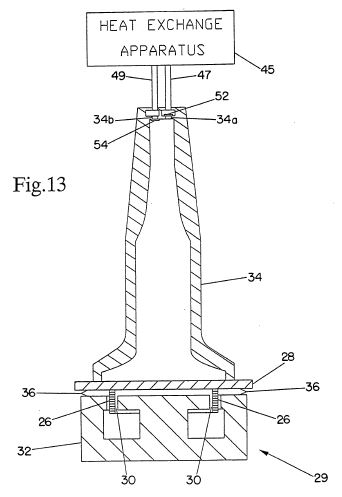
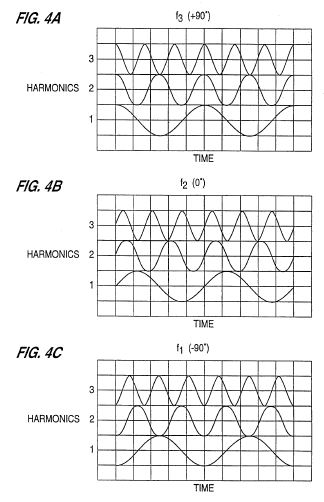
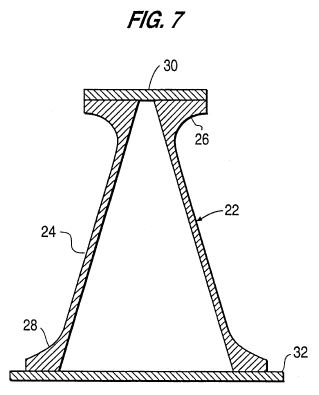
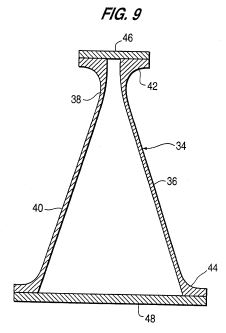
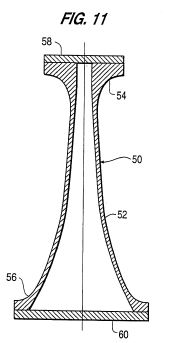
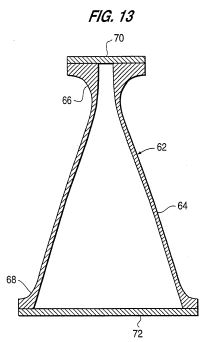
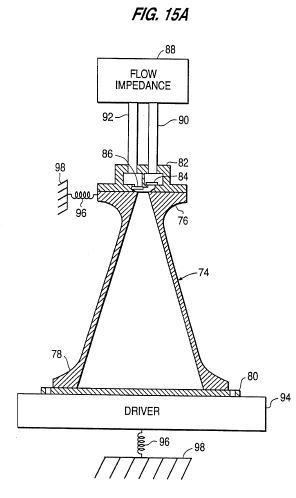
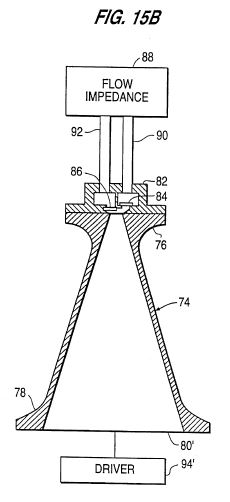
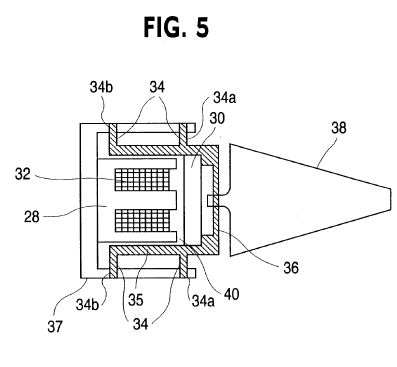
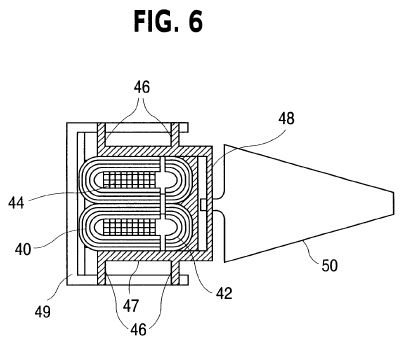
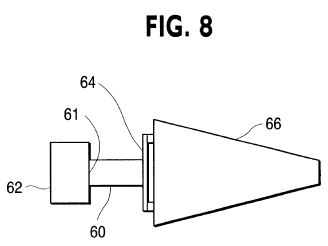
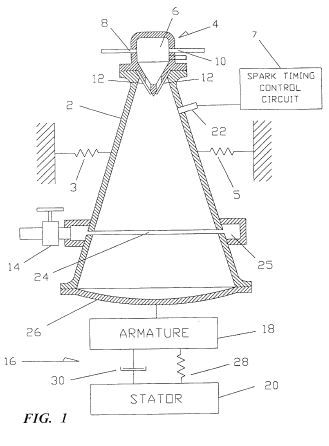
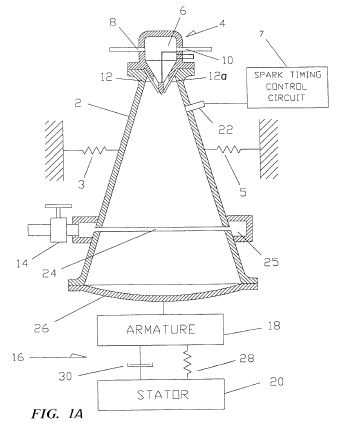
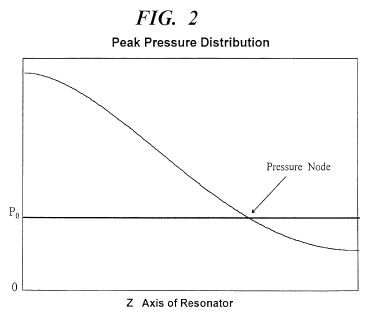
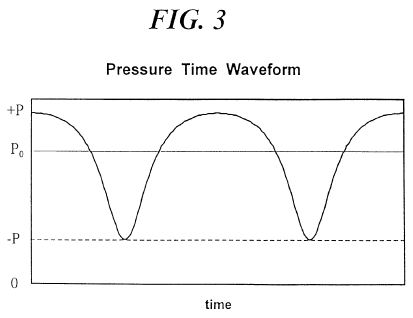
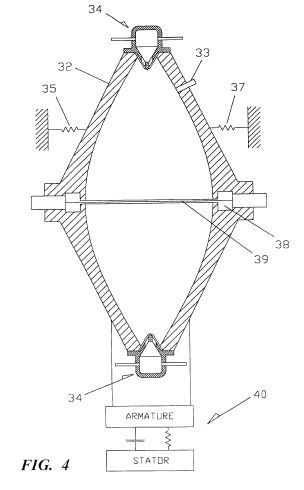
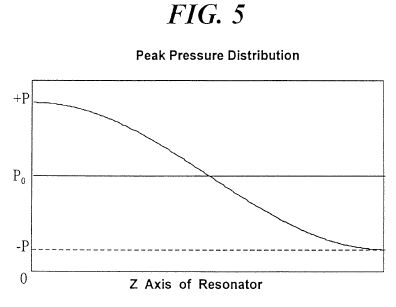
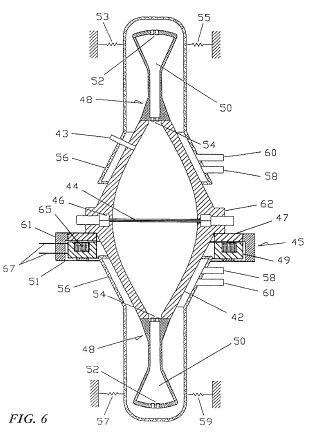
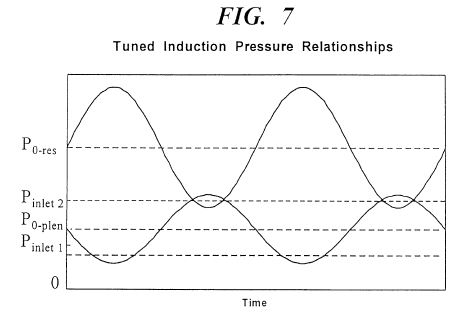
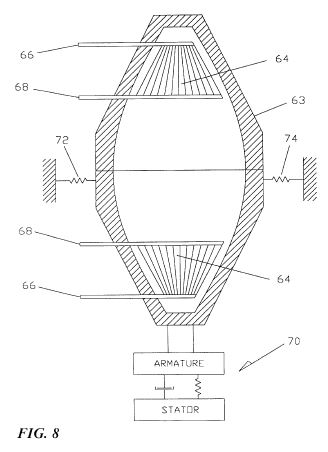
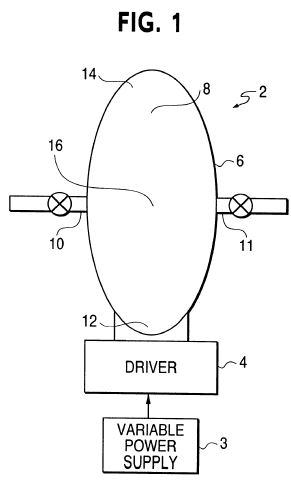
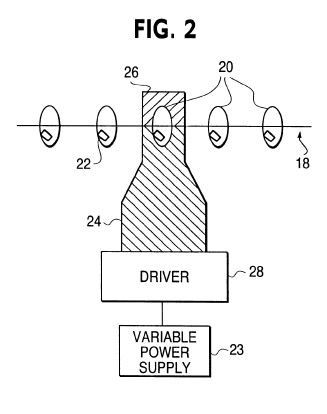
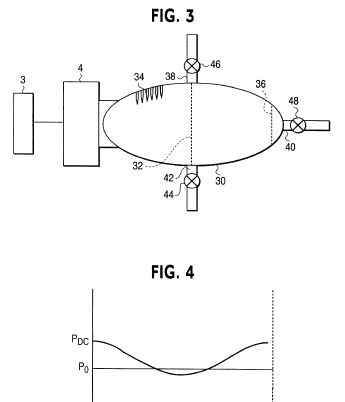
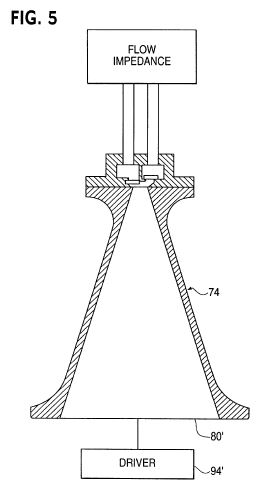
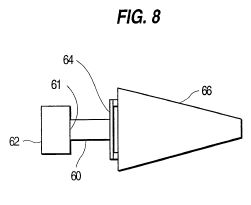
RMS creates standing acoustic waves in specially shaped resonators (cones, bulbs, etc.) that suppress shock-wave formation, allowing energy densities thousands of times higher than ordinary acoustic devices. The high-pressure portions of the wave compress gases or drive other mechanical tasks, while a microprocessor-controlled linear motor drives a metal diaphragm to sustain resonance.
Detailed Description
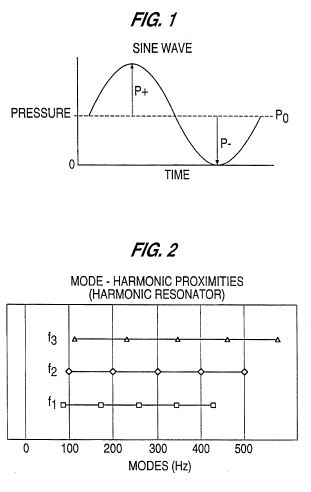
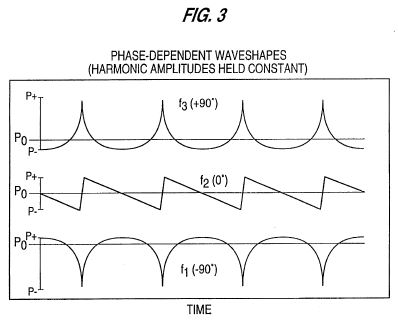
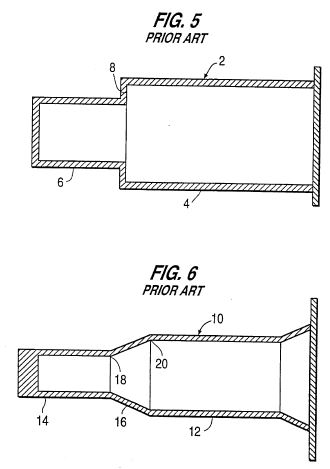
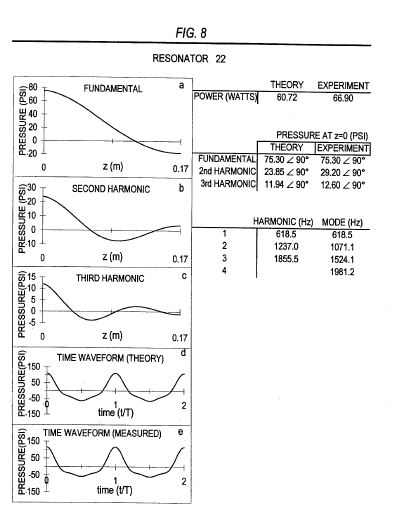
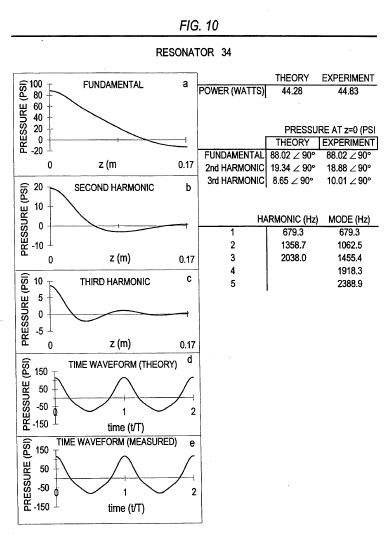
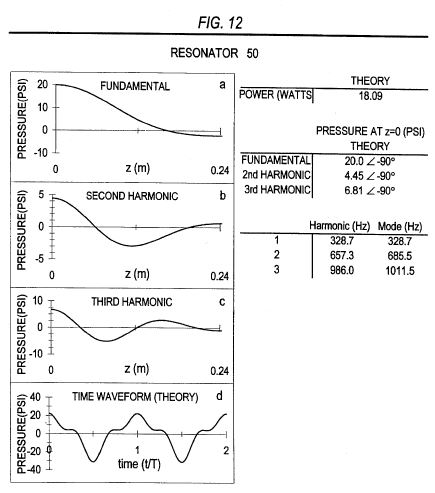
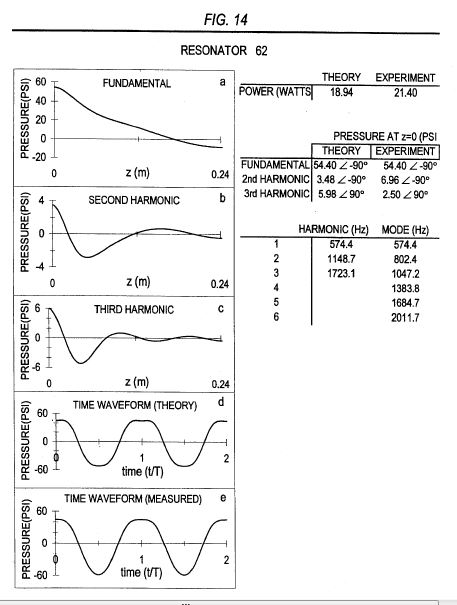
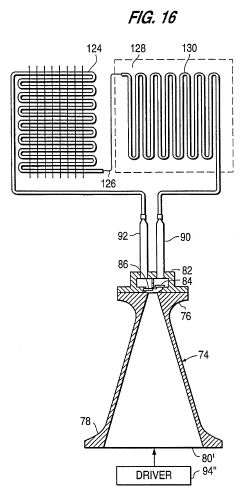
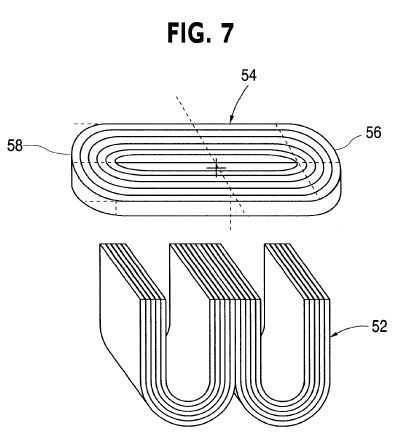
The system consists of a metal diaphragm driven by a linear motor, a closed cavity whose geometry is engineered to control harmonic phases and prevent shock formation, and a microprocessor controller that maintains resonance at the desired frequency. By shaping the resonator (e.g., horn-cone or bulb), the waveform can be made shock-free, enabling dynamic pressures up to 10 atmospheres (~=500 psi) and energy densities up to 1600x conventional values. Applications demonstrated include piston-less gas compressors, refrigeration condensers, electronic cooling, and laboratory-scale chemical processing.
Principles
- Acoustic resonance
- Standing wave formation
- Resonator geometry control
- Shock-wave suppression
- Energy density amplification
Scientific Domains
Materials
- Metal diaphragm
- Metal cavity (e.g., aluminum, steel)
Mechanisms of Action
- Resonant standing acoustic waves generate high dynamic pressures
- Cavity shape prevents shock wave formation
- Acoustic pressure compresses gas or moves liquids
Energy Sources
Applications
- Industrial gas compressors
- Refrigeration and air-conditioning
- Electronic cooling
- Chemical processing (atomization, powder processing)
- Acoustic levitation for non-contact manufacturing
- Hybrid electric vehicle power systems
- Grid-scale clean electric power generation
Claimed Performance
Dynamic pressures exceeding 500 psi; energy densities up to 1600x higher than previously achieved; pressure oscillations up to 10 atm.
Experimental Evidence
Patents (US5515684, US5994854, etc.) describe prototypes; conference presentations reported pressures >500 psi and energy densities 1600x; a licensed company is developing refrigerator compressors using RMS.
Replication Status
Licensed to one company for refrigerator compressors; no independent third-party replication reported.
Limitations
- Requires precise resonator geometry to avoid shock formation
- Scale-up to large-volume industrial systems not yet demonstrated
- Efficiency depends on electrical drive and acoustic coupling losses
- Potential material fatigue from high-amplitude vibrations
Red Flags
- Claims of energy densities thousands of times higher without independent peer-reviewed data
- Limited public demonstration data; most evidence comes from company press releases and patents