Goal
Convert rotational motion (e.g., from wind turbines) directly into useful heat without intermediate electricity generation.
Problem
Low efficiency and high start-up loads of small wind generators; waste of captured wind energy as heat; need for simple direct-drive heat generation.
Concept Summary
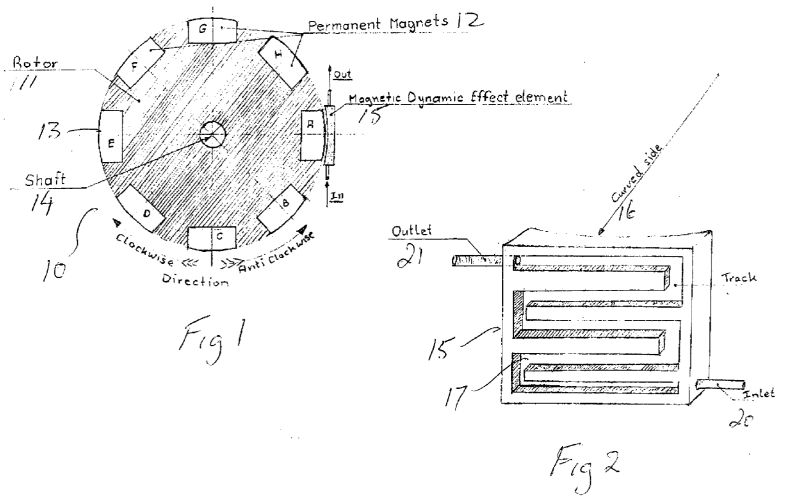
A non-magnetic support disc embedded with permanent magnets rotates relative to a stationary conductive inductor (aluminium). The moving magnetic flux cuts the conductor, inducing eddy currents that generate heat, which is removed by a fluid heat-exchange system. The apparatus can be driven directly by wind turbine rotors or an electric motor.
Principles
- electromagnetic induction
- magnetic flux cutting
- eddy-current heating
- fluid heat exchange
Scientific Domains
Materials
- glass reinforced plastics (support body)
- rare-earth permanent magnets
- aluminium (inductor body)
- non-magnetic, electrically conductive material
Mechanisms of Action
- relative motion between permanent magnets and a conductive body induces circulating currents
- resistive losses in the conductive body convert electrical energy to heat
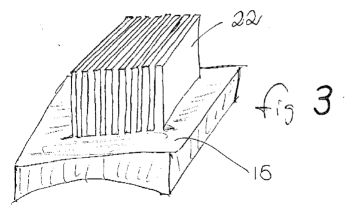
- heat is transferred to a fluid via internal passages or fins
Energy Sources
Applications
- domestic hot-water heating
- industrial steam generation
- marine vessel heating (propeller shaft integration)
Claimed Performance
Laboratory tests reported up to 91 % thermal efficiency (electric motor power to water temperature rise) under steady-state operation.
Experimental Evidence
Example 1: 745 W motor power, 1300 ml/min water flow raised temperature from 30 deg C to 37.1 deg C (~=89 % efficiency). Example 2: similar setup at 2000 rpm gave ~=91 % efficiency. Tests used a 12 cm radius glass-reinforced plastic disc with eight embedded permanent magnets and an aluminium inductor with internal coolant passages.
Limitations
- Requires precise clearance between magnets and conductor
- Performance depends on rotor speed and wind variability
- Use of rare-earth magnets may increase cost