Goal
Increase automotive fuel mileage and reduce exhaust pollution.
Problem
Inefficient combustion in gasoline engines leading to high fuel consumption and elevated hydrocarbon and carbon monoxide emissions.
Concept Summary
A plastic control device that pulses incoming air, breaking the air-fuel mixture into a fine mist that burns more thoroughly, thereby improving fuel efficiency, engine performance, and reducing emissions.
Detailed Description
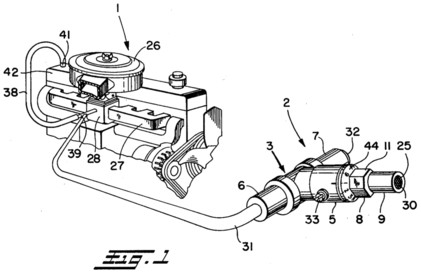
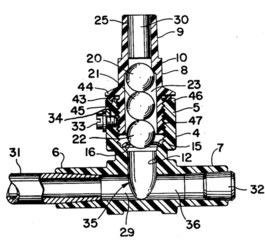
The device draws air from the intake, passes it through a valve containing resilient spherical members that resonate over the engine's operating range. This creates pulsating airflow and turbulence that atomizes the fuel into smaller, more uniform droplets before entering the carburetor. The resulting finer mist promotes more complete combustion, yielding 12-19 % higher mileage and reductions of >50 % hydrocarbons and >75 % carbon monoxide. The control weighs about 3 oz, is made of hard nylon or thermosetting material, and is intended to be installed in line with the carburetor and PCV system.
Principles
- Air pulsation
- Resonant valve operation
- Fuel atomization
- Turbulence generation
- Air-fuel mixture homogenization
Scientific Domains
Materials
- Hard nylon (plastic) housing
- Thermosetting material spherical balls
- Metal tubing
- O-ring seals
Mechanisms of Action
- Air flow pulsation
- Fuel droplet size reduction
- Maintaining constant air-fuel ratio
- Enhanced turbulence in intake manifold
Applications
- Automotive internal combustion engines
Claimed Performance
12-19 % increase in mileage; >50 % reduction in hydrocarbons; >75 % reduction in carbon monoxide; emissions effectively eliminated when combined with catalytic converter.
Experimental Evidence
3000 controls tested under rigorous conditions over 8 years; computer analysis performed; computer tests show emission reductions when used with catalytic converter.
Limitations
- Requires integration with existing carburetor and PCV lines
- Performance not verified on modern fuel-injection engines
- Long-term durability of resonant components not documented