Goal
Provide an effective, low-cost occlusive biological dressing for second- and third-degree burns to accelerate healing, reduce pain and decrease dressing changes.
Problem
Shortage of human, pig and synthetic skin substitutes for burn patients in Brazil, leading to reliance on gauze and silver sulfadiazine creams.
Concept Summary
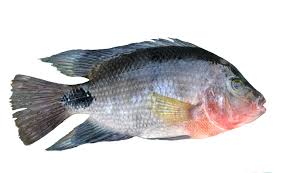
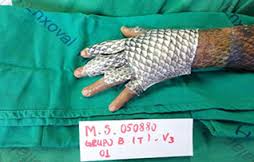
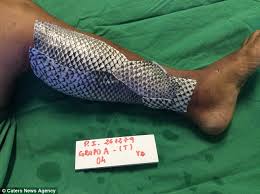
Sterilized tilapia skin, rich in type I and III collagen, is processed with glycerol-based solutions and antimicrobial agents, then applied directly to burn wounds as an occlusive dressing that promotes faster healing, provides a barrier to infection and relieves pain.
Detailed Description
The invention describes a multi-stage processing method for tilapia skin: removal, washing, sequential chlorhexidine treatments, glycerol-saline-antibiotic immersion (50 %, 75 %, then 99 % glycerol), optional gamma-radiation sterilization, and final packaging. The treated skin retains high collagen content and tensile strength, can be stored up to two years, and is applied to burns as an occlusive dressing that adheres to the wound, reduces exudate loss, prevents bacterial invasion and accelerates dermal matrix repair.
Principles
- Collagen scaffold for tissue regeneration
- Occlusive barrier to maintain moisture
- Antimicrobial protection via chemical sterilization and gamma radiation
- Biocompatibility of fish skin
Scientific Domains
Materials
- Tilapia skin
- Glycerol
- Physiological saline (0.9% NaCl)
- Chlorhexidine gluconate
- Penicillin
- Streptomycin
- Fungicide
Mechanisms of Action
- Collagen type I promotes dermal matrix repair
- Barrier function prevents infection and fluid loss
- Moisture retention accelerates epithelialization
- Pain relief through protective covering
Applications
- Burn wound care
- Chronic wound management
- Low-cost dressings for developing regions
Claimed Performance
Healing time reduced by several days; fewer dressing changes compared with gauze-silver sulfadiazine; pain relief reported by patients.
Experimental Evidence
Clinical trial in Fortaleza, Brazil with patients receiving tilapia skin dressings; anecdotal reports of faster healing and pain reduction; histological studies comparing collagen content with human and pig skin.
Replication Status
Clinical trial ongoing; no independent large-scale replication reported.
Limitations
- Requires clean-room and sterilization infrastructure
- Regulatory approval pending in many countries
- Shelf life limited to two years under refrigeration
- Limited quantitative clinical data