Goal
Eliminate the need for heavy permanent magnets in speakers by using a magnetic cellulose membrane that can serve as the active diaphragm.
Problem
Heavy, bulky permanent magnets in conventional loudspeakers increase weight, cost, and environmental impact.
Concept Summary
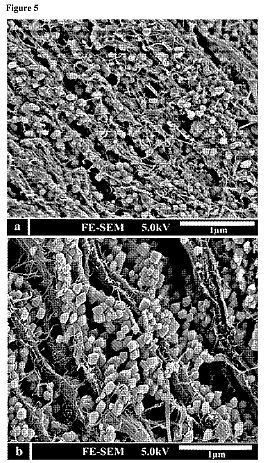
Magnetic nanoparticles are attached to cellulose nanofibrils derived from renewable wood pulp, forming a magnetic gel membrane. The membrane itself contains the magnetic particles, allowing the speaker diaphragm to be driven by a coil without a separate permanent magnet, resulting in ultra-thin, lightweight, and environmentally friendly speakers.
Detailed Description
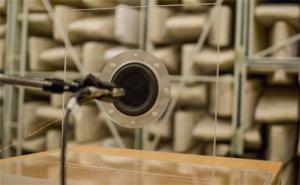
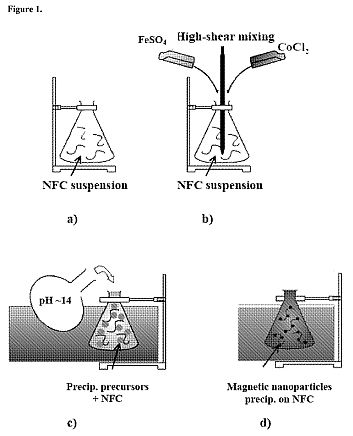
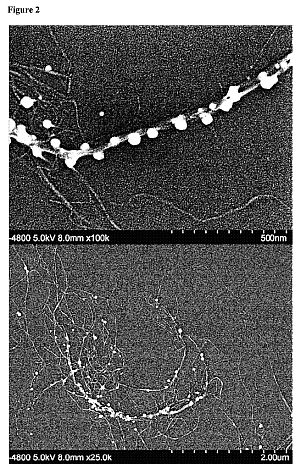
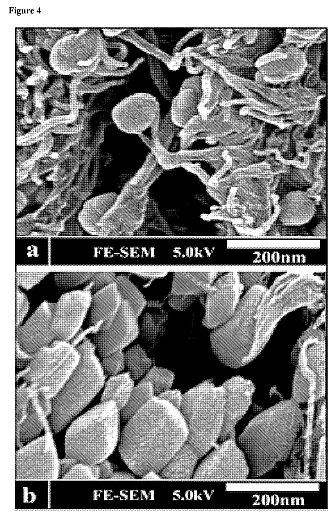
The invention consists of a magnetic cellulose gel made by decorating cellulose nanofibrils (NFC) with magnetic nanoparticles (e.g., ferrite or cobalt ferrite). The cellulose is sourced from renewable wood pulp and processed in water-based chemistry. The resulting gel is cast into a thin membrane and dried. In the speaker, a voice coil is placed near the membrane; the magnetic particles embedded in the membrane interact with the coil's magnetic field, causing the membrane to vibrate and move air, producing sound. The membrane's high stiffness and uniform magnetic particle distribution provide precise sound reproduction. The technology was demonstrated as a flat, ultra-thin loudspeaker prototype at KTH and described in a paper published by the Royal Society of Chemistry. Potential extensions include active magnetic damping for vehicles and noise-cancellation devices.
Principles
- Magnetic nanoparticles
- Nanocellulose reinforcement
- Magneto-mechanical coupling
Scientific Domains
Materials
- Cellulose nanofibrils (NFC)
- Magnetic nanoparticles (ferrite, cobalt ferrite)
- Wood pulp
Mechanisms of Action
- Magnetic field interaction between coil and embedded nanoparticles
- Membrane vibration induced by magnetic forces
Energy Sources
Applications
- Audio loudspeakers
- Active magnetic damping in automobiles and trains
- Noise cancellation devices
Claimed Performance
Sound quality at least as good as conventional speakers, possibly better due to even force distribution; ultra-thin, lightweight form factor.
Experimental Evidence
Prototype demonstrated at KTH Royal Institute of Technology; paper published by the Royal Society of Chemistry; patent filed (WO2013119179).
Replication Status
Prototype demonstrated; no independent replication reported.
Limitations
- Scalability of uniform nanoparticle dispersion in cellulose
- Durability of the membrane under repeated flexing
- Cost of magnetic nanoparticle production