Goal
Provide air-conditioning cooling below the wet-bulb temperature with dramatically reduced electricity consumption.
Problem
High electricity use and greenhouse-gas emissions of conventional compressor-based air-conditioning systems.
Concept Summary
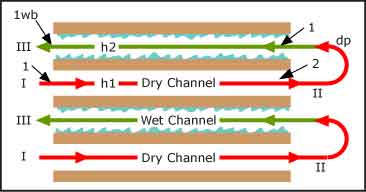
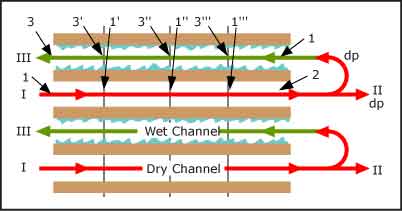
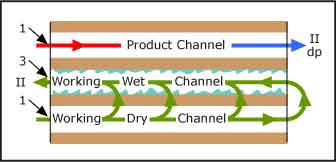
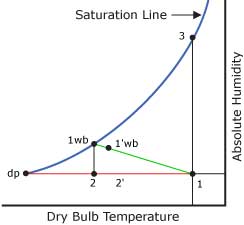
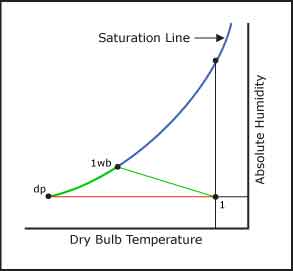
The Maisotsenko Cycle (M-Cycle) is an indirect evaporative cooling process that uses a specially designed wet- and dry-channel heat-and-mass exchanger. Working air is split, partially humidified, and reused to extract heat from the product air stream, allowing the product air to be cooled close to the dew-point temperature without adding moisture.
Detailed Description
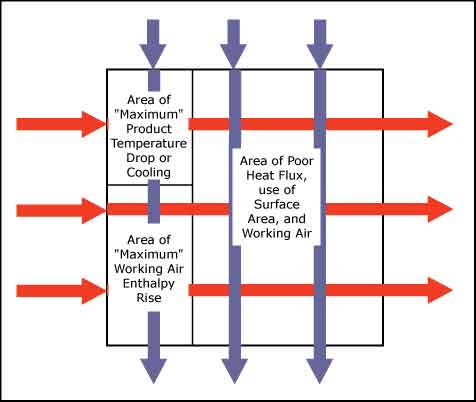
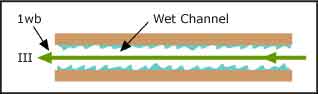
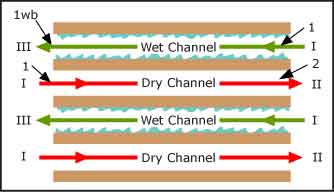
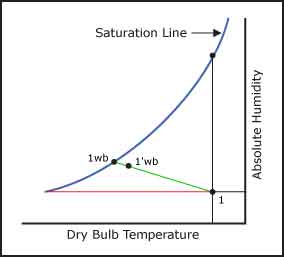
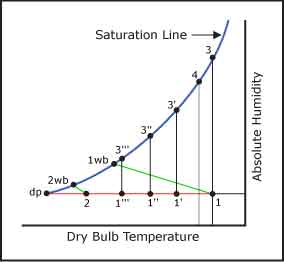
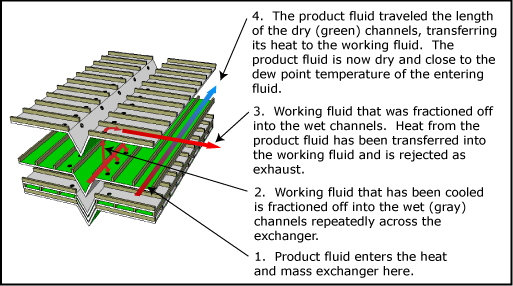
The M-Cycle employs a plate-type heat-and-mass exchanger (HMX) made of a plastic-coated cellulose-blend fiber. Incoming ambient air is divided into a product stream and a working stream. The working stream is first pre-cooled in dry channels, then passes through a series of wet channels where water evaporates, cooling the stream incrementally. Heat from the product air is transferred across the exchanger plates into the colder working air, and the exhausted working air carries away heat as water vapor. The cycle repeats multiple times within a compact exchanger, achieving product-air temperatures well below the wet-bulb point and approaching the dew-point temperature.
Principles
- Indirect evaporative cooling
- Heat and mass exchange
- Psychrometric cooling
- Incremental wet-dry channel cascade
Scientific Domains
Materials
- Cellulose-blend fiber (heat-exchanger matrix)
- Plastic coating (on the fiber)
- Water
Mechanisms of Action
- Air stream splitting into product and working streams
- Sequential wet-channel evaporation to cool the working stream
- Cross-flow heat transfer from product to working air
- Exhaust of heat as water vapor
Energy Sources
Applications
- Building HVAC (residential, commercial, industrial)
- Vehicular air-conditioning
- Power-plant waste-heat recovery
- High-efficiency refrigerant condensers
- Combustion-engine heat recovery
Claimed Performance
Up to 80 % reduction in electricity consumption compared with conventional air-conditioners; laboratory tests show product-air cooling 22 % below wet-bulb temperature and within 85 % of the dew-point temperature.
Experimental Evidence
Independent laboratory tests by NREL (FEMP), Delphi, SMUD, PG&E, and Sanwa reported the performance figures above; the Coolerado Cooler has received the 2004 R&D 100 award and other industry recognitions.
Replication Status
Commercially available (Coolerado Cooler) and independently tested by multiple agencies and research labs.
Limitations
- Requires a water supply for evaporation
- Performance degrades in very high ambient humidity
- Limited to applications where indirect evaporative cooling is acceptable