Goal
Reduce frictional resistance between a ship hull and seawater to lower fuel consumption and CO_2 emissions.
Problem
High drag on ship hulls leading to excessive fuel use and greenhouse-gas emissions.
Concept Summary
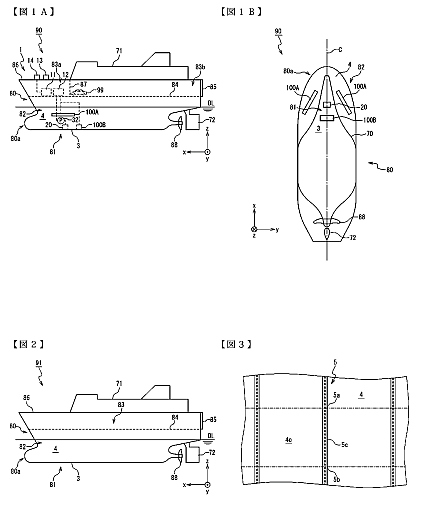
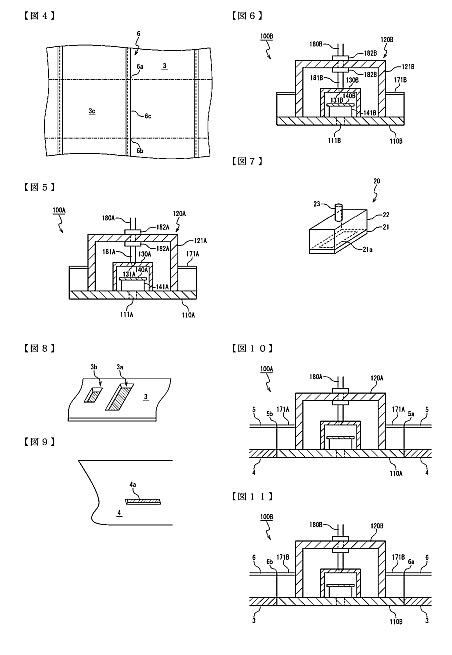
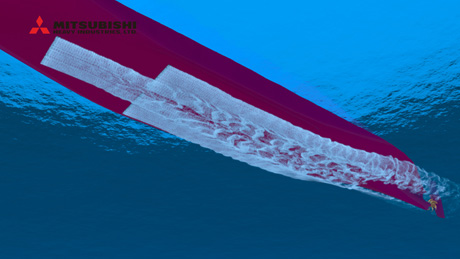
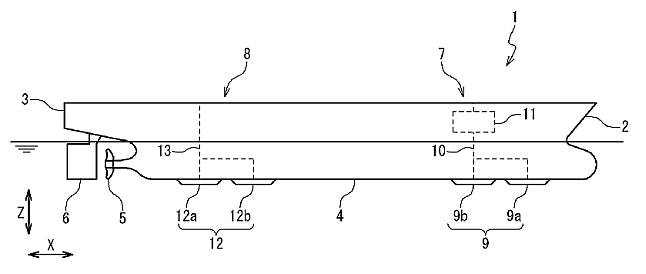
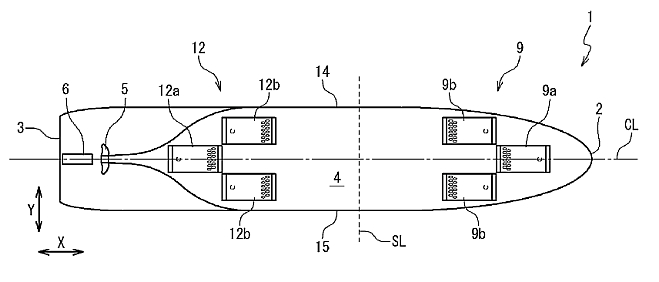
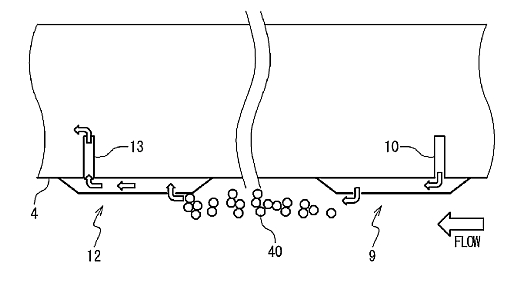
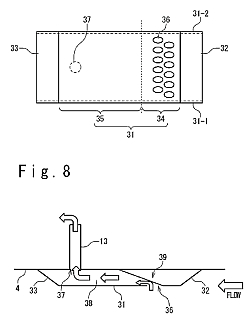
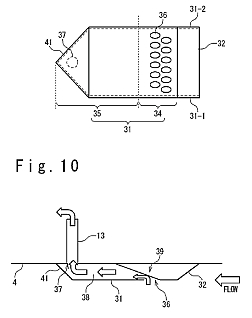
MALS injects a carpet of fine air bubbles beneath the ship's bottom using a blower. The air layer reduces the wetted surface drag, decreasing propulsion power requirements and CO_2 output. The system may include a recovery chamber to recirculate air.
Detailed Description
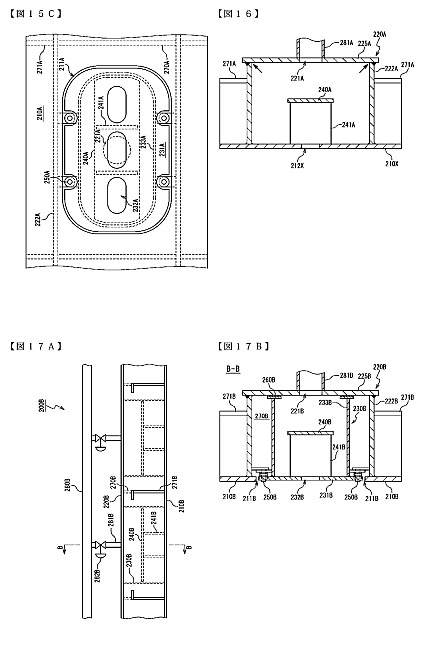
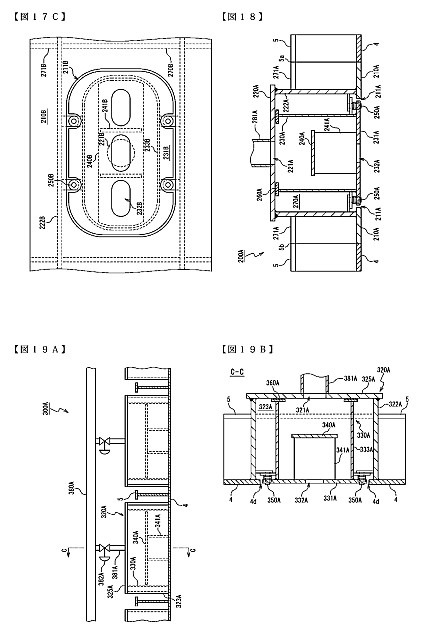
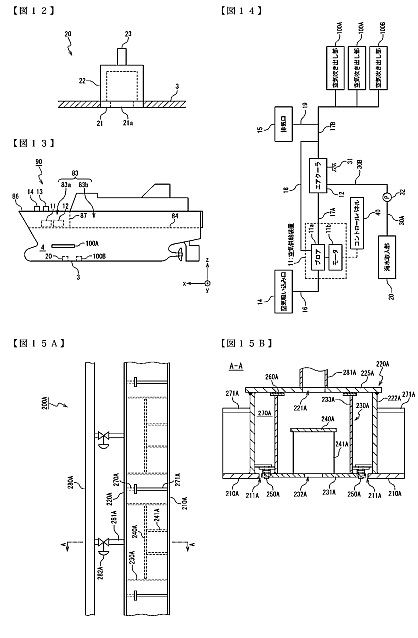
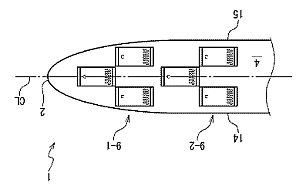
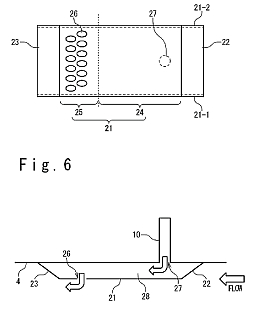
The system consists of an air-ejecting blower mounted on the hull, a series of air-outlet ports distributed along the bottom, and (in some embodiments) a recovery side chamber that accumulates and re-injects air. CFD and model-scale tests show that bubble size has little effect on drag reduction, and that the bubbles flow toward the propeller with negligible loss of propulsive efficiency. The technology is being installed on shallow-draft vessels such as the YAMATAI module carrier and is planned for larger container ships.
Principles
- air lubrication
- drag reduction
- boundary-layer modification
Scientific Domains
Materials
- air
Mechanisms of Action
- Air bubbles create a low-density layer that reduces skin-friction drag
- Uniform bubble distribution maintains a stable lubricating film
- Recovery chamber recirculates air to improve efficiency
Energy Sources
Applications
- container ships
- bulk carriers
- passenger ships
Claimed Performance
Up to 35 % CO_2 emission reduction on a conceptual container ship; about 10 % reduction observed on the YAMATAI module carrier.
Experimental Evidence
MITS installed MALS on the YAMATAI and reported ~10 % CO_2 reduction; CFD and model-scale experiments showed bubble distribution matching predictions and negligible propeller efficiency loss.
Replication Status
Installed on the YAMATAI module carrier and ordered for three dry bulk carriers; further installations planned for container and passenger ships.
Limitations
- Effective mainly on flat-bottom hulls
- Requires continuous power for air blower
- Potential impact on propeller noise and vibration