Goal
Create a transformer that can induce simultaneous bidirectional magnetic flux, allowing voltage induction from low-quality iron cores and reducing overall size.
Problem
Conventional transformers rely on unidirectional flux in a ferromagnetic core, limiting performance with poor core materials and resulting in larger sizes.
Concept Summary
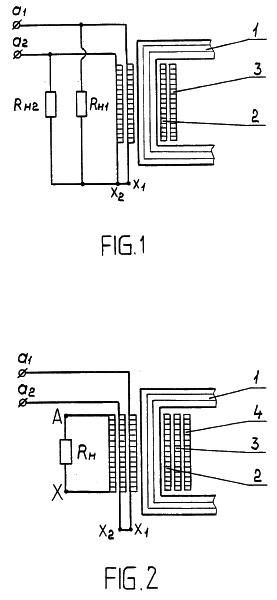
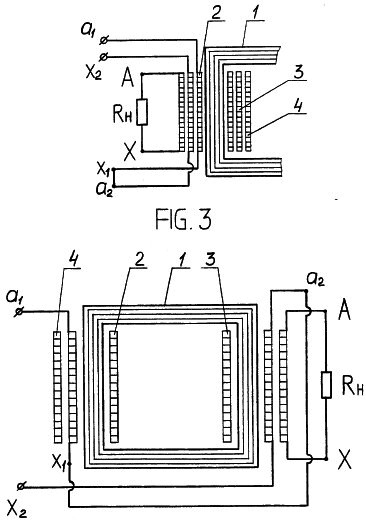
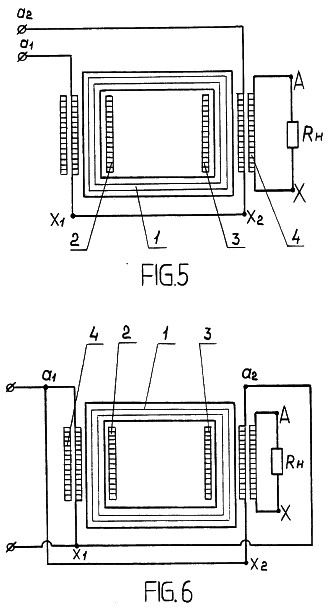
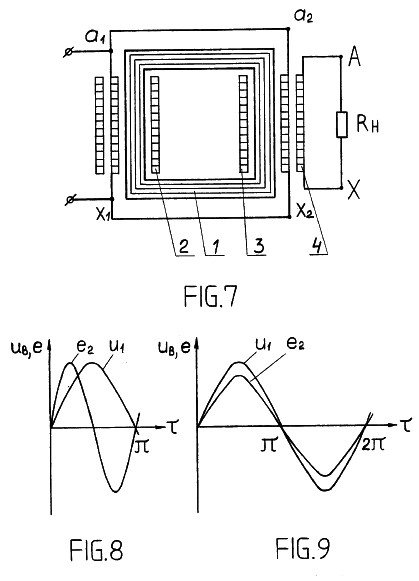
Markov proposes a transformer where the primary coil is split into two sections wound on the same magnetic circuit. The flux generated by each section balances the other, enabling simultaneous bidirectional flux induction. A secondary winding is placed over the primary, and the device can operate with poorer core materials while being more compact.
Principles
- Bidirectional magnetic flux induction
- Flux balance between two primary winding sections
Scientific Domains
Materials
- Iron
- Copper
Mechanisms of Action
- Two primary winding sections wound onto a magnetic core with opposing flux directions that cancel each other
- Secondary winding wound over the primary on the same core to extract power
Energy Sources
Applications
- Power stations
- Substations
- Power transmission lines
- Radio engineering
- Measurement and automatic control
Claimed Performance
Can induce necessary voltage even from low-quality iron cores and achieve considerably reduced transformer size.
Experimental Evidence
After several years of experimenting and practical studies Markov managed to prove the validity of his theory and develop an operable transformer.
Limitations
- Requires precise winding configuration
- Performance claims lack quantitative data
Red Flags
- Claims to refute Faraday's law without peer-reviewed validation
- Patents may be the primary source of evidence