Goal
Provide low-cost, high-efficiency solar electricity by converting sunlight directly to electrical power.
Problem
High cost and low conversion efficiency of conventional silicon-crystal photovoltaic cells.
Concept Summary
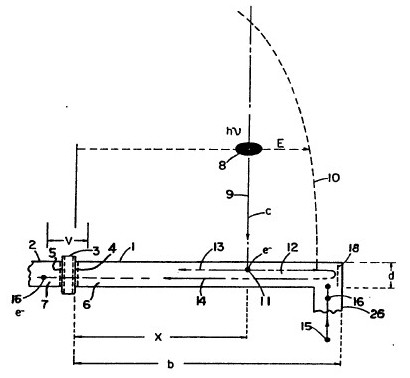
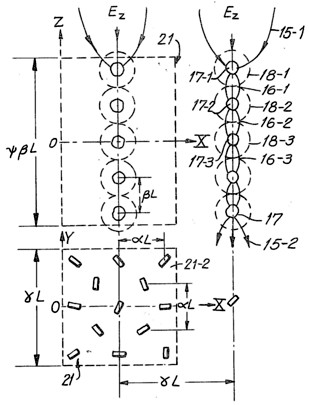
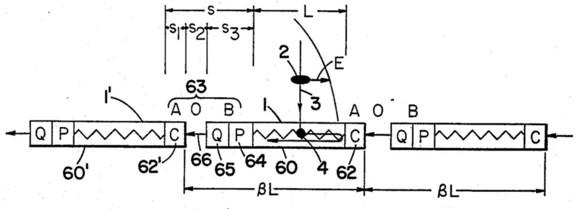
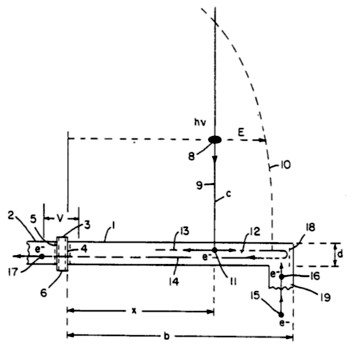
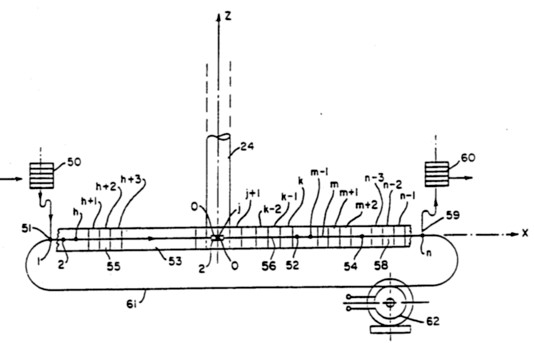
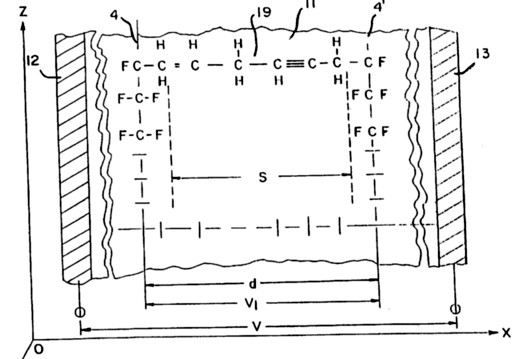
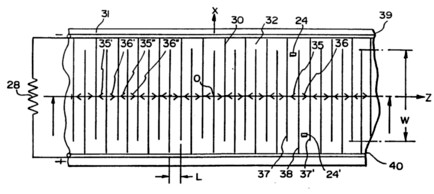
The invention uses a dense array of sub-micron metal strips (or conductive polymer films) on a glass or plastic substrate that act as nano-scale antennas. Sunlight is absorbed by these antennas, causing electrons to be emitted and generate high-frequency alternating current, which is then rectified to direct current.
Principles
- Antenna theory (sub-micron antenna arrays)
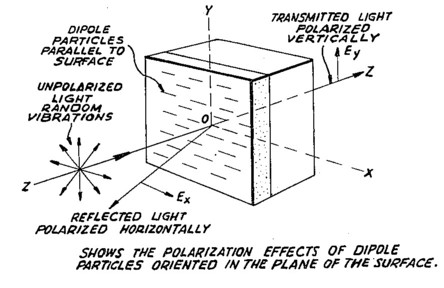
- Light polarization
- Photo-electron emission
- Rectification of AC to DC
- Polymer photovoltaic effect
Scientific Domains
Materials
- Glass
- Aluminum
- Copper
- Plastic (polymer film)
- Conductive polymers
- Mylar substrate
Mechanisms of Action
- Absorption of visible light by metal or polymer nano-antennas
- Excitation of electrons in the antenna material
- Generation of high-frequency AC from electron flow
- Conversion of AC to DC via miniature circuitry
Energy Sources
Applications
- Residential electricity generation
- Laser power sources (Pentagon interest)
- Strategic Defense Initiative (Star Wars) power applications
- Grid-scale renewable energy
Claimed Performance
Inventor claims 70-80 % conversion efficiency (theoretical 72 %), 75 % efficiency in some statements, and a 10 % demonstrated efficiency in a 1996 laboratory test. Cost claimed at $0.50 /W (Lepcon) and $0.75 /W (Lumeloid).
Experimental Evidence
A low-efficiency laboratory demonstration of light-to-electric conversion was reported on 5 April 1996 (Journal of Applied Physics, vol. 80). No large-scale working prototypes have been produced; Westinghouse and ARDI are developing prototypes.
Replication Status
No independent large-scale replication; only a single low-efficiency lab demo reported.
Limitations
- No commercial product available yet
- Demonstrated efficiency far below claimed values
- Requires precise sub-micron fabrication
- Undisclosed polymer chemical composition
- Scalability and long-term durability unproven
Red Flags
- High efficiency claims without peer-reviewed data
- Lack of disclosed chemical formulation for the polymer film
- Potential overstatement of cost reduction versus conventional PV