Goal
Create a self-running engine that generates mechanical power without burning conventional fuel by using compressed air and internal pneumatic expansion.
Problem
Dependence on fossil fuels and the need for a free-energy power source for vehicles and stationary applications.
Concept Summary
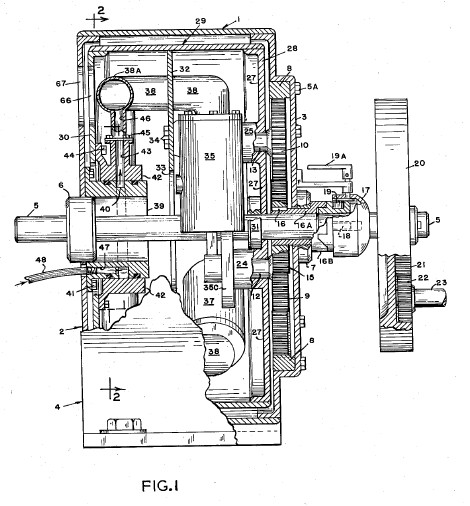
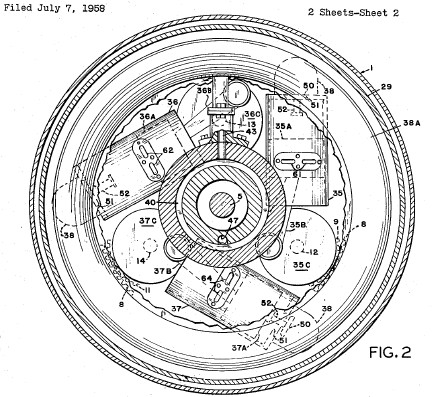
The McClintock Air Motor is a hybrid diesel-rotary engine that uses three high-compression cylinders (27:1) to compress ambient air, then expands that air in the same cylinders to produce power. The engine drives its own air compressor, making it self-sustaining. Power is transmitted through planetary gears and a sun-gear arrangement, providing high torque suitable for heavy-truck use. Heat generated by compression can be harvested for building heating.
Detailed Description
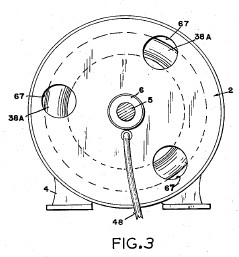
The invention consists of a stationary cylindrical housing with three identical motor cylinders, each containing a piston linked to a planetary gear set. Air is drawn from a manifold, compressed by the pistons during the up-stroke, and then expanded during the down-stroke to produce a power stroke. Pop-pet valves control intake and exhaust. The planetary gear train (sun gear, planet gears, carrier) transfers the piston forces to the engine shaft, while a clutch mechanism allows manual engagement/disengagement of the air-compressor drive. Exhaust ports release spent air to the atmosphere. The design claims that the heat of compression and the high-velocity air flow result in minimal friction losses and net mechanical output without external fuel.
Principles
- Pneumatic compression and expansion
- High compression ratio (27:1)
- Planetary gear torque multiplication
- Self-driven air compressor
Scientific Domains
Materials
- Steel
- Iron
- Metallic alloys
Mechanisms of Action
- Air compression by pistons
- Expansion of compressed air to produce work
- Gear train converting linear piston motion to rotary shaft torque
- Self-sustaining air-compression loop
Energy Sources
Applications
- Vehicle propulsion (trucks, heavy vehicles)
- Stationary power generation
- Building heating using waste heat
Claimed Performance
High torque suitable for large trucks; self-running without fuel; capable of heating buildings with waste heat.
Limitations
- No quantitative performance data provided
- Reliance on self-compression loop may not yield net positive energy
- Potential mechanical wear from high-pressure cycles
- Lack of independent replication
Red Flags
- Free-energy claim without experimental data
- High torque claim without supporting measurements
- No peer-reviewed validation or replication