Goal
Generate electrical power output that exceeds the input power (over-unity) to replace conventional power generation and provide abundant, cheap energy.
Problem
Dependence on conventional energy sources, high-voltage transmission infrastructure, and the need for a perpetual-motion-type power source.
Concept Summary
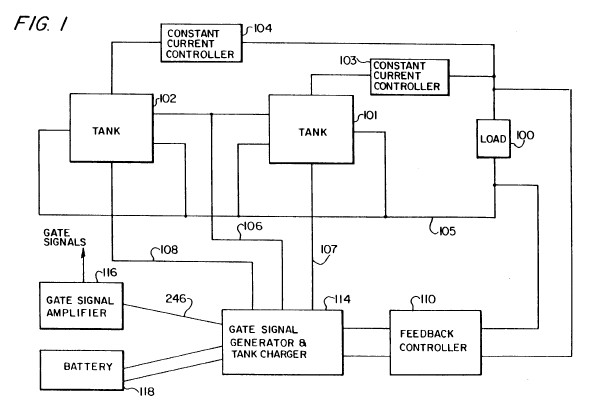
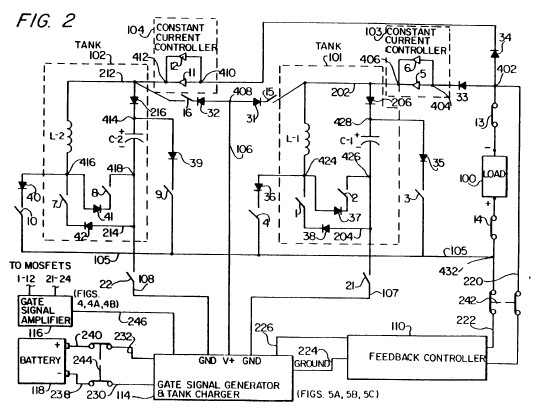
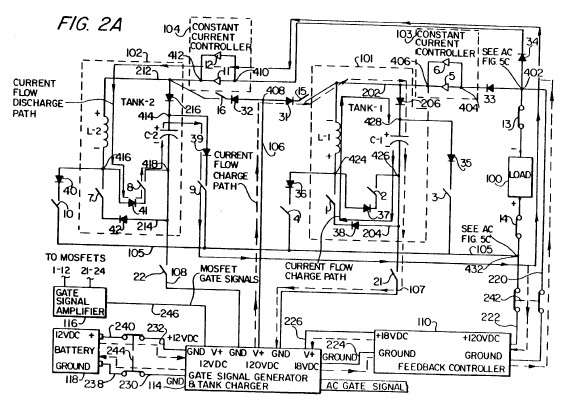
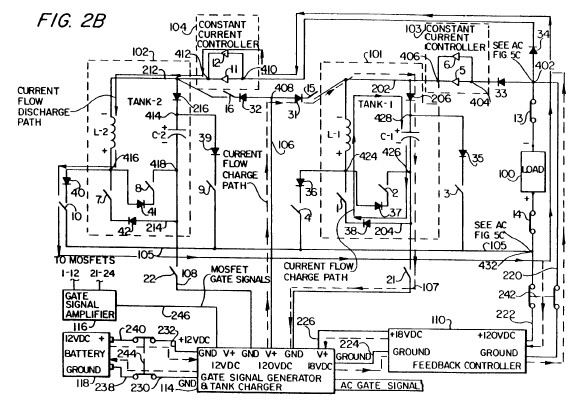
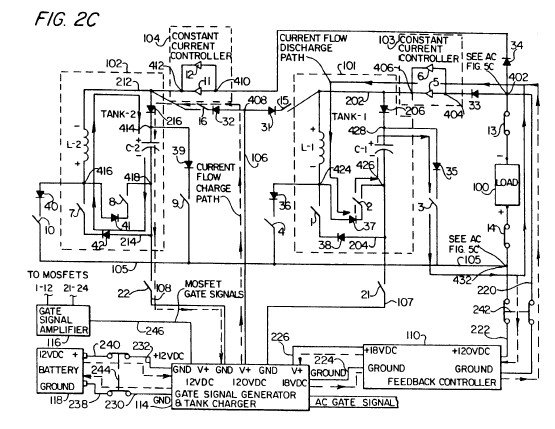
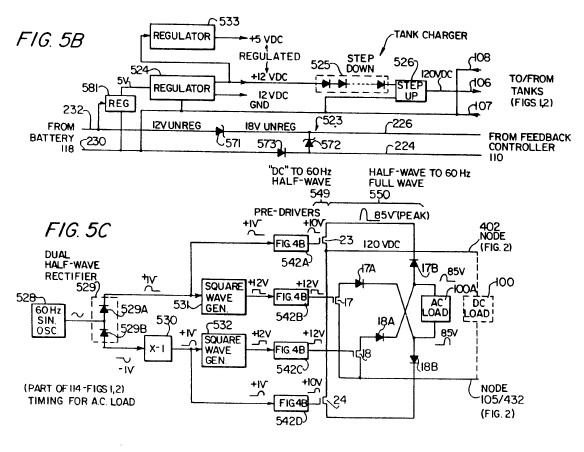
The PODMOD device uses two resonant tank circuits (each comprising a capacitor and an inductor) that alternately charge one another. By exploiting electromagnetic resonance and high-frequency switching, the system is claimed to amplify the input energy many thousands of times, producing net output power without fuel or moving parts.
Detailed Description
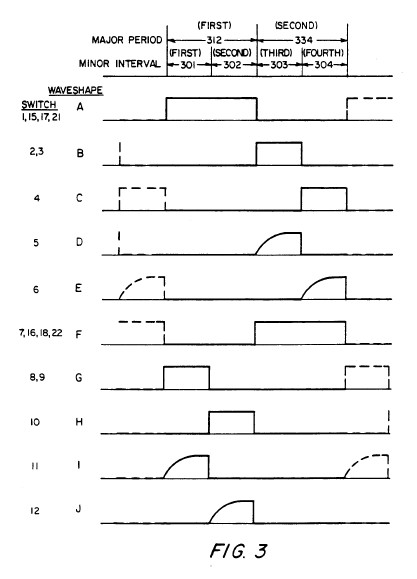
The prototype is a roughly one-foot-square cardboard enclosure housing two LC tank circuits on circuit boards. One circuit is charged while the other delivers power; the roles are then swapped via rapid switching. The interaction of the capacitors and inductors creates a resonant condition that, according to the inventor, allows the system to output far more energy than is supplied. The design is intended to be scaled up into box-car-sized "POD Mods" that can run off a 12-V battery and deliver up to 10 MW of continuous power. No moving parts or fuel are used; the device relies solely on electrical input and resonance phenomena.
Principles
- Electromagnetic resonance
- LC tank circuit energy transfer
- High-frequency switching
- Energy reverberation
- Multipass energy collection
Scientific Domains
Materials
- Copper wire
- Aluminum coil former
- Capacitor dielectric material
- Insulating board material
Mechanisms of Action
- Resonant energy exchange between two LC tanks
- Amplification of current via resonance
- Iterative energy interception and collection
Energy Sources
Applications
- Grid-scale power generation
- Portable high-power modules
- Electric hydroplane propulsion
Claimed Performance
Up to 4,000 x input power; 10 MW continuous output per PODMOD unit; COP > 1,000 claimed in prototype tests.
Experimental Evidence
Prototype built and tested; over-unity effect observed unintentionally in 1982 and reproduced in 1984; independent tests by accredited specialists reported; US patent granted for the concept.
Limitations
- Lack of peer-reviewed, independently verified data
- Potential measurement error in reported over-unity
- Scalability of resonant tanks to megawatt levels not demonstrated
- Regulatory and safety approvals not addressed
Red Flags
- Extraordinary claim of perpetual motion without accepted scientific explanation
- Reliance on anecdotal evidence and self-reported prototypes
- No publicly available detailed schematics or measurement data
- Potential for fraud or misinterpretation of measurement errors