Goal
Grow crops indoors using optimized LED spectra and closed-loop water recycling to dramatically reduce water use and eliminate dependence on sunlight and long-distance transport.
Problem
Water scarcity, high agricultural water consumption, reliance on oil-based fertilizers and food transport, seasonal and climate constraints on traditional farming.
Concept Summary
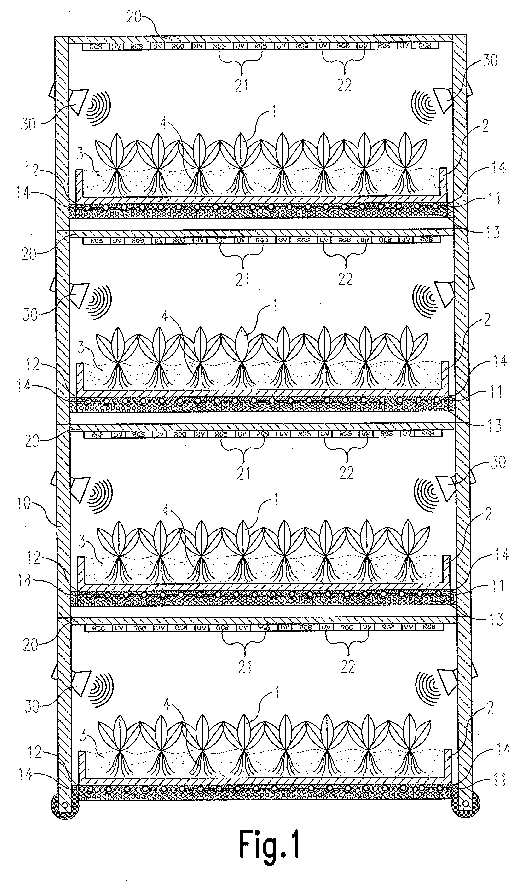
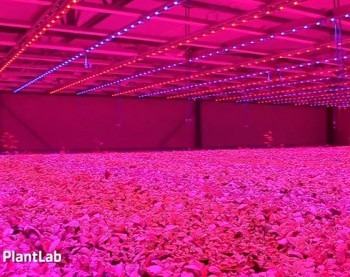
PlantLab uses vertically stacked indoor farms illuminated by a combination of red and blue LEDs (pink-purple light) that provide only the wavelengths needed for photosynthesis. The environment is climate-controlled, water is recirculated in a slow-trickle system, and computer algorithms continuously adjust light intensity, spectrum, and watering cycles for optimal growth. The system claims up to 90 % water savings, year-round production, and reduced carbon emissions from transport.
Principles
- Photosynthesis spectrum optimization
- Closed-loop water recycling
- Vertical stacking for space efficiency
- Computer-controlled environmental parameters
Scientific Domains
Materials
- Red LED chips
- Blue LED chips
- Plant growth substrate (soil or hydroponic medium)
- Water
Mechanisms of Action
- LED illumination with red and blue wavelengths
- Root temperature control
- Precise water delivery and collection
- Continuous monitoring of light, water, and climate
Energy Sources
Applications
- Urban food production
- Agriculture in water-scarce regions
- Year-round fresh produce supply
Claimed Performance
90 % less water than conventional open-field agriculture; up to 20-24 h of artificial light per day (~=7 300 h/year) - roughly five-fold increase in growing time; reduced fertilizer and pesticide use.
Experimental Evidence
PlantLab reports water-use reduction of 90 % in its pilot facilities; the VertiCrop pilot in the UK confirmed water savings of 4-6 % of conventional use. LED spectrum optimization and water recirculation were demonstrated in controlled environment trials.
Replication Status
VertiCrop pilot (UK) demonstrated comparable water-saving performance; other vertical farms (e.g., AeroFarms) reported similar LED-based growth results.
Limitations
- High electricity demand for continuous LED operation
- Limited light penetration depth of LEDs (~=30 cm)
- Capital cost of vertical stacking infrastructure
Red Flags
- Potential overstatement of water-saving percentages without independent peer-reviewed data