Goal
Generate electrical power without moving parts and with a coefficient of performance greater than one (over-unity free energy).
Problem
Need for a source of electrical energy that does not rely on conventional fuel or external input power.
Concept Summary
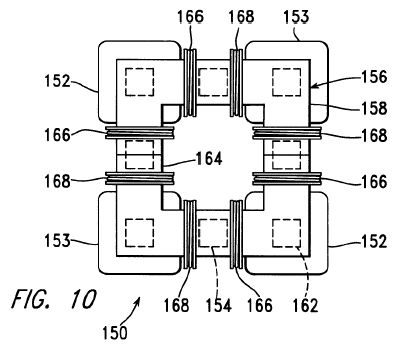
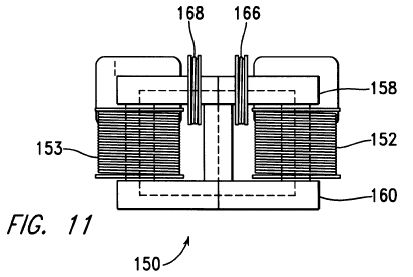
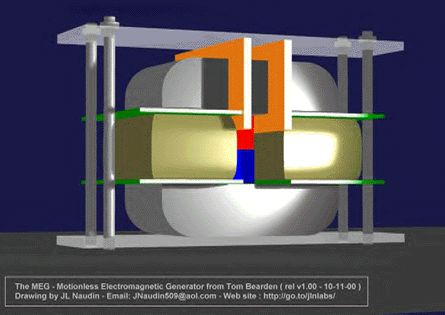
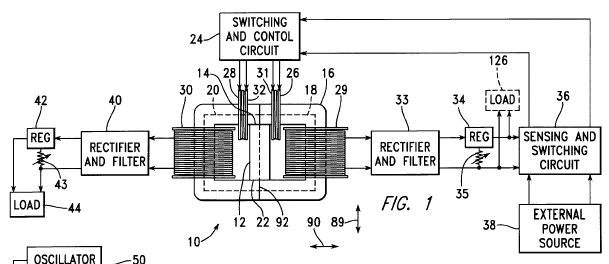
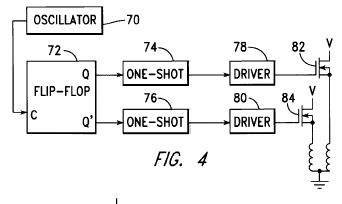
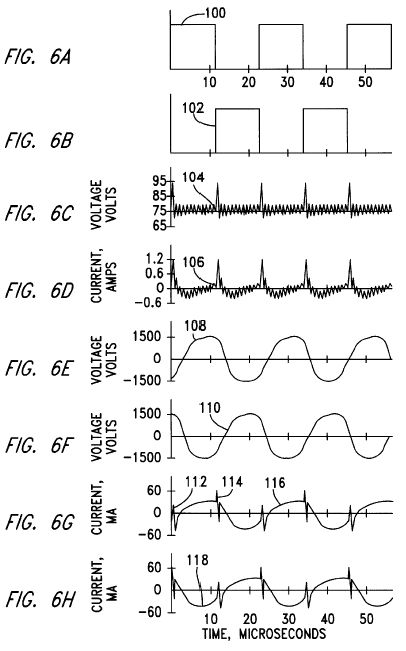
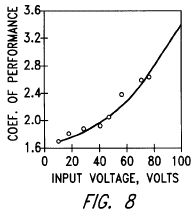
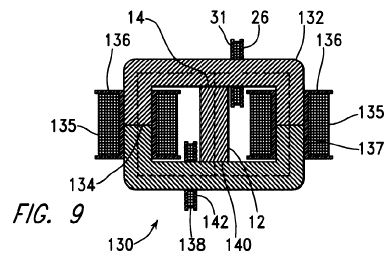
The MEG is a stationary magnetic generator that uses a permanent magnet and a magnetic core with two flux paths. Input coils are pulsed to temporarily reduce the magnetic flux from the permanent magnet, causing a rapid change in magnetic field that induces current in surrounding output coils. The inventors claim that the device extracts additional energy from the surrounding vacuum (scalar field), yielding a COP of about 5.0 and output powers around 2.5 kW.
Detailed Description
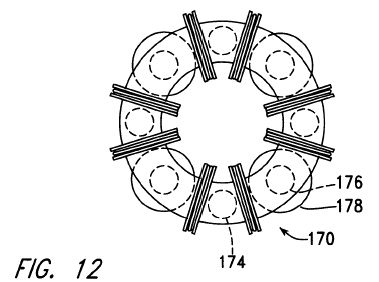
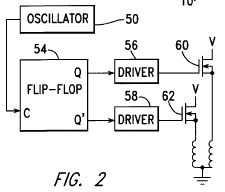
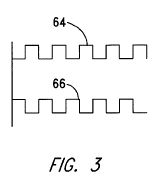
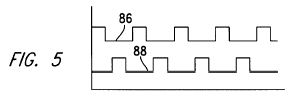
The patent describes a magnetic core containing annular plates with alternating permanent magnets and posts. First and second input coils surround portions of the two magnetic paths; first and second output coils surround the same paths. By alternately pulsing the input coils, flux is drawn from the permanent magnet, creating a changing magnetic field that induces current in the output coils. An alternative embodiment uses plates and posts with coils wrapped around each post. The inventors argue that the device harvests energy from the "active vacuum" (scalar field) and that proper phase-coherent control of the radiated electromagnetic signals is required for COP > 1.0.
Principles
- Electromagnetic induction
- Flux-transfer principle
- Scalar field (vacuum) energy extraction
- O(3) electrodynamics
Scientific Domains
Materials
- Permanent magnet (e.g., NdFeB)
- Magnetic core (ferromagnetic plates)
- Copper wire coils
- Metal posts
- Insulating supports
Mechanisms of Action
- Pulsed input coils reduce magnetic flux from the permanent magnet
- Rapid flux change induces current in output coils
- Coherent re-radiation of external electromagnetic signals back into the core
- Proposed extraction of energy from the vacuum (scalar field)
Energy Sources
Applications
- Standalone power generation
- Portable electricity supply
- Potential integration into micro-grid systems
Claimed Performance
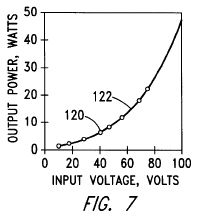
Coefficient of Performance ~= 5.0; prototype output ~= 2.5 kW (modular).
Experimental Evidence
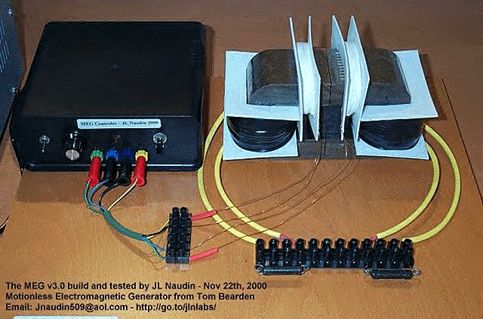
The inventors cite replication attempts by J. L. Naudin and other experimenters worldwide, though some observers claim measurement errors. A paper in *Foundations of Physics Letters* (2001) discusses the device's theory.
Replication Status
Replicated by J. L. Naudin and other experimenters (disputed by some parties).
Limitations
- Claims of over-unity lack independently verified quantitative data
- Measurement disputes and possible systematic errors
- Funding and engineering development gaps
- Unclear scalability and manufacturing pathway
Red Flags
- Over-unity claim without peer-reviewed experimental data
- Conflicting reports on measurement validity
- Potential for fraud or unsubstantiated marketing