Goal
Separate oil from water in oil-spill cleanup.
Problem
Oil pollution in water bodies (oil spills).
Concept Summary
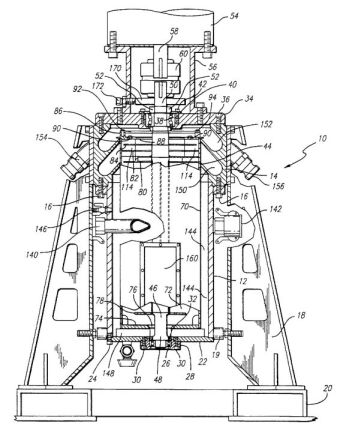
A rotating hollow rotor creates centrifugal acceleration that forces the denser oil phase outward and the lighter water phase toward the axis, allowing the two phases to be collected separately.
Detailed Description
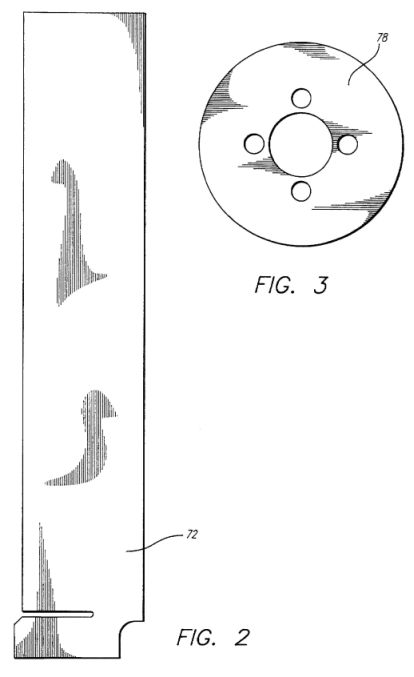
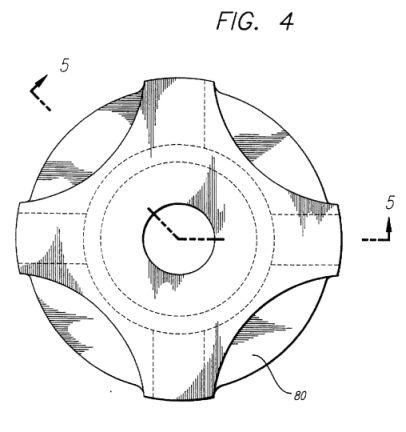
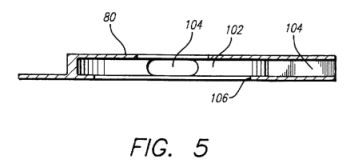
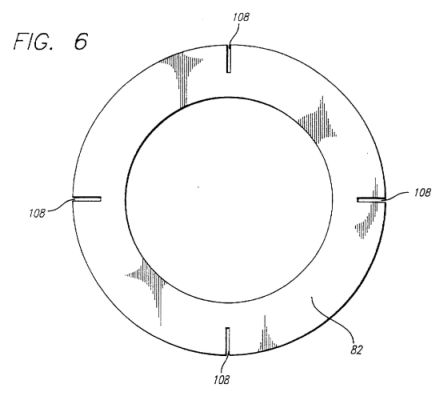
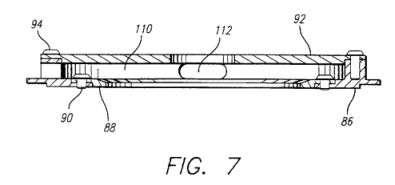
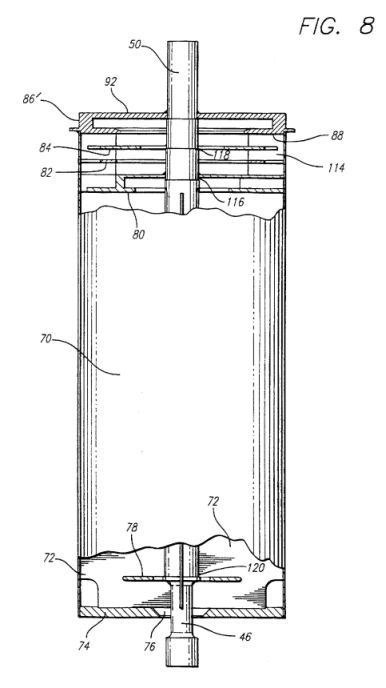
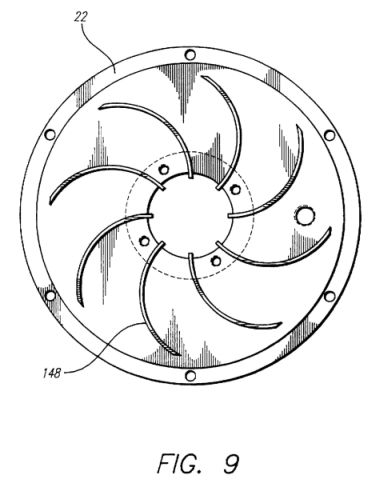
The invention comprises a cylindrical housing with a rotating hollow rotor. A liquid mixture enters an annular volume between rotor and housing, then passes into the rotor where centrifugal force separates components by density. Radial vanes on the housing bottom direct flow with minimal turbulence. An upper rotor assembly with a removable weir ring tunes separation and directs the separated phases to collector rings integrated into the housing wall. The device can be scaled for various throughputs, from 5 to 200 gallons per minute, and is designed for oil-water mixtures such as crude-laden water from spills.
Principles
- Centrifugal force
- Phase density separation
Scientific Domains
Materials
- Metal housing (steel or stainless steel)
- Rotating rotor (metal)
- Radial vanes (metal)
- Collector rings (metal)
Mechanisms of Action
- Rotating hollow rotor generates centrifugal acceleration
- Radial vanes guide fluid into rotor with low turbulence
- Removable weir ring allows tuning of separation efficiency
Energy Sources
Applications
- Oil spill remediation
- Industrial oil-water separation
- Marine environmental protection
Claimed Performance
Prototype demonstrated 97-99 % water cleanliness; devices available from 5 gpm to 200 gpm throughput.
Experimental Evidence
Demonstrations reported by local officials and news outlets showed the prototype separating crude-laden water into a clean-water tank (97-99 % purity) and an oil tank. No peer-reviewed data were provided.
Replication Status
Prototype demonstrated; no independent replication reported.
Limitations
- Scalability to large spill volumes uncertain
- Requires external power supply
- Separation efficiency not 100 % (3 % oil remains in water)
Red Flags
- Performance claims based on limited demonstrations, no peer-reviewed validation
- Heavy reliance on celebrity endorsement may bias perception