Goal
Generate electrical power (free energy) using magnetic resonance and partial separation of magnetic fields.
Problem
Provide a low-cost, self-charging power source without relying on conventional energy inputs.
Concept Summary
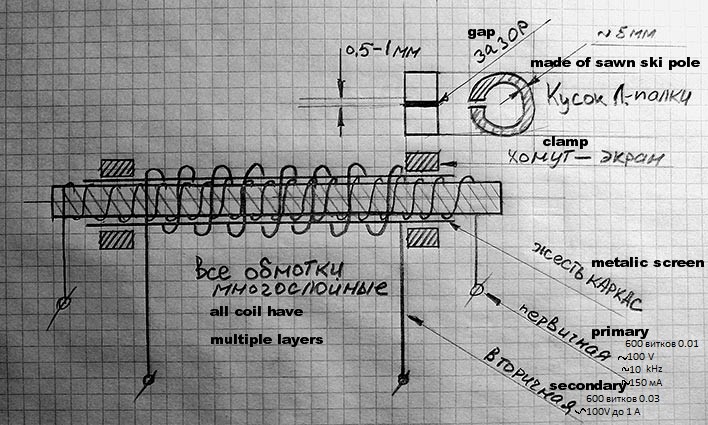
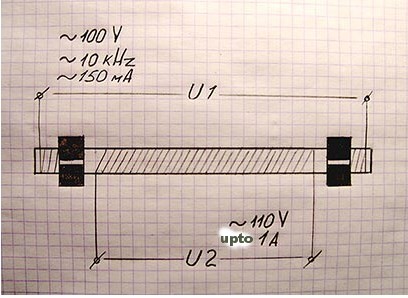
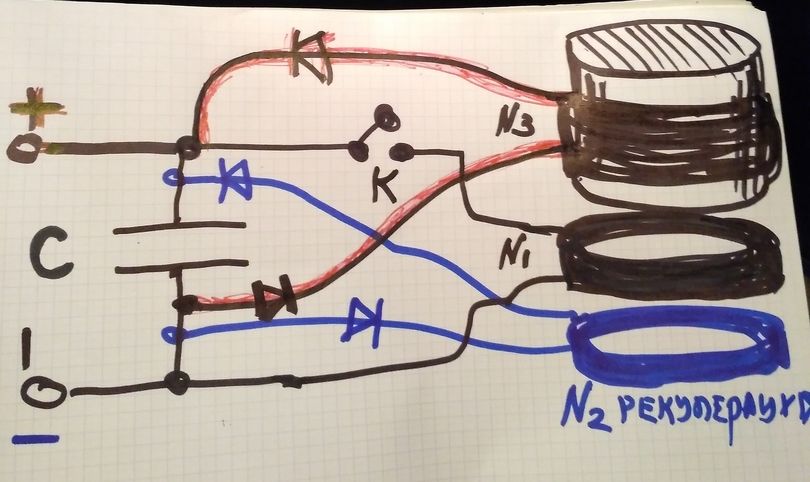
A primary low-voltage battery drives a resonant circuit that magnetizes a ferromagnetic core. The core's magnetic field is deliberately only partially coupled to the magnetization coil, leaving a large portion of magnetic energy unlinked. During demagnetization, a detachable secondary winding extracts this otherwise unused magnetic energy as electricity, allegedly producing more output power than the input.
Detailed Description
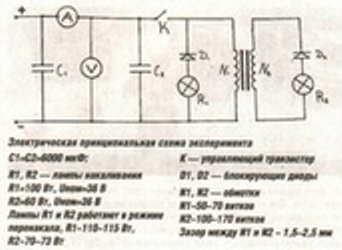
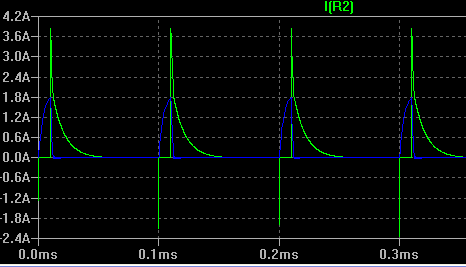
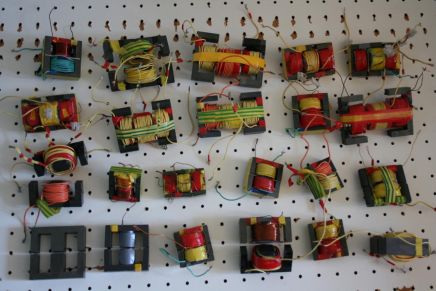
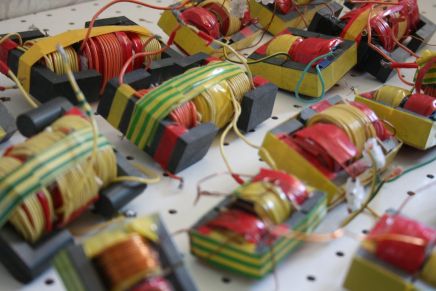
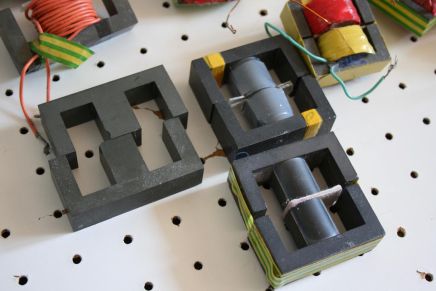
The invention uses a magnetization coil placed at a distance from a ferromagnetic core (e.g., ferrite or steel) so that only a fraction of the core's magnetic flux links the coil. The primary coil is energized by a small DC source (e.g., a 1.5 V battery) which creates an alternating voltage through resonance. When the primary current is switched off, the core's magnetic elastic energy is released. A secondary winding, isolated during magnetization by diodes or a rectifier, conducts only during the current-fall (demagnetization) phase, converting the released magnetic energy into usable electric power. The topology may include multiple cores, laminated sheets, or dumbbell-shaped cores to shape the magnetic field and minimize inductive coupling. The system can be powered by any pulsating voltage source and may employ various pulse-conversion schemes (booster, chopper, inverter).
Principles
- magnetic resonance
- partial inductive coupling
- demagnetization energy conversion
- magnetic elastic interaction energy
Scientific Domains
Materials
- ferromagnetic core (ferrite, steel, laminated sheets)
- copper wire coil
Mechanisms of Action
- magnetization of ferromagnetic core
- creation of uncoupled magnetic flux
- secondary winding activation during current fall
- conversion of magnetic elastic energy to electrical energy
Energy Sources
Applications
- home power generation
- low-power devices
- portable energy supplies
Claimed Performance
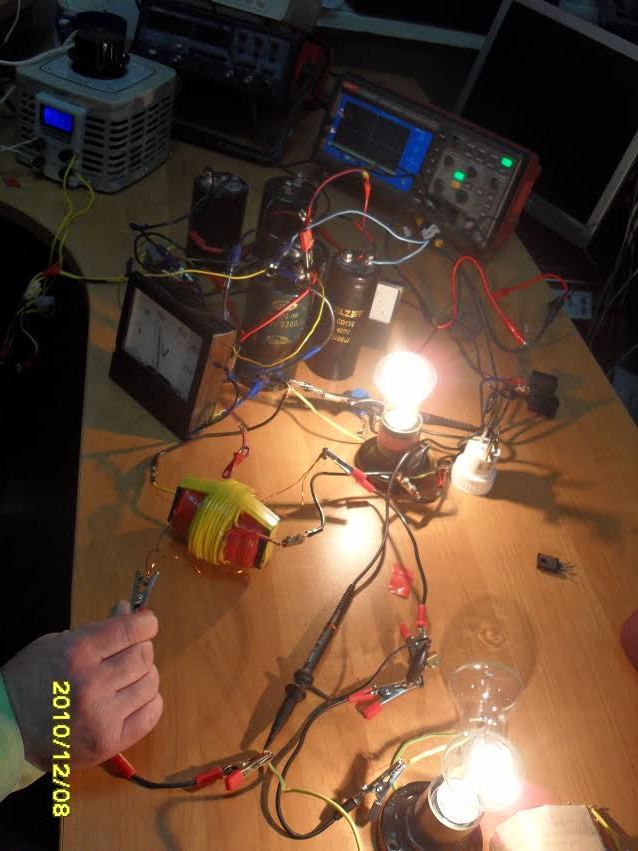
Operated a 17 W fan motor and a 60 W load using only a 1.5 V battery as the primary source.
Experimental Evidence
The author reports that a 17 W fan motor and a 60 W load were successfully powered by the resonant system driven from a small battery.
Replication Status
No independent replication reported.
Limitations
- No peer-reviewed data or independent verification
- Energy balance not quantified
- Requires precise magnetic topology and timing
Red Flags
- Free-energy claim without rigorous data
- Reliance on anecdotal demonstration
- Potentially pseudoscientific terminology