Goal
Generate hydrogen and oxygen gases from ordinary tap water with far less electrical energy than conventional electrolysis.
Problem
High energy consumption and heating of traditional water electrolysis; need for a low-energy, cold-operation water-splitting method.
Concept Summary
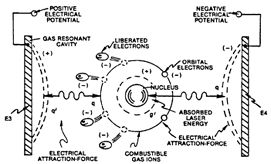
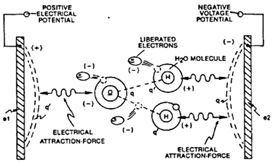
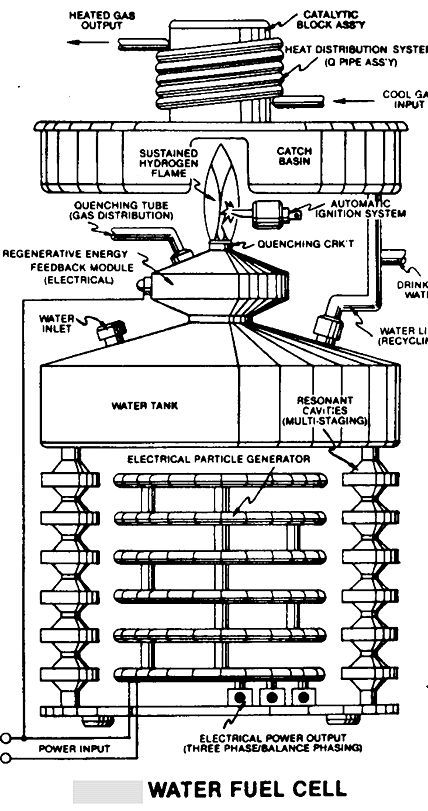
Meyer's Water Fuel Cell (WFC) uses a high-voltage, low-current pulsed electric field resonating with the cell's capacitance. Stainless-steel plate electrodes are spaced a few millimetres apart; an external inductance and a charge-pump circuit create brief kilovolt spikes that cause molecular breakdown of water, producing hydrogen-oxygen gas while the cell remains cold.
Detailed Description
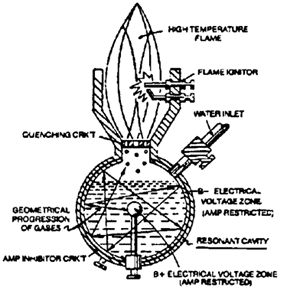
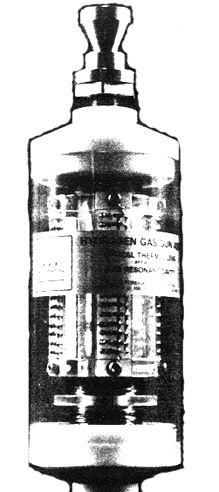
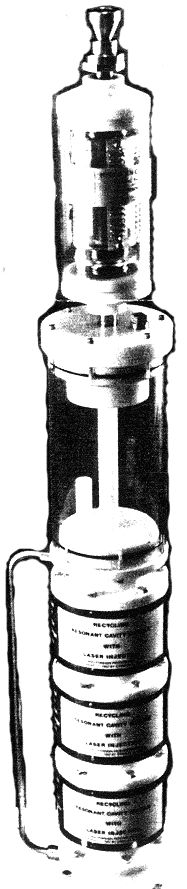
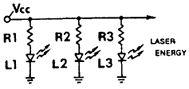
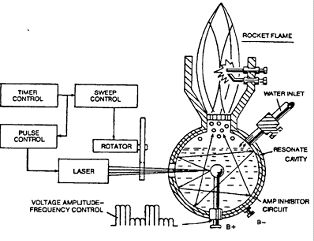
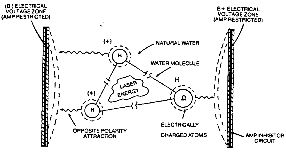
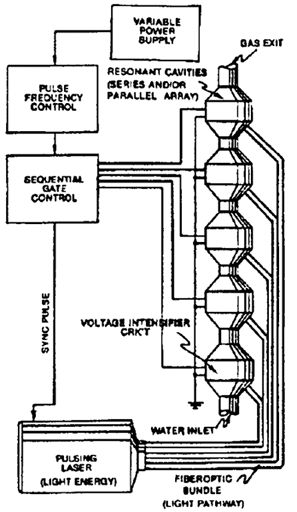
The core of the WFC is a parallel-plate stainless-steel electrode assembly (~=1.5 mm spacing) immersed in tap water. An external inductive coil forms a resonant LC circuit with the cell's dielectric (water, epsilon~=5). A high-power pulse generator drives the circuit, delivering tens of thousands of volts in short pulses. The pulse builds a staircase DC potential across the electrodes; when the breakdown voltage of water is reached, a momentary high current flows, dissociating water into H_2/O_2. A current-sensing circuit detects breakdown and disables the pulse for a few cycles, allowing the water to "recover". The process reportedly operates at milliamps, produces gas sufficient to sustain a flame that melts steel, and remains cold to the touch. Variants include multiple stacked cells, optical-fiber laser stimulation, and permanent-magnet assistance.
Principles
- Resonant LC circuit
- High-voltage pulsed electric field
- Molecular resonance and polarization
- Charge-pump operation
Scientific Domains
Materials
- Stainless steel (electrodes)
- Tap water (or pure water)
- Dielectric water (epsilon~=5)
Mechanisms of Action
- Voltage-induced dielectric breakdown of water
- Pulsed high-voltage spikes across electrodes
- Resonant energy transfer from inductance to cell capacitance
- Molecular alignment and resonance
Energy Sources
Applications
- Hydrogen-powered vehicles
- Portable hydrogen generation
- On-site fuel production
Claimed Performance
Gas production at milliamps with kilovolt pulses; cell remains cold after prolonged operation; gas flow sufficient to sustain a hydrogen-oxygen flame that instantly melted steel; claimed ability to power a converted VW vehicle for years.
Experimental Evidence
Witnessed demonstrations before Professor Michael Laughton, Admiral Sir Anthony Griffin, and Dr. Keith Hindley; gas evolution reported sufficient to melt steel; cold cell observed after >20 min of operation; patents granted after demonstration to US Patent Office.
Replication Status
No independent replication reported; details withheld by inventor; only anecdotal witness accounts.
Limitations
- Lack of publicly disclosed schematics
- Potential corrosion of stainless-steel electrodes
- Unclear net energy balance
- Requires high-voltage equipment
- No peer-reviewed data
Red Flags
- Overunity and free-energy claims
- Absence of independent replication
- Reliance on anecdotal witness testimony
- Patents do not guarantee functional performance