Goal
Provide a low-cost, gasoline-free propulsion system for automobiles using stored compressed air.
Problem
High fuel costs and dependence on gasoline engines for personal transportation.
Concept Summary
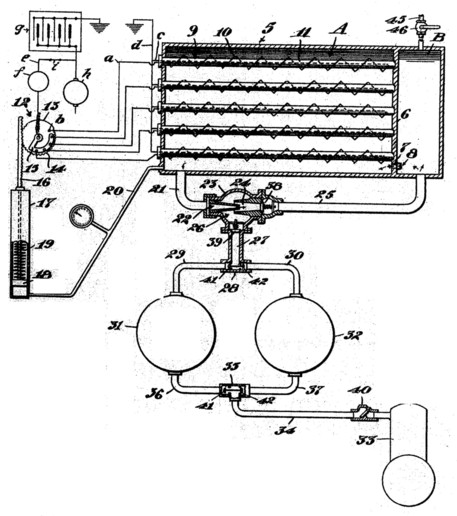
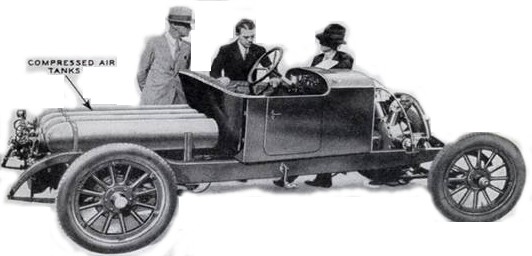
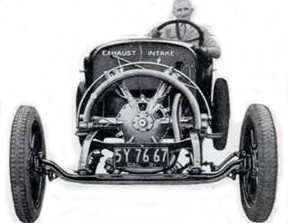
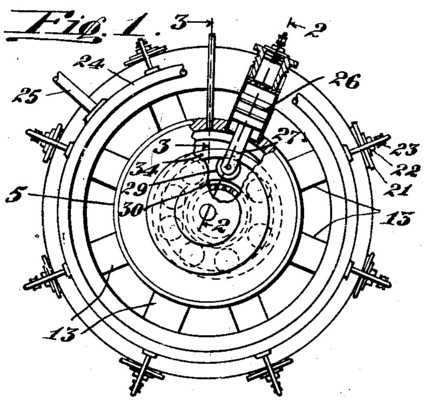
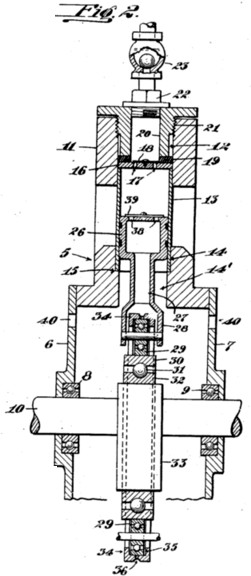
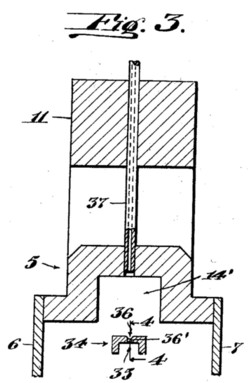
A standard automobile chassis is fitted with a radial-type compressed-air motor that expands heated, high-pressure air to drive the wheels. Four high-pressure air tanks supply the air, which is heated by an electric heater powered by a battery-generator set. The engine requires no cooling, ignition, or carburetor and recovers waste heat to re-pressurise the air.
Detailed Description
The motor resembles an airplane radial engine and is mounted upright in the space normally occupied by a gasoline engine. Air stored in four tanks is heated to about 200 psi by an electric heater, then expanded in the motor to produce mechanical work. After expansion the air is cooled, recovered, and sent to a compression chamber where it is reheated and returned to the tanks, creating a closed-loop cycle. The system claims to drive the vehicle up to 500 miles at 35 mph with a fuel cost of roughly one cent per mile.
Principles
- Compressed-air energy storage
- Thermal expansion of gases
- Fluid-pressure work conversion
- Heat recovery and recirculation
Scientific Domains
Materials
- air
- steel
- aluminum
- copper
- battery components
Mechanisms of Action
- Pressurized air expansion in a piston-type motor
- Electrical heating of air to increase pressure before expansion
- Cooling of exhaust air and recompression for reuse
Energy Sources
Applications
- Transportation
- Low-cost personal vehicles
Claimed Performance
500 miles range at 35 mph; fuel cost ~= $0.01 per mile.
Experimental Evidence
An "amazing demonstration" in Los Angeles showed a standard automobile chassis powered by the compressed-air motor driving around the city streets at a cost of one cent per mile for fuel.
Limitations
- Range limited by tank size and pressure
- Need for high-pressure containment vessels
- Energy loss due to heat exchange inefficiencies
Red Flags
- Extraremely low claimed operating cost without detailed data
- Safety concerns associated with high-pressure air storage