Goal
Provide a virtually unlimited source of usable energy by converting ordinary hydrogen atoms into lower-energy "hydrino" states.
Problem
Global energy scarcity and the need for new, high-density energy sources; also challenges to conventional quantum-mechanical understanding of hydrogen.
Concept Summary
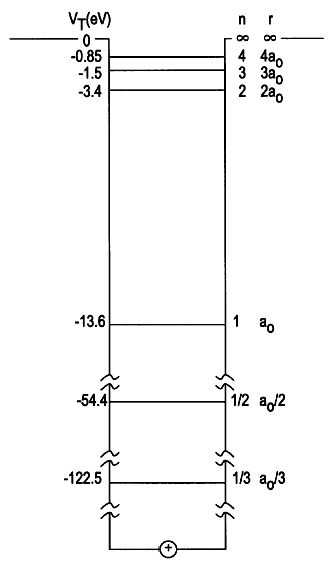
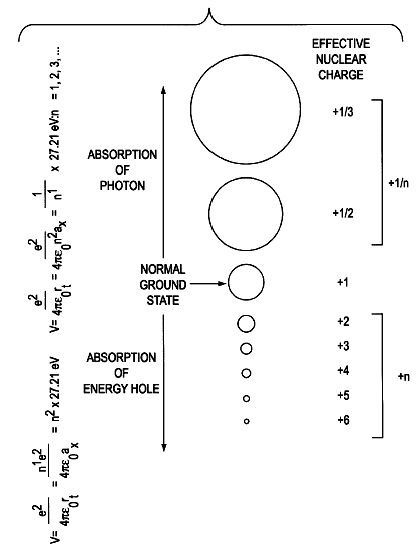
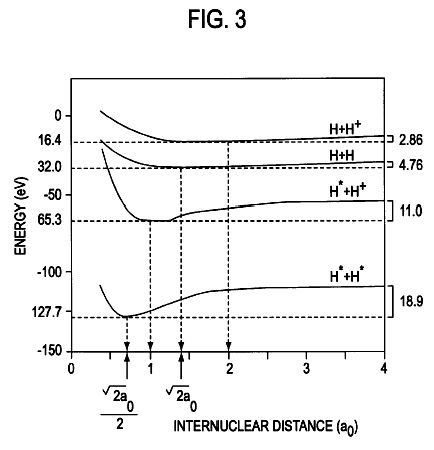
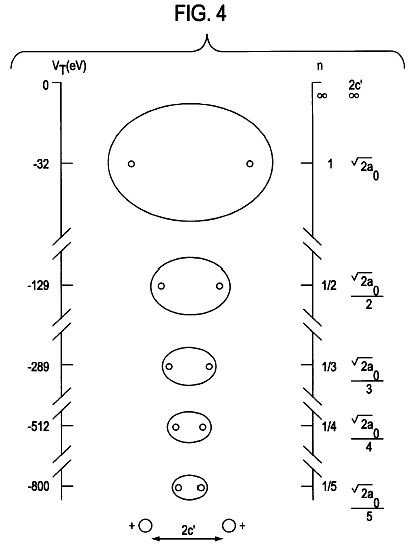
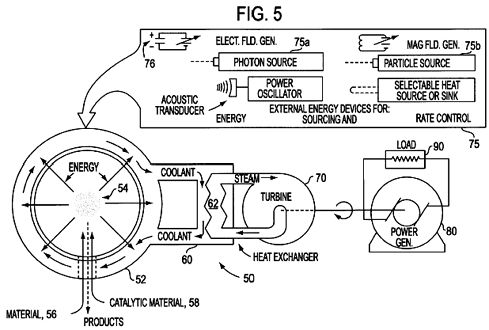
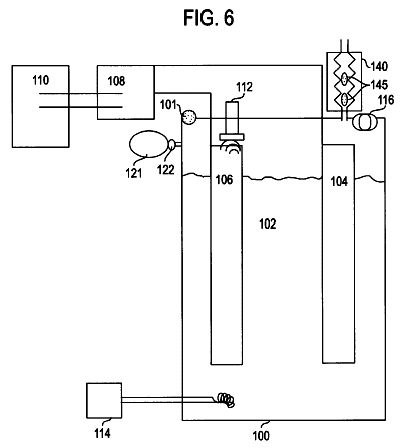
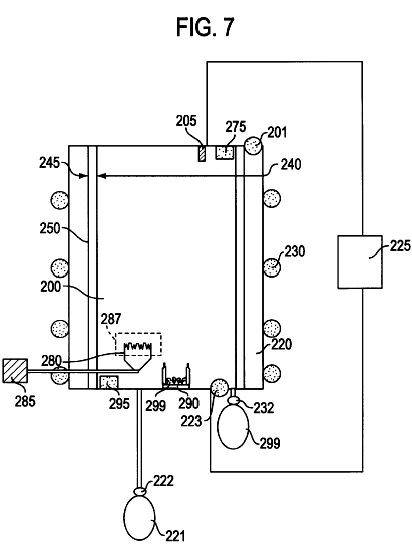
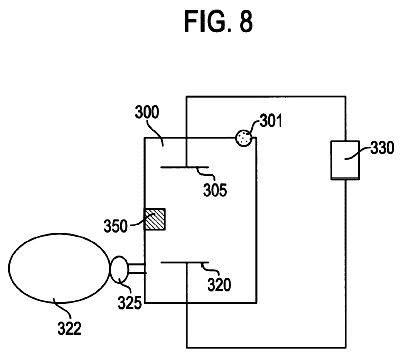
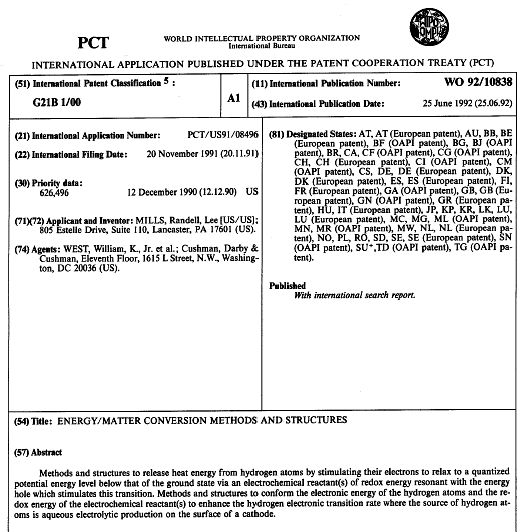
The invention proposes that hydrogen atoms can be induced to transition to quantized energy-energy states (hydrinos) using a specialized catalyst and an "energy-hole" electron transfer mechanism. The transition releases excess energy as heat and light, and the resulting hydrino compounds can be used in batteries, conductive plastics, and high-strength coatings.
Principles
- Chemical catalysis of hydrogen dissociation
- Electron-transfer energy-hole mechanism
- Quantum-level transition to sub-ground-state hydrogen (hydrinos)
- Hydrogen spillover catalyst functionality
Scientific Domains
Materials
- Hydrogen (atomic and molecular)
- Hydrogen-spillover catalyst (unspecified metal/oxide material)
- Electron donor/acceptor compounds (e.g., metallic ions)
- Electrolytic cell components
Mechanisms of Action
- Stimulation of hydrogen electrons to relax to lower quantized energy levels
- Transfer of electrons between donor and acceptor species to create an energy sink
- Use of a hydrogen-spillover catalyst to dissociate H_2 and support free H atoms
- Release of excess energy as visible/UV radiation and heat
Energy Sources
Applications
- Power generation (distributed turbines)
- High-energy batteries for vehicles
- Conductive plastics
- High-strength protective coatings
Claimed Performance
A virtually unlimited supply of energy; batteries capable of 1,000 mi range; conductive plastics with magnetic properties; super-strong coatings.
Experimental Evidence
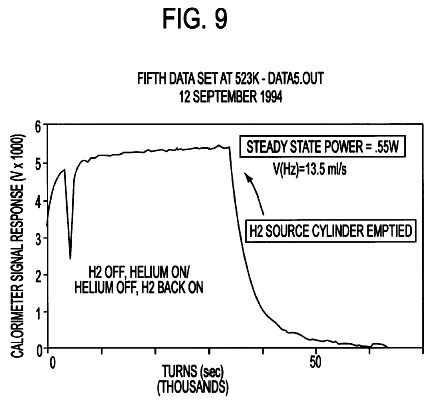
The article cites observations of high-energy release (visible/UV light) from a "Mills cell", positive results reported by independent laboratories, and ongoing testing of hydrino crystals by major utilities.
Replication Status
Testing by two major corporations is underway; no independent, peer-reviewed replication reported.
Limitations
- Lack of independent, peer-reviewed verification
- Theoretical conflict with established quantum mechanics
- Unclear scalability of the catalyst and reactor system
- No disclosed quantitative energy output per hydrogen atom
Red Flags
- Claims that contradict well-established quantum theory
- Reliance on proprietary catalysts without disclosed composition
- Absence of peer-reviewed publications
- Marketing language suggesting "unlimited energy"