Goal
Biodegradation of PET plastic to mitigate environmental pollution and enable recycling.
Problem
Accumulation of polyethylene terephthalate (PET) plastic waste in the environment and limited recycling rates.
Concept Summary
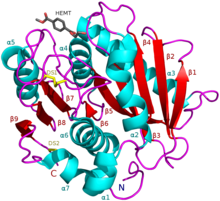
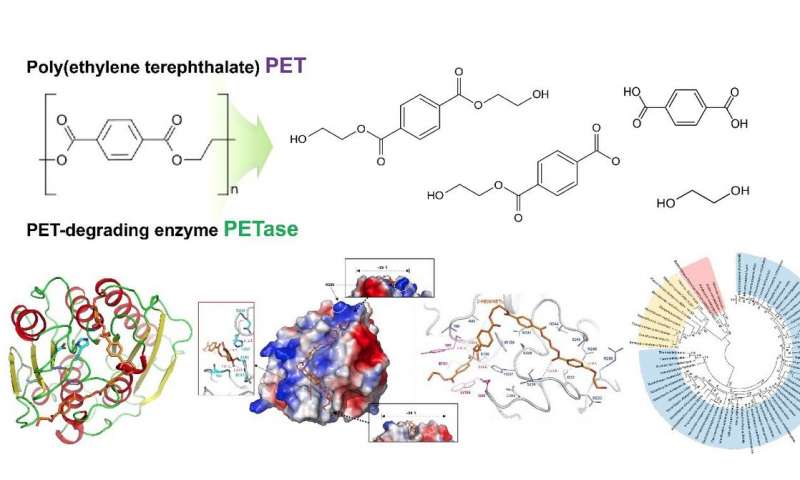
The bacterium Ideonella sakaiensis uses two enzymes, PETase and MHETase, to hydrolyze PET into its monomers-terephthalic acid and ethylene glycol-which can then be assimilated for growth. This enzymatic pathway offers a biological route to PET depolymerisation and potential recycling.
Principles
- Enzymatic hydrolysis
- Microbial metabolism
- Biocatalysis
Scientific Domains
Materials
- Polyethylene terephthalate (PET) plastic
- PETase enzyme
- MHETase enzyme
Mechanisms of Action
- PETase catalyzes the hydrolysis of PET polymer chains into mono(2-hydroxyethyl) terephthalic acid (MHET).
- MHETase further hydrolyzes MHET into terephthalic acid and ethylene glycol.
- The bacterium assimilates the resulting monomers as carbon and energy sources.
Energy Sources
Applications
- Industrial PET recycling
- Environmental remediation of PET pollution
- Biocatalytic production of terephthalic acid and ethylene glycol
Claimed Performance
Low-quality PET film was almost completely degraded within six weeks under laboratory conditions.
Experimental Evidence
Laboratory tests reported in Science (Vol. 351, 2016) showed Ideonella sakaiensis degrading PET films, with enzymatic assays confirming PETase and MHETase activity.
Replication Status
Results reported in a peer-reviewed study; no independent large-scale replication documented.
Limitations
- Slow degradation of highly crystalline PET (e.g., bottle-grade material).
- Current enzyme activity insufficient for commercial throughput.
- Need for optimisation of bacterial growth conditions and enzyme stability.