Goal
Capture ambient cosmic radiant energy and convert it into usable electrical power for lighting, heating and mechanical work.
Problem
Dependence on conventional fuel and electricity sources; desire for a free, ubiquitous energy supply.
Concept Summary
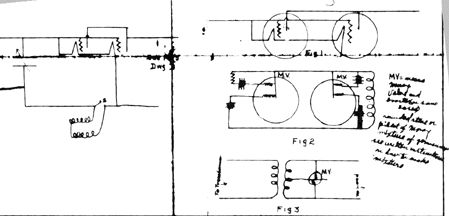
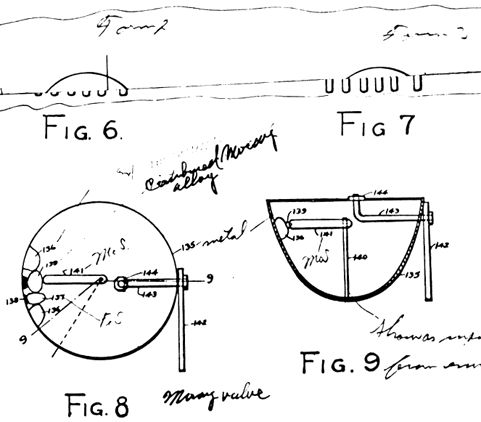
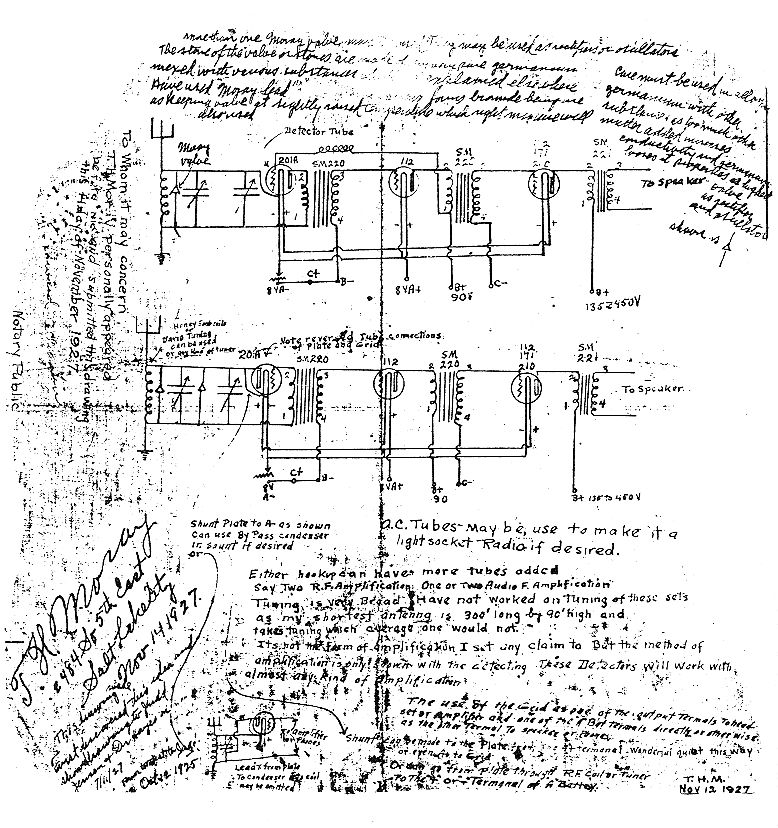
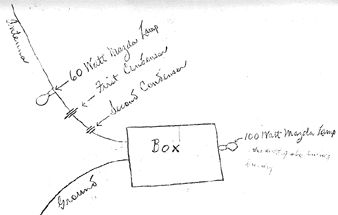
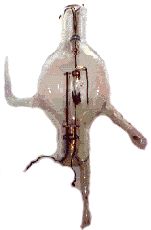
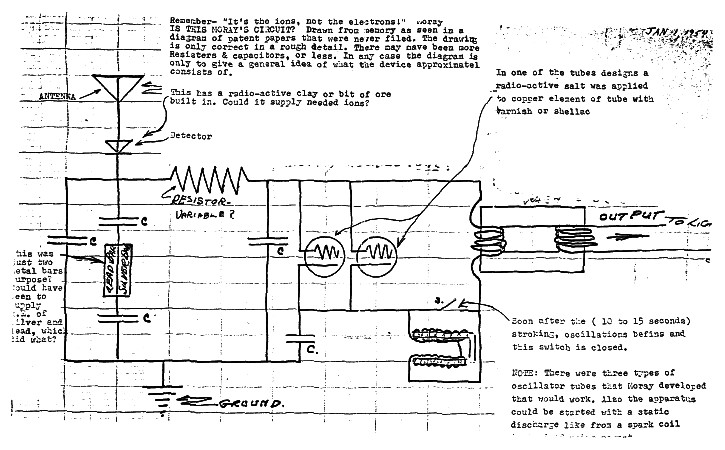
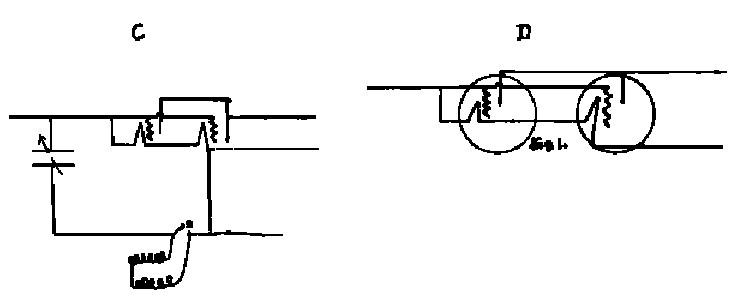
The Moray device consists of an antenna, a ground connection, and a solid-state "Moray valve" made from a soft white semi-conductive stone with silver wiring. When tuned with a magnet, the system couples to an unspecified high-frequency radiant energy that permeates space, rectifies it, and delivers high-voltage, high-power electrical output without drawing energy from internal batteries or the grid.
Detailed Description
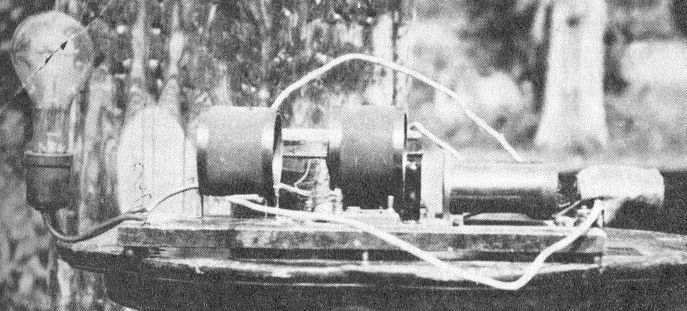
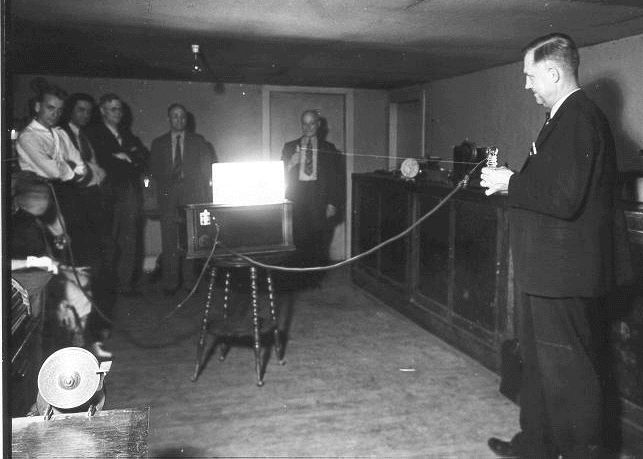
The apparatus is housed in a small wooden box containing a magnet, switch, and light receptacle. An external antenna (copper wire up to 200 ft long) is stretched high above the ground and connected to the device via insulated leads. A ground rod (water pipe) is driven into the earth. The user tunes the device by stroking a magnet across metal projections, which allegedly brings the internal circuitry into resonance with the ambient "radiant energy". Once tuned, the device produces voltages up to 250 kV and powers loads such as a 100-W incandescent lamp, a 655-W flat-iron heater, and a space heater, delivering up to 50 kW of power. Demonstrations were performed miles from power lines, and the output ceased when the antenna or ground was disconnected, requiring retuning.
Principles
- Resonant tuning
- High-frequency energy harvesting
- Rectification via semi-conductive stone (Moray valve)
- Antenna coupling to ambient radiant energy
Scientific Domains
Materials
- Silver wire
- Soft white stone (semi-conductive material)
- Copper cable
- Glass insulators
- Water pipe (ground rod)
- Metal baseboard
- Magnet
Mechanisms of Action
- Antenna captures ambient high-frequency electromagnetic/radiant energy
- Ground provides a return path and reference potential
- Moray valve rectifies the captured energy into DC
- Magnet stroking tunes the circuit to resonance with the external field
Energy Sources
Applications
- Remote power generation
- Lighting
- Heating
- Experimental propulsion
Claimed Performance
Up to 250,000 V, up to 50,000 W of power; lighting a 100-W globe at ~75 % brightness; heating a 655-W flat-iron to sizzling temperature; operation miles from any power line.
Experimental Evidence
Multiple on-site demonstrations are described: lighting a 100-W lamp, heating a 655-W flat-iron, producing visible arcing when the antenna was re-connected, and operating the device in a remote canyon away from power lines with independent observers (Dr. Eyring, Mr. Judd).
Replication Status
Demonstrated to independent observers in the 1920s; no documented large-scale or peer-reviewed replication.
Limitations
- Unverified source of energy
- Dependence on large antenna and deep ground connection
- No peer-reviewed validation or quantitative measurements
- Potential for induction artefacts
Red Flags
- Extraordinary claims without independent, reproducible verification
- Lack of quantitative data and peer-reviewed analysis
- Historical association with free-energy pseudoscience