Goal
Provide extremely high power and torque in a compact, lightweight internal-combustion engine with low parts count, low maintenance, high mechanical efficiency and reduced pollution.
Problem
Conventional internal-combustion engines are bulky, heavy, have limited power-to-weight ratios, require complex valve trains and suffer from high friction and pollution.
Concept Summary
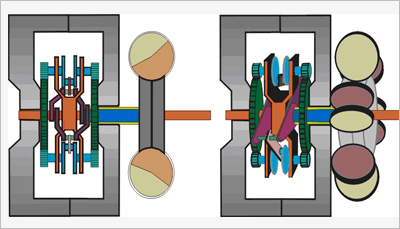
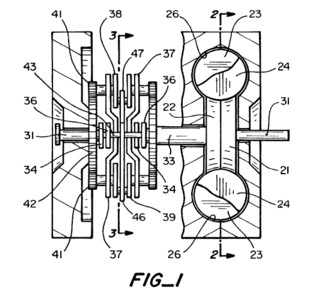
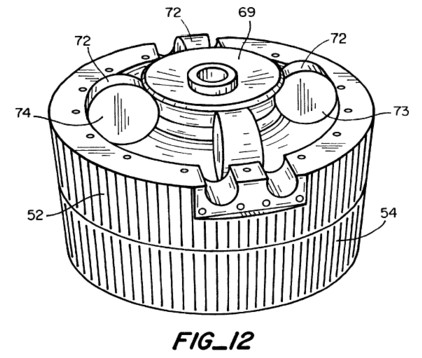
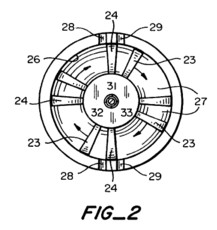
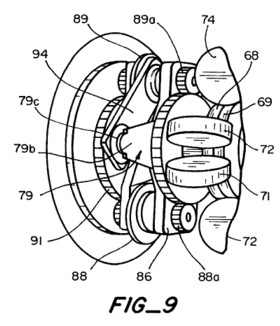
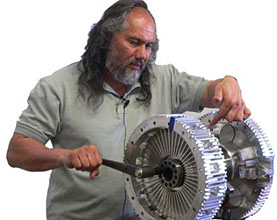
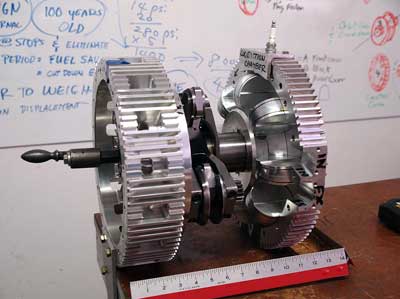
The MYT engine uses a toroidal combustion chamber with two rotating disks, each driving four pistons. The pistons fire 16 times per shaft rotation, giving the equivalent of a 32-cylinder four-stroke engine. Wide-open porting eliminates valves, and only piston rings contact the cylinder wall, minimizing friction. The design yields a very high displacement (~=850 cid) in a small package (14 in x 14 in, 150 lb) and claims 40x higher power-to-weight ratio.
Detailed Description
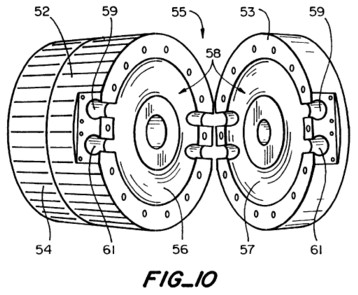
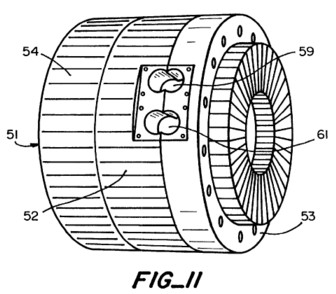
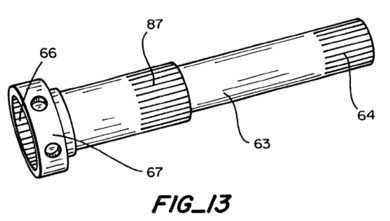
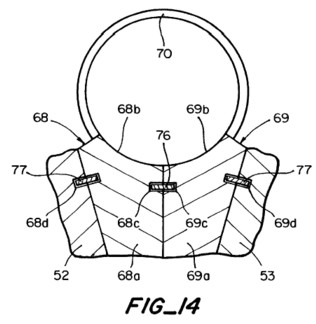
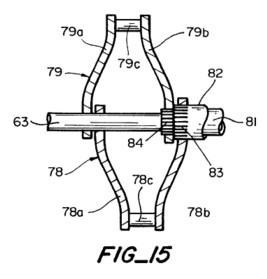
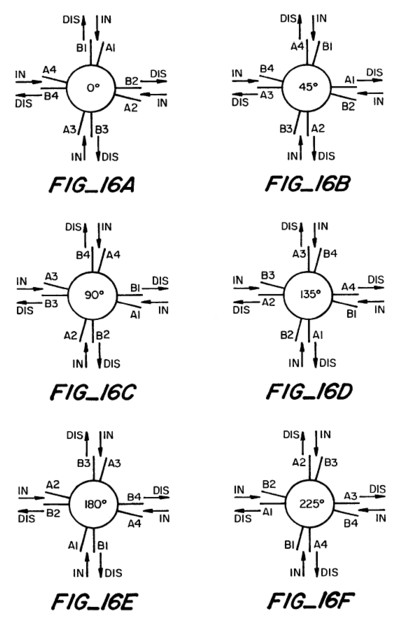
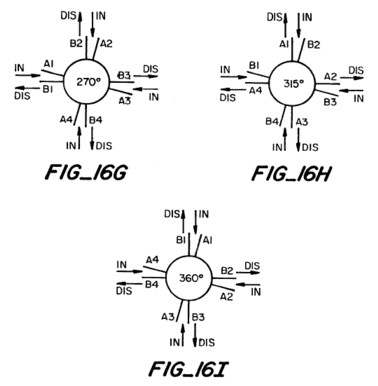
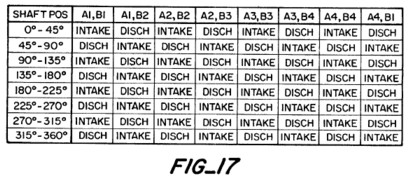
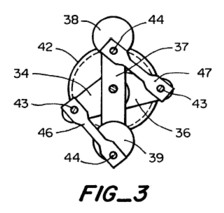
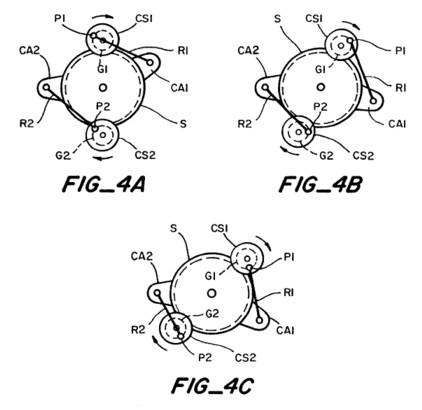
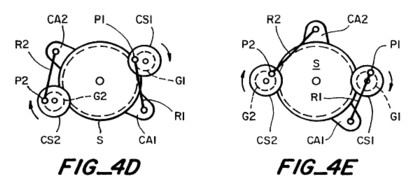
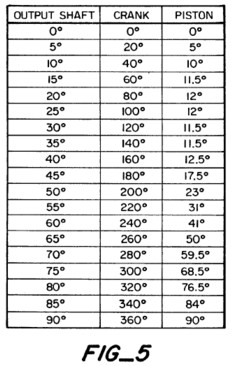
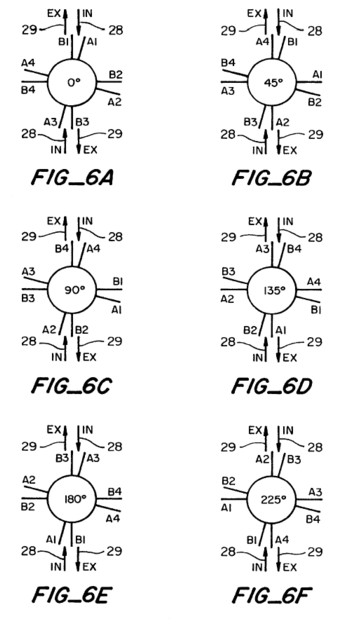
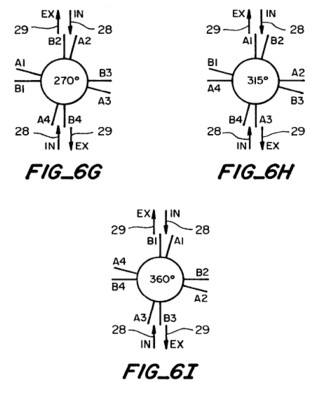
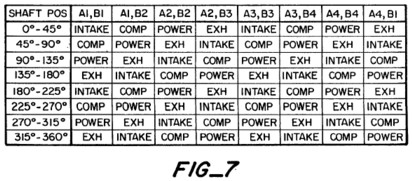
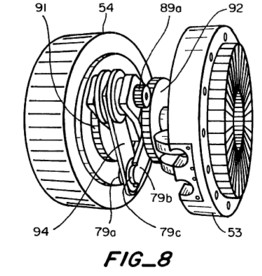
The engine consists of two coaxial disks that rotate alternately inside a toroidal cylinder. Each disk carries four pistons; the pistons move in indexed motion to complete the four strokes (intake, compression, power, exhaust) without traditional valves. The pistons fire twice per rotation, giving 16 firings per shaft revolution, equivalent to a 32-cylinder engine. The only contact with the cylinder wall is via piston rings, reducing friction losses. A prototype of 850 cid displacement was tested on a dynamometer, producing up to 850 hp and over 800 ft-lb of torque. The engine can also operate as a positive-displacement pump or compressor for air or liquid. The design promises lower part count (<25 parts), reduced maintenance, and suitability for transportation, power generation, and pumping applications.
Principles
- Multiple firings per shaft rotation
- Toroidal combustion chamber
- Four-stroke cycle via indexed piston motion
- Valve-less wide-open porting
- Reduced friction through piston-ring-only wall contact
Scientific Domains
Materials
- Metal alloys (e.g., aluminum or steel for disks and cylinder)
- Piston ring material (cast iron or steel)
- Standard engine fasteners
Mechanisms of Action
- Combustion in toroidal chambers
- Rotating disks drive pistons through indexed motion
- Air intake and exhaust via wide-open ports
- Power transmitted to output shaft through piston-driven crank
Energy Sources
Applications
- Automobiles
- Trucks
- Airplanes
- Ships
- Power generators
- Air and liquid pumps/compressors
Claimed Performance
40x higher power-to-weight ratio; 850 hp from a 150-lb engine; torque > 800 ft-lb; part count < 25; low friction losses; low pollution.
Experimental Evidence
The MYT Engine has been tested with fuel and air motoring on a dynamometer; the prototype (14 in x 14 in, 150 lb) produced the claimed displacement (~=850 cid) and power output.
Replication Status
Prototype tested on dynamometer; no independent replication or commercial production reported.
Limitations
- Manufacturing difficulty of a perfectly split toroidal cylinder
- Material strength and fatigue under high-frequency firing
- Cooling and lubrication challenges in a compact toroidal geometry
Red Flags
- Extraordinary performance claims (850 hp from 150 lb) without peer-reviewed data
- Limited public testing; no independent verification
- Potential over-optimism in manufacturing feasibility