Goal
Increase ignition spark energy and efficiency to achieve more complete fuel combustion and higher engine performance.
Problem
Conventional spark ignition is very inefficient (~=0.01% conversion) and often leads to incomplete fuel burning, high emissions, and limited power output.
Concept Summary
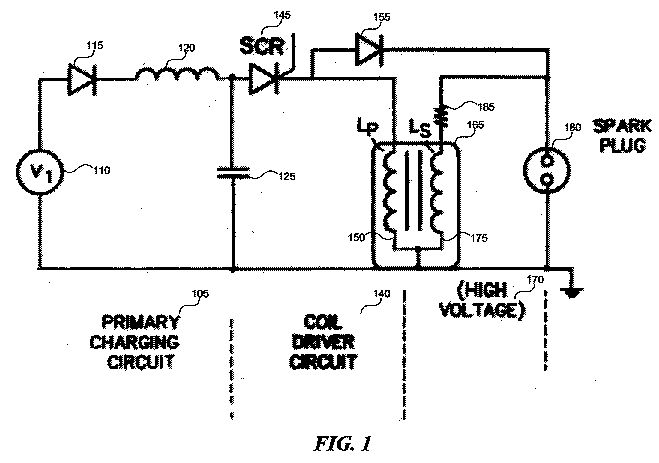
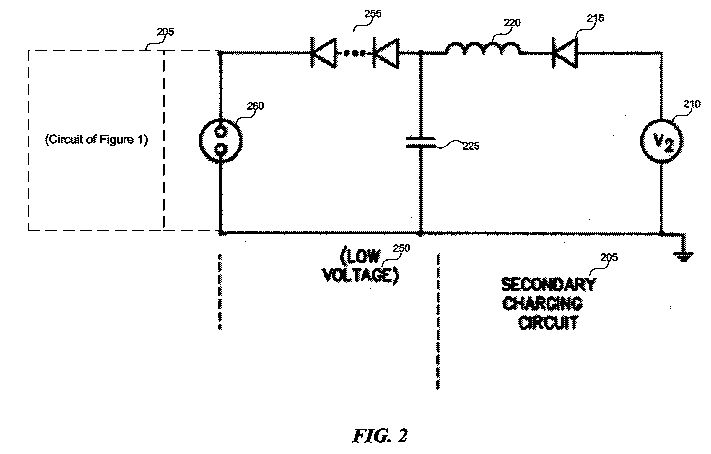
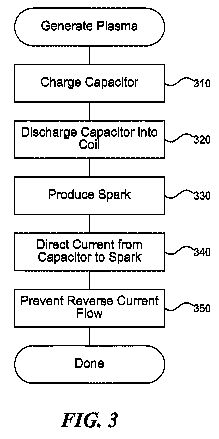
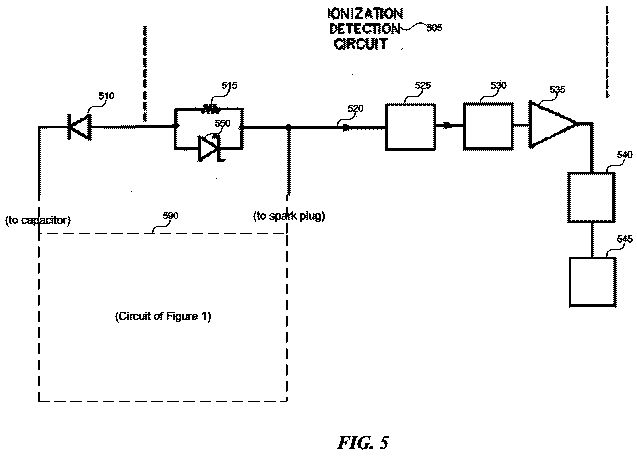
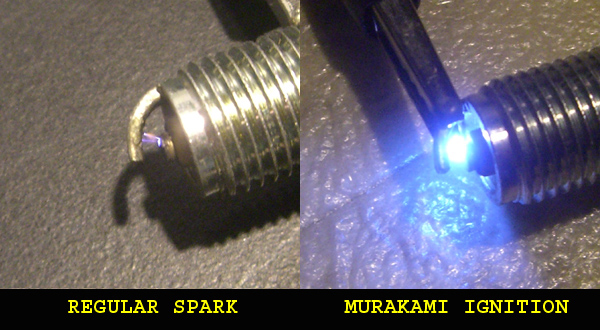
The invention adds a one-way current path between the primary and secondary windings of the high-voltage ignition transformer. After the initial spark, energy stored in the capacitor flows through this path across the spark-plug gap, producing a high-current plasma arc that ionizes the surrounding air, creating a bright white plasma ball and a more energetic ignition event without requiring a separate power supply.
Principles
- High-voltage transformer operation
- Capacitive discharge ignition
- One-way (diode-protected) current path
- Plasma ionization by high current
- Ohm's law for current-driven ionization
Scientific Domains
Mechanisms of Action
- Capacitor stores energy during the primary discharge
- After spark formation, the plasma-plug gap becomes low-resistance, allowing capacitor energy to flow through the one-way path
- High current through the gap ionizes the surrounding gas, forming a plasma kernel that expands the spark
- Blocking diode protects the capacitor from reverse high-voltage discharge
Energy Sources
Applications
- Automotive engine ignition
- Industrial boiler ignition
- Fuel cell and fuel-stack ignition
Claimed Performance
Plasma ignition provides a dramatically brighter and more powerful white plasma ball, with ionization efficiency up to 50 % compared to ~0.01 % for conventional spark ignition, while using the same power as a CDI system and adding minimal components.
Experimental Evidence
The patent description asserts improved spark energy and efficiency but does not present quantitative test data or independent verification.
Limitations
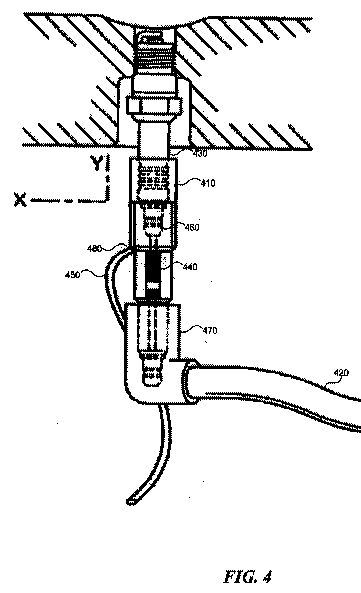
- Requires integration with existing ignition circuitry
- May need redesign of coil-on-plug assemblies
- No publicly available performance data
Red Flags
- Lack of peer-reviewed or independently verified experimental data
- Potential overstating of efficiency gains without quantitative support