Goal
Remove salts and other solutes from water to produce potable or purified water.
Problem
Lack of access to clean drinking water and the need for efficient desalination of seawater and wastewater.
Concept Summary
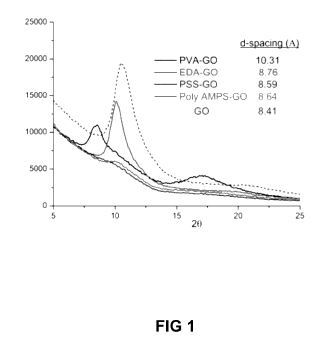
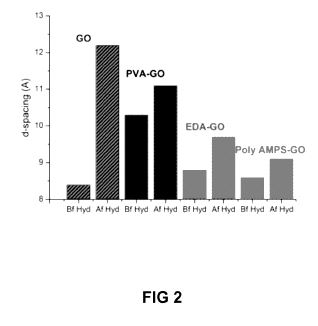
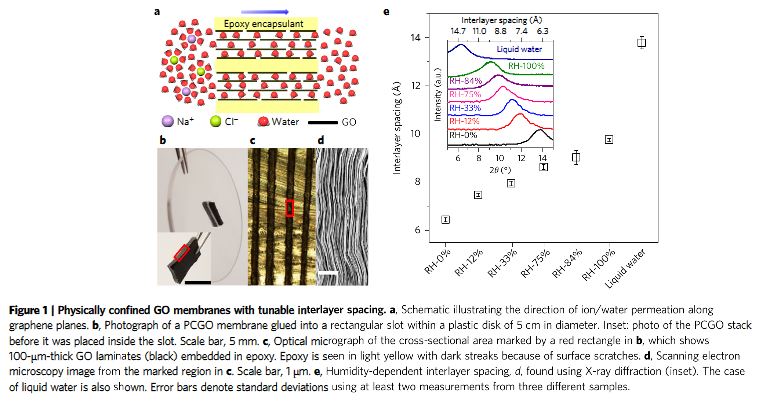
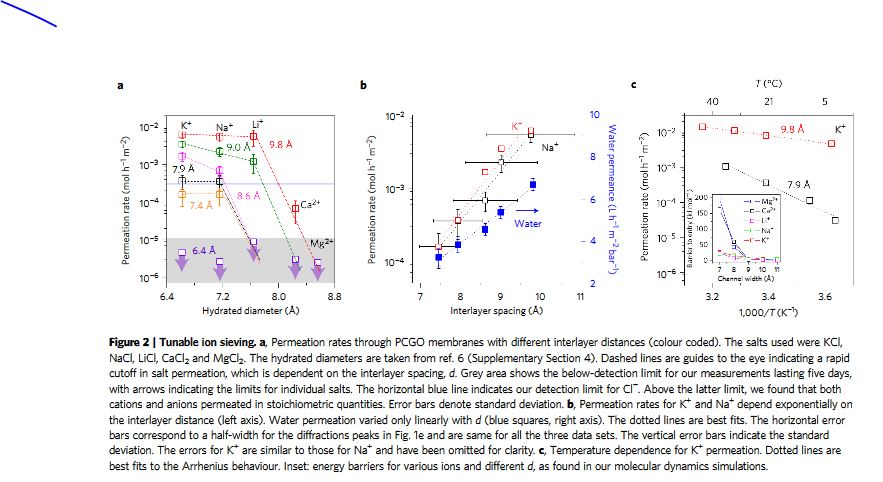
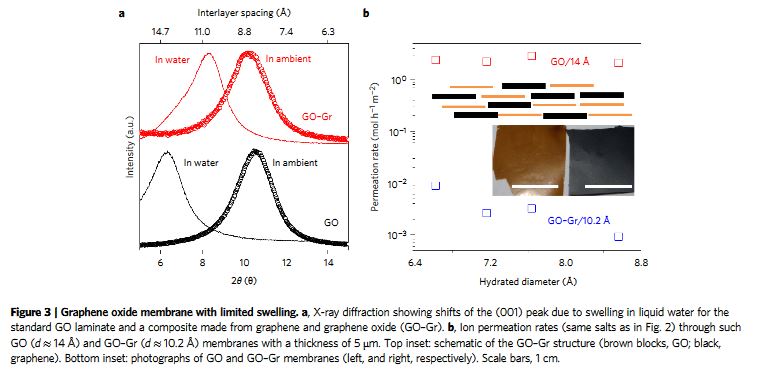
A graphene-oxide laminate membrane, cross-linked and optionally combined with graphene flakes, is engineered to limit swelling in water, allowing precise control of pore size. The membrane acts as a size-exclusion filter that rejects ions (e.g., NaCl) while permitting high water flux, enabling scalable desalination.
Principles
- Size-exclusion filtration
- Control of membrane swelling through cross-linking
- Tunable pore size via cross-linking agents and graphene inclusion
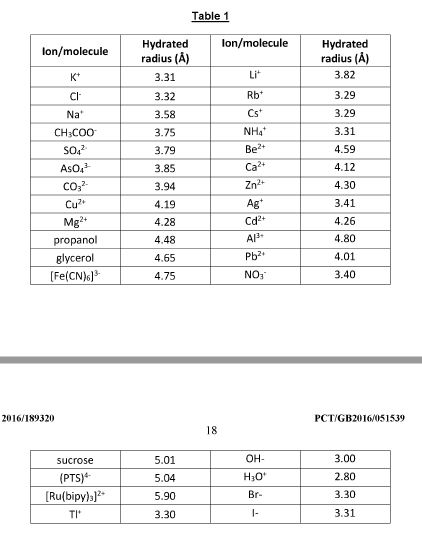
- Hydration-radius based ion rejection
Scientific Domains
Materials
- graphene oxide
- graphene
- cross-linking agents
- graphene oxide flakes
- graphene flakes
Mechanisms of Action
- Selective ion rejection based on hydration radius
- Reduced pore expansion upon hydration due to cross-linking
- Enhanced water permeability through thin GO laminates
Applications
- drinking water production
- industrial wastewater treatment
- brackish water desalination
Claimed Performance
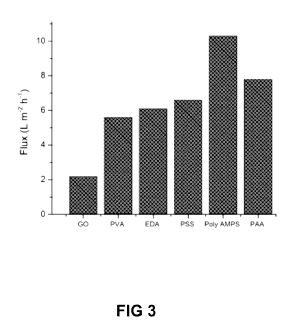
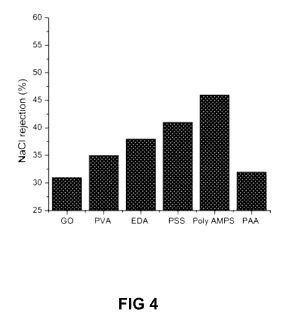
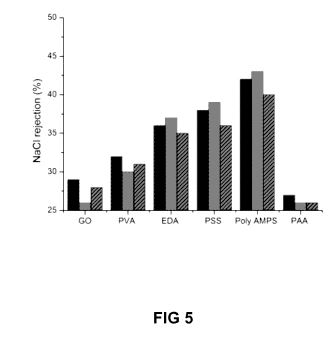
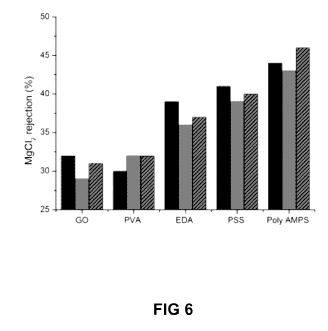
97% NaCl rejection; water flux 6-10 L m^-^2 h^-^1 bar^-^1 at 25 bar (vs ~2 L m^-^2 h^-^1 bar^-^1 for non-cross-linked GO membranes).
Experimental Evidence
Laboratory tests showed 97% rejection of NaCl and a water flux of 6-10 L m^-^2 h^-^1 bar^-^1 for cross-linked GO membranes at 25 bar pressure.
Replication Status
Demonstrated in laboratory experiments; no commercial scale deployment reported.
Limitations
- Scalable, cost-effective production of GO membranes
- Membrane fouling by organics, salts and biological material
- Long-term mechanical stability under continuous operation