Goal
Provide a pollution-free automobile engine that runs on tap water by generating hydrogen and oxygen in-situ, delivering greater power than a conventional gasoline engine.
Problem
Air pollution and greenhouse-gas emissions from gasoline-powered vehicles; need for an alternative, low-cost fuel source for cars.
Concept Summary
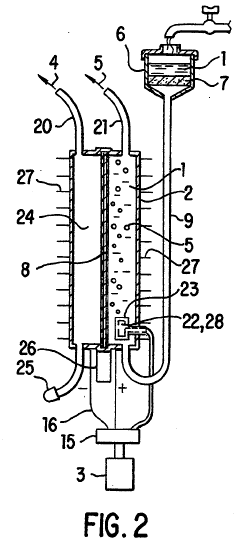
The Enerex system electrolyzes tap water inside a vehicle using a solid polyelectrolyte membrane sandwiched between electrodes. Water is fed from a tank into an electrolytic bath where the membrane vibrates (using vehicle motion) and is heated by an electronic element. The generated hydrogen is mixed with gasoline and fed to the engine, while the oxygen is vented into the cabin. The design claims three-fold power output compared with a standard gasoline engine and a reduction in nitrogen-dioxide emissions.
Principles
- Solid-state water electrolysis using a cation-exchange polymer film
- Vibrational activation of the electrolyte membrane
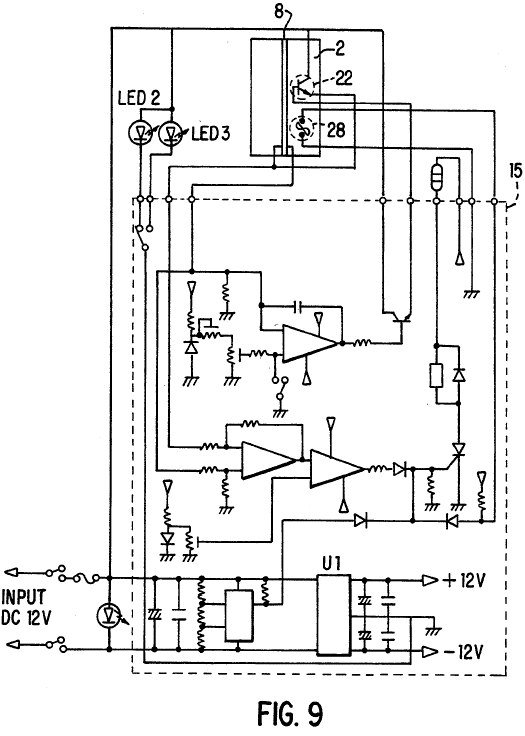
- In-situ heating of the electrolyte by an electronic resistor
- Mixing of generated hydrogen with gasoline for combustion
- Release of excess oxygen into the vehicle interior
Scientific Domains
Materials
- Solid polyelectrolyte (cation-exchange) film
- Metal plates and metal nets
- Ion-exchange resin layer
- Water (tap water)
- Battery (electrical power source)
Mechanisms of Action
- Electrolytic splitting of water into H_2 and O_2
- Vibration-enhanced gas bubble release
- Thermal assistance to improve electrolysis efficiency
- Combustion of a hydrogen-gasoline mixture
Energy Sources
Applications
- Automotive power generation
- On-board electricity production
- Emission reduction for cars, ships, airplanes
Claimed Performance
The Enerex engine can run on tap water and generate three times as much power as a standard gasoline engine while producing electricity for any purpose.
Experimental Evidence
The patent description provides design schematics, figures, and theoretical operation details but does not present quantitative performance data or independent testing results.
Limitations
- Reliance on a specialized solid polymer electrolyte membrane
- Need for vibration and heating mechanisms
- No publicly verified performance data
- Potential durability issues of the membrane under vehicle conditions
Red Flags
- Claims of three times the power of a gasoline engine without supporting data
- No independent replication or peer-reviewed testing reported
- Potential for over-optimistic performance expectations