Confidence
0.60
Practicability
0.30
Evidence
0.20
Fringe Score
0.90
Risk
0.40
TRL
3
Goal
To extract energy from ether gravitational space and convert it into heat, mechanical work, or electricity.
Problem
Lack of a practical free-energy source and the need for reaction-less propulsion.
Concept Summary
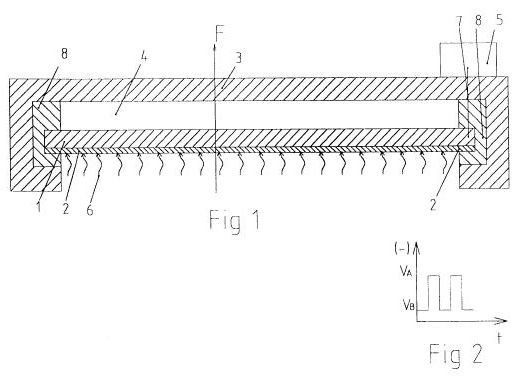
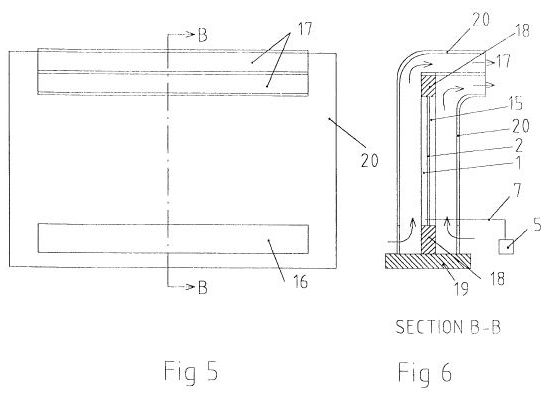
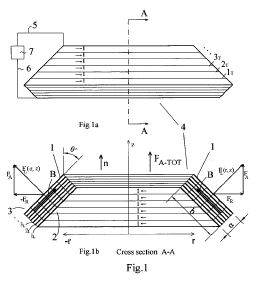
The invention proposes that oscillations of electron-proton couples in a hydrogen-laden metallic carrier absorb "ether gravitational space" (a form of vacuum energy). The absorbed energy is then converted via photon emission into heat, mechanical force, or electrical power. The process relies on a hypothesized difference in local time-flow (negative time) and on gradients of dielectric permittivity to produce reaction-less thrust.
Principles
- Negative time axis
- Vacuum (ether) energy extraction
- Time-reversal symmetry
- Dielectric permittivity gradient
- Photon/anti-photon pair production
Scientific Domains
Materials
- Hydrogenated carrier (metallic system with absorbed hydrogen)
- Dielectric materials with permittivity gradients
- REBCO superconducting tape (in related propulsion coil)
Mechanisms of Action
- Absorption of ether gravitational space via electron-proton oscillations in a hydrogenated carrier
- Conversion of absorbed energy to photons and then to heat, mechanical work, or electricity
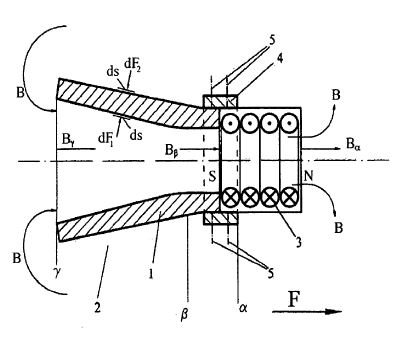
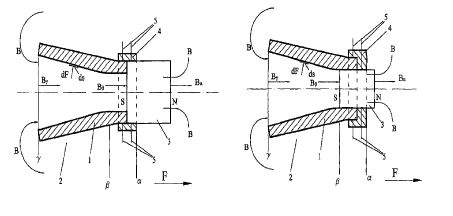
- Generation of reaction-less thrust through dielectric permittivity gradients
Energy Sources
Applications
- Free-energy generation
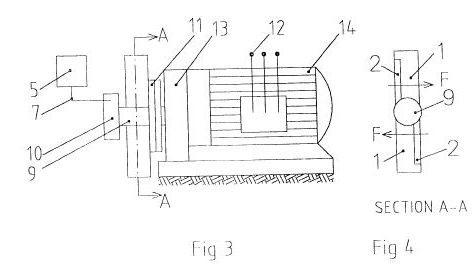
- Propulsion systems
- Heat generation for industrial processes
Claimed Performance
Over-unity energy output; reaction-less propulsion force; conversion of ether space into usable work.
Limitations
- No peer-reviewed experimental data provided
- Relies on unverified concepts of negative time and ether
- Implementation details are vague
Red Flags
- Claims of free energy and reaction-less thrust without independent verification
- Use of speculative physics (negative time, ether) not accepted by mainstream science
- Potential for commercial scams due to lack of reproducible data