Goal
To improve core symptoms of autism spectrum disorder by using low-dose antipurinergic therapy that modulates the cell danger response and metabolic dysfunction.
Problem
Core behavioral and metabolic symptoms of autism spectrum disorder (ASD) for which no approved drugs exist.
Concept Summary
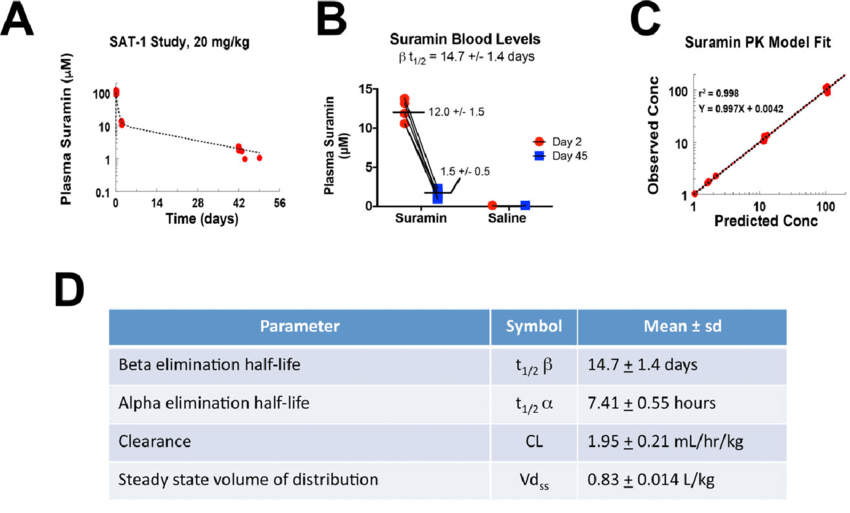
A single low-dose intravenous infusion of suramin, an old antipurinergic drug, was tested in a small randomized clinical trial (SAT-1). The trial reported dramatic but transient improvements in core ASD symptoms and metabolic markers, attributed to inhibition of extracellular ATP-mediated purinergic signaling and suppression of the cell danger response. The authors propose larger trials to confirm safety and efficacy.
Principles
- Antipurinergic therapy
- Purinergic signaling inhibition
- Cell danger response (CDR) modulation
- Metabolic syndrome correction
Scientific Domains
Materials
- Suramin
Mechanisms of Action
- Inhibits binding of extracellular ATP/eADP to purinergic receptors
- Reduces activation of the cell danger response
- Normalizes metabolic signaling pathways
- Provides a molecular "all-clear" safety signal
Applications
- Treatment of core symptoms of autism spectrum disorder
- Potential therapy for other chronic diseases linked to the cell danger response
Claimed Performance
A single low-dose suramin infusion produced dramatic but transient improvement of core autism symptoms and metabolic markers, with no serious side effects observed in the small trial.
Experimental Evidence
In the SAT-1 trial (10 subjects total, 5 receiving suramin), the suramin group showed significant improvements in core ASD symptoms compared with placebo, and a self-limited rash was the only observed adverse event.
Replication Status
No independent replication reported; only the initial small trial.
Limitations
- Very small sample size (10 subjects, 5 treated)
- Transient nature of observed improvements
- Suramin not approved for ASD; off-label use carries regulatory risk
- Potential side effects (rash, unknown long-term toxicity)
Red Flags
- Drug not FDA-approved for autism; off-label use discouraged
- Evidence based on a single, under-powered trial
- Potential for misuse by untrained personnel