Goal
Generate excess mechanical energy (over-unity) by extracting heat from ambient air using a self-sustaining compressed-air heat engine.
Problem
Provide a continuous power source without external fuel by harvesting ambient solar heat via compressed air.
Concept Summary
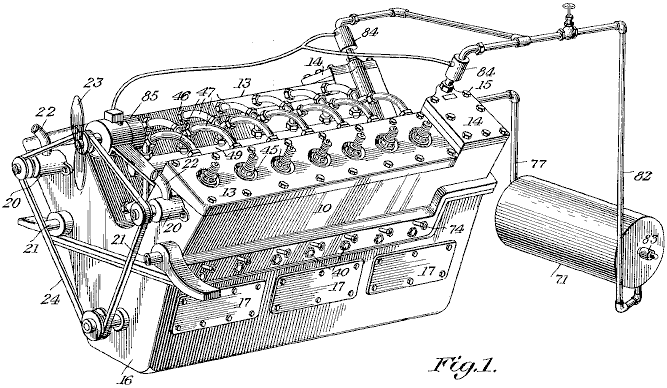
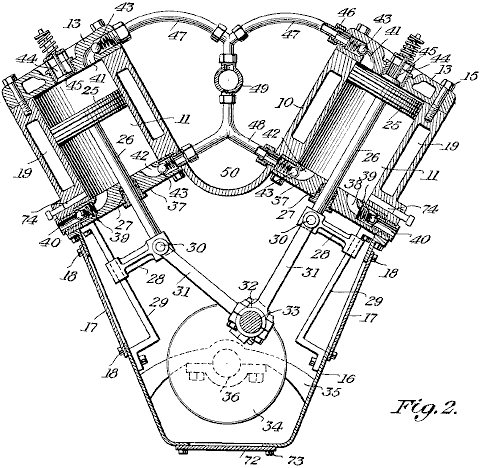
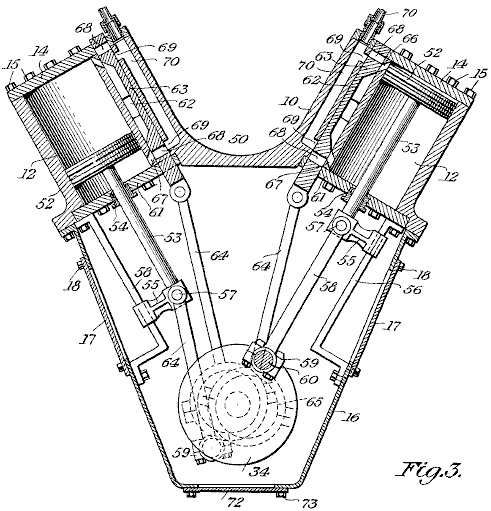
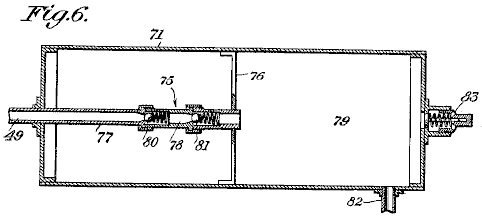
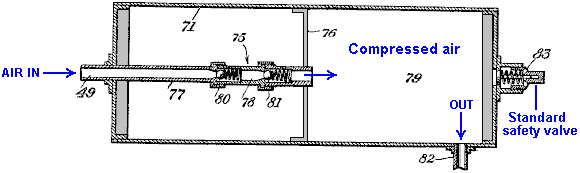
The engine uses a compressor that creates resonance (standing waves) in its discharge pipe, allowing compression to occur in the pipe and tank rather than in the compressor itself. Heat from the compression is retained in the high-pressure tank, and a series of check-valves and an equalizer pipe amplify pressure pulsations, enabling the tank to stay full while delivering mechanical work, effectively producing more work than the input energy.
Principles
- Resonance in compressor discharge pipe (standing wave compression)
- Heat exchange and retention from air compression
- Pressure equalization via check valves
- Self-sustaining air-pump cycle
Scientific Domains
Materials
- air
- steel (tank, piping)
- copper (valves)
- check valves
- rubber seals
Mechanisms of Action
- Resonance-induced compression
- Heat recovery from compression
- Standing-wave amplification
- Internal re-compression
Energy Sources
Applications
- Power generation
- Air conditioning
- Refrigeration
- Ventilation
Claimed Performance
Self-sustaining operation delivering ~45-48 kW continuous power; tank pressure amplified 8-12x the input; over-unity claimed.
Experimental Evidence
A machinist friend reported very good results with a prototype, though the device was not robust enough; a current open-source project claims to have tested all pieces and is building a demonstration engine.
Replication Status
No independent replication documented; only anecdotal reports and a single prototype builder.
Limitations
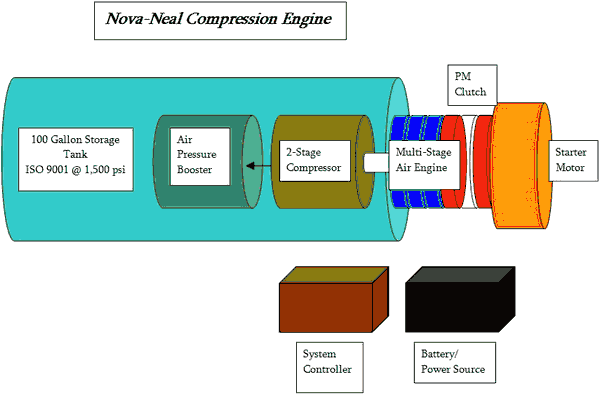
- Requires high-pressure (1100-1200 psi) tanks
- No peer-reviewed validation
- Potential safety hazards from high pressure
Red Flags
- Perpetual-motion / over-unity claim
- Lack of independent verification
- Potential for scam or exaggerated marketing