Goal
Provide a non-polluting urban vehicle that runs on stored compressed air, reducing reliance on fossil fuels and lowering emissions.
Problem
Urban air pollution and greenhouse-gas emissions from conventional gasoline-powered cars; limited range and high cost of electric vehicles.
Concept Summary
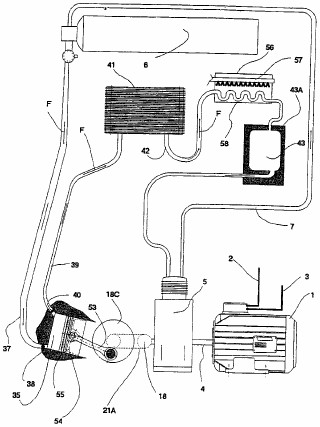
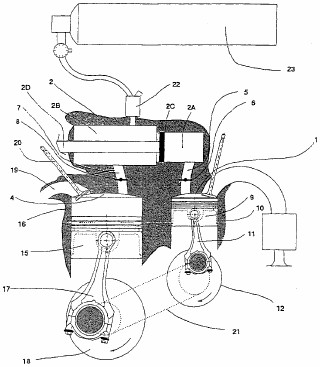
A city-size vehicle powered by a high-pressure (~=300 bar) compressed-air engine. The air is heated and expanded in a piston engine to drive the wheels. The tanks are recharged with electricity electric electric or or a using-charge at a tank-filling station. A hybrid version can switch to conventional fuels at higher speeds.
Principles
- Compressed-air energy storage
- Pneumatic (air) piston engine
- Heat exchange (heating cold compressed air before expansion)
- Recuperation of kinetic energy during braking
- Hybrid fuel switching (air <-> petrol/diesel/natural gas)
Scientific Domains
Materials
- carbon fiber
- glass fiber
- steel
- aluminum
Mechanisms of Action
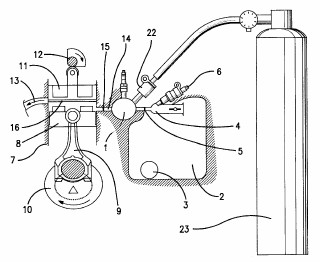
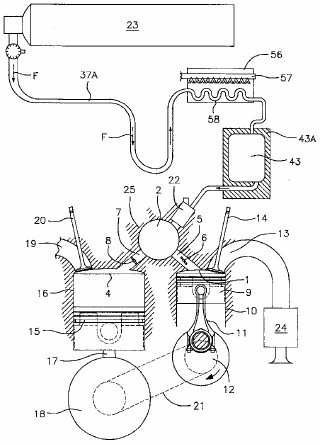
- Air is compressed to ~300 bar in carbon or glass-fibre tanks.
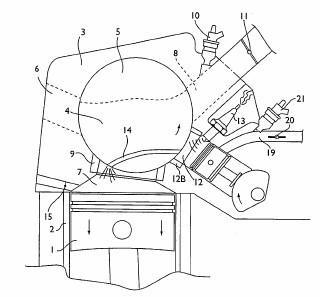
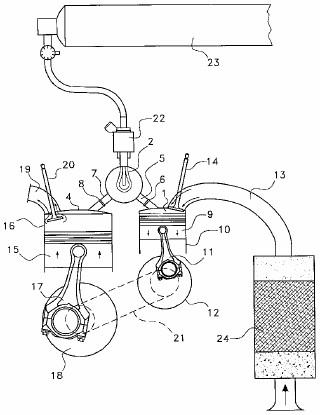
- Compressed air is heated and fed into a piston engine where it expands, producing mechanical work.
- The engine drives the vehicle's wheels directly or through a transmission.
- An electric compressor refills the tanks from a standard outlet; a high-pressure pump can refill in 2-3 minutes.
- Optional fuel injection takes over at speeds above ~60 km/h, with a built-in mini-compressor re-charging the air tanks during deceleration.
Energy Sources
Applications
- Urban passenger cars
- Taxis
- Delivery vans
- Pickup trucks
- Small municipal utility vehicles
Claimed Performance
Top speed ~110 km/h; range ~200 km using 300 L of 300 bar compressed air; runtime up to ~10 hours at low speed; refuel time 2-3 minutes at a high-pressure station; home recharge possible with electric compressor.
Experimental Evidence
Three prototype vehicles (taxi TOP, delivery van, pickup) built and road-tested in May 1998 in Brignoles, France; over 35 television programmes and several hundred newspaper/magazine articles covering the tests; ongoing pre-series production in France and South Africa.
Replication Status
Prototype vehicles have been built and road-tested; small-scale production facilities sold to investors; no independent third-party replication reported.
Limitations
- Low energy density of compressed air -> limited range
- Dependence on electricity for tank recharging
- Infrastructure for high-pressure air refueling not widely available
- Higher upfront cost compared with conventional cars
Red Flags
- Claims of "zero pollution" ignore emissions from electricity generation used to compress the air.
- Business model relies on selling turnkey factories to investors, raising concerns about financial viability.
- Limited independent testing; performance data comes mainly from the inventor's company.