Goal
Generate electrical power with net energy gain (over-unity) from a vacuum-tube based electron apparatus.
Problem
Need for clean, abundant energy sources that can produce more output than input.
Concept Summary
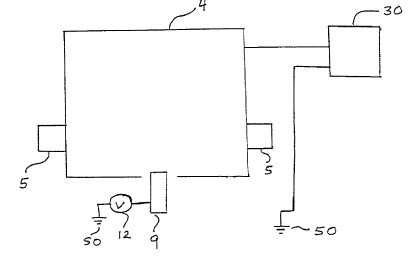
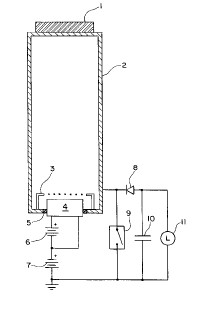
A vacuum-tube system in which a free-electron source (electron gun) injects electrons into an enclosing conductive surface. The surface is alternately isolated from ground and then grounded, allowing capacitive energy stored on the surface to be discharged to a load. The device may include a magnetic bottle to confine electrons and enhance charge accumulation, resulting in a claimed voltage gain and net power output.
Principles
- Free-electron emission
- Capacitive energy storage and discharge
- Vacuum tube operation
- Magnetic confinement (magnetic bottle)
Scientific Domains
Materials
- Metal cathode (electron gun)
- Conductive metal enclosure
- Capacitor plates/dielectric
Mechanisms of Action
- Electron gun emits a beam of free electrons into a conductive enclosure.
- The enclosure is charged by the incoming electrons while isolated from ground.
- When switched to ground, the stored charge is rapidly discharged through a circuit to a load.
- A magnetic bottle can be activated to improve electron confinement and increase charge density.
Energy Sources
Applications
- Electric power generation
Claimed Performance
1000 W output from 200 W input (~=5x over-unity).
Experimental Evidence
The author worked with Lawrence Nelson for one month and successfully replicated the invention under his supervision, documenting more energy output than input.
Replication Status
Replicated by NERL under supervision of the inventor.
Limitations
- Requires high-vacuum environment
- Scalability and long-term stability not demonstrated
- No peer-reviewed data
Red Flags
- Over-unity claim without independent verification
- Lack of published experimental data
- Potential classification as a fringe technology