Goal
To cure or induce remission of diabetes mellitus by oral administration of a plant-derived steroidal compound.
Problem
Diabetes mellitus (hyperglycemia) requiring lifelong insulin injections and diet management.
Concept Summary
Compounds isolated from the leaves of Vernonia amygdalina are formulated into an oral pharmaceutical composition. The steroidal molecules are claimed to enhance insulin sensitivity, promote beta-cell regeneration, and thereby cure diabetes without toxicity.
Detailed Description
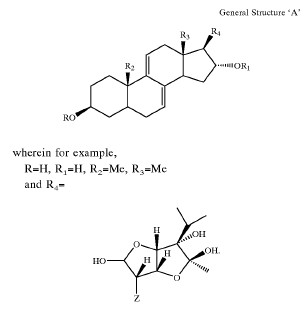
The invention (US Patent 6,531,461 / GB 2,378,652) discloses a class of steroidal compounds (general structure A) and their metal salts, isolated from Vernonia amygdalina leaves. The leaves are dried, ground, and extracted with a 1:1 water-ethanol mixture in a Soxhlet extractor. The crude extract is filtered and concentrated, then purified by chromatography to yield the active compounds. The compounds are administered orally (e.g., 100 mg three times daily) in capsule, tablet, or syrup form. Pre-clinical trials in hyperglycemic mammals showed restoration of insulin activity within six months; a human trial with 26 patients receiving the extract for six months reported remission of diabetes after three months and no required diet discipline. The composition may contain sodium, potassium, or lithium salts and carriers such as glucose syrup, starch, or CMC.
Principles
- Herbal extraction
- Steroidal chemistry
- Insulin sensitisation
- Beta-cell regeneration
Scientific Domains
Materials
- Vernonia amygdalina leaf
- Ethanol
- Water
- Sodium salt
- Potassium salt
- Lithium salt
- Glucose syrup
- Starch
- Carboxymethylcellulose (CMC)
- Alcohol solution
Mechanisms of Action
- Enhance insulin sensitivity
- Promote regeneration of pancreatic beta-cells
- Reduce blood glucose levels
Applications
- Treatment of type I and type II diabetes
- Oral antidiabetic medication
- Therapeutic regeneration of pancreatic beta-cells
Claimed Performance
Cure of diabetes mellitus; remission observed after three months of oral dosing; no known toxicity; restoration of full insulin activity within six months.
Experimental Evidence
A clinical trial with 26 hyperglycemic patients receiving 100 mg of the extract three times daily for six months showed that after the first month diet discipline was no longer required and after three months disease remission was observed. All volunteers were reported to have recovered and returned to normal life.
Replication Status
Clinical trial performed; no independent replication reported in the article.
Limitations
- Small patient sample size (31 subjects total)
- No peer-reviewed publication of trial data
- Potential variability in plant compound concentration
- Lack of long-term safety data
Red Flags
- Extraordinary claim of curing diabetes without insulin
- Absence of independent replication or peer-reviewed evidence
- Potential for unverified efficacy leading to false hope