Confidence
0.85
Practicability
0.60
Evidence
0.20
Fringe Score
0.10
Risk
0.10
TRL
6
Goal
Increase the propulsive power and efficiency of swim fins.
Problem
Low thrust and high drag of conventional swim fins reduce swimming efficiency.
Concept Summary
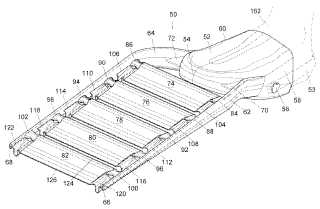
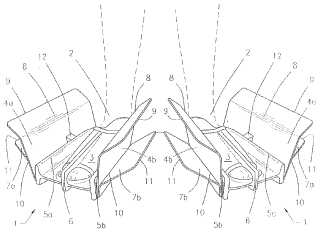
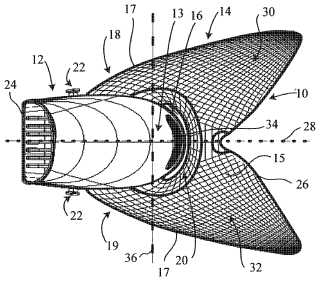
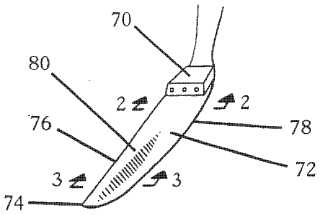
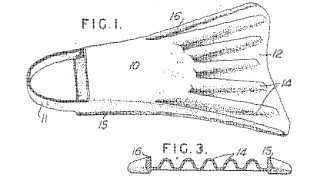
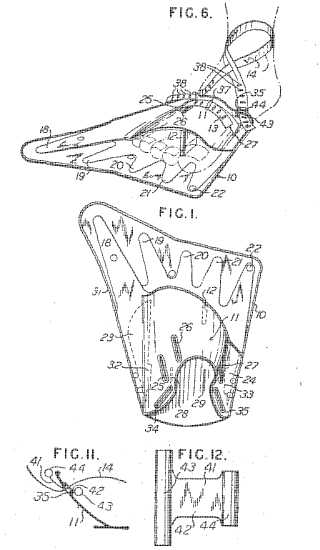
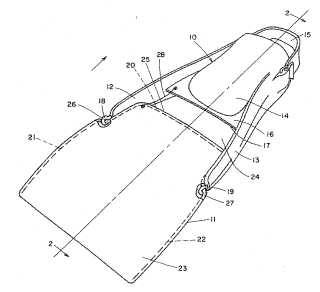
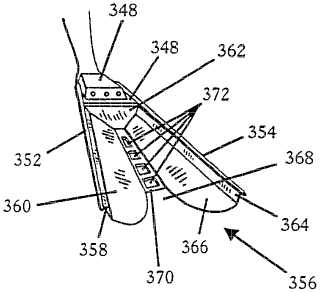
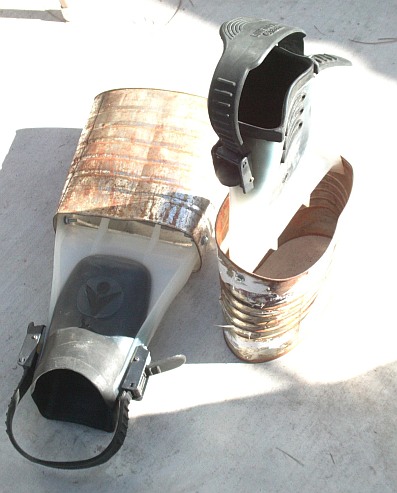
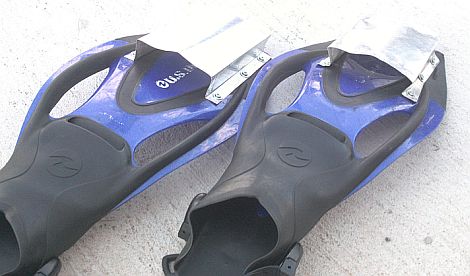
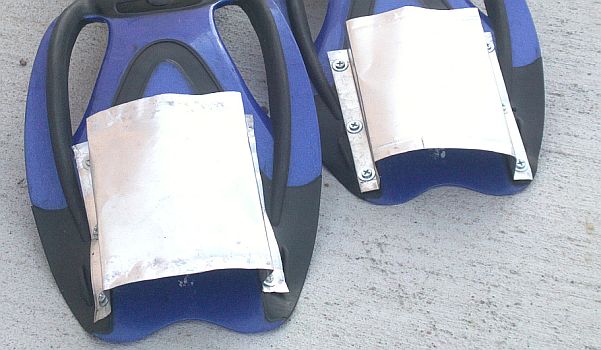
The invention adds high-aspect-ratio hydrofoil vanes to swim fins, mounted on flexible hinges and limited by flexible webs. The vanes can pivot to an optimal angle of attack during the kick stroke, increasing lift and reducing turbulence and drag. The system is produced by injection-molding a thermoplastic foot pocket with integrated flexible hinges and web members.
Principles
- Hydrodynamic lift generation
- Drag reduction
- Flexible hinge mechanics
- Pivot resistance for optimal angle of attack
- Injection molding manufacturing
Scientific Domains
Materials
- Polyvinyl chloride (PVC)
- Polyethylene
- Metal strengthening ribs
- Thermo-plastic material
Mechanisms of Action
- Pivoting hydrofoil vanes create lift during the kick
- Flexible membranes limit vane rotation to maintain optimal attack angle
- Reduced turbulence by shaping vanes and adding anhedral contours
- Living hinges provide resistance that increases with kicking force
Applications
- Recreational swimming
- Competitive swimming
- Scuba diving
- Underwater propulsion
Claimed Performance
Propulsive power increase of 15 %-20 % compared with conventional fins.
Limitations
- Requires precise injection-molding of flexible hinges
- Potential increase in manufacturing cost
- Performance gain limited to 15-20 % increase open_questions open_and
- web long swimming over time
- Optimal hinge stiffness for different kick intensities
- Effect on swimmer fatigue