Goal
Create a durable, super-hydrophobic coating that makes virtually any surface repel water, oils and other liquids.
Problem
Water damage, corrosion, ice buildup, dirt, bacterial growth and oil staining on fabrics, metals, plastics, wood and other everyday objects.
Concept Summary
NeverWet is a two-step spray-on coating that combines a silicone-based formulation with nano-scale particles and an acrylic polymer binder. The nano-roughness and low-surface-energy chemistry produce contact angles of 160-175 deg , causing water and most liquids to bead and roll off the surface.
Detailed Description
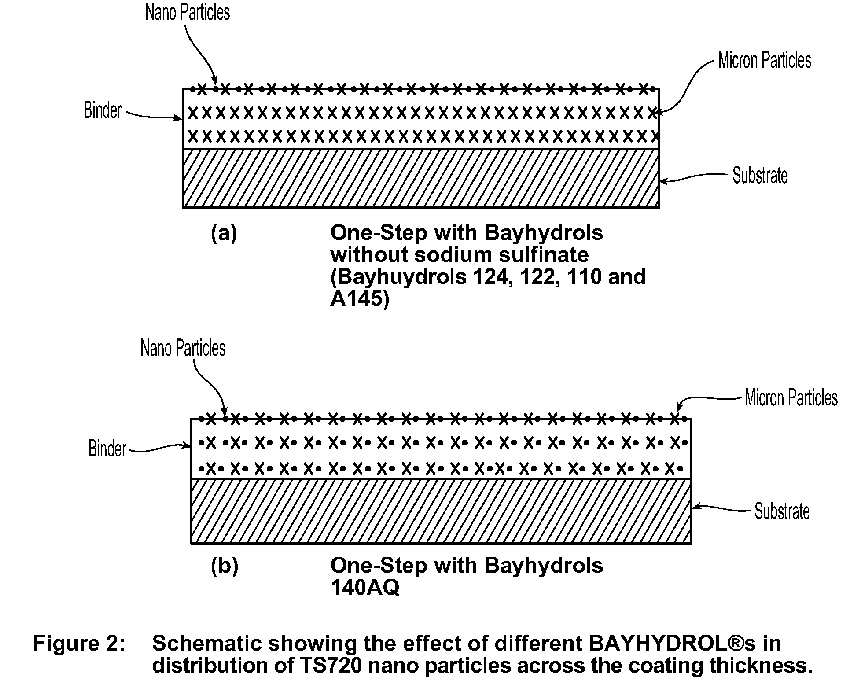
The coating is applied in two layers, each drying in about 30 minutes. The first layer forms a chemically hydrophobic base; the second layer adds nano-particles (<100 nm) that create a micro-rough texture. This texture mimics the lotus-leaf effect, dramatically increasing the water contact angle. The product is sold in 10-15 ft^2 cans for about $20 and has been demonstrated on fabrics, shoes, iPhones, metal, wood and plastics. Claims include sustained performance after >1 year underwater and resistance to heavy oils. A clear-drying formulation for glass is under development.
Principles
- Low surface energy chemistry (silicone-based)
- Nanostructured surface roughness
- High water contact angle (>150 deg )
- Oleophobicity through nano-particle dispersion
Scientific Domains
Materials
- Silicon-based compounds
- Acrylic polymer binder
- Nanoparticles (<100 nm)
- Silicone resin
Mechanisms of Action
- Creates micro-scale texture that traps air pockets
- Reduces liquid-solid adhesion, leading to high contact angles
- Repels water, oil and many other liquids
Applications
- Waterproofing electronics (e.g., smartphones)
- Corrosion protection for metal parts
- Ice prevention on outdoor surfaces
- Oil-repellent packaging
- Clean-room and medical surface protection
Claimed Performance
Contact angle 160-175 deg ; remains dry after >1 year underwater; waterproof iPhone submerged 30 min without failure; oil-repellent on heavy oils.
Experimental Evidence
Demonstration videos showing water being off coated surfaces, iPhone submerged for 30 min, and claims of seawater exposure for over a year.
Replication Status
Technology licensed to other manufacturers (four licenses sold) and commercialized in consumer cans.
Limitations
- Causes frosted appearance on glass (clear-drying version pending)
- Performance may vary with surface preparation