Goal
Generate more electrical energy than is supplied, providing cheap, abundant power.
Problem
High cost and limited availability of conventional energy sources; need for a self-sustaining power generator.
Concept Summary
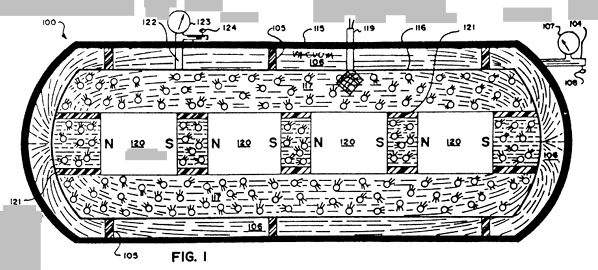
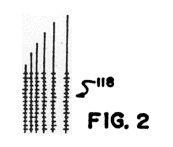
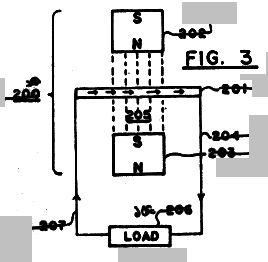
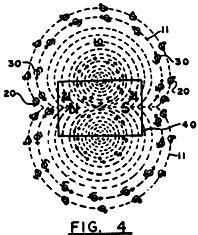
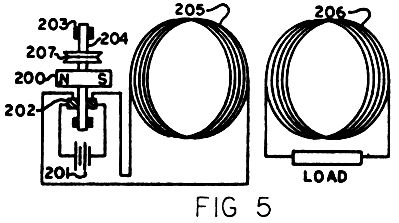
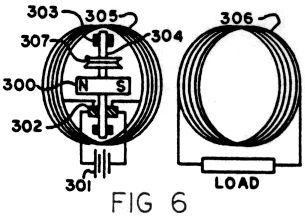
Newman's machine uses a long copper coil carrying pulsed electrical current to create a magnetic field described as shells of gyroscopic particles. These particles supposedly expand, collapse and collide, converting mass (via E=mc^2) into usable electrical energy that exits the wire at right angles.
Principles
- Gyroscopic particle theory
- Magnetic field as shells of rotating particles
- Matter-to-energy conversion via E=mc^2
- Pulsed magnetic field expansion and collapse
Scientific Domains
Materials
- Copper wire
- Copper sheath
Mechanisms of Action
- Pulsed electric current creates a magnetic field of gyroscopic particles
- Particles expand outward, then collapse back into the wire
- Collisions cause particles to bounce off at right angles, emitting electrical energy
Energy Sources
Applications
- Power generation
- Water desalination
- Transportation
Claimed Performance
Produces more energy than it consumes; claimed to run indefinitely by converting matter to energy.
Experimental Evidence
Newman claimed public demonstrations in the Louisiana Superdome and Atlanta, and a special master report stating the machine performed as claimed. The U.S. National Bureau of Standards (NBS) later reported the device behaved consistently with established physics and did not produce net energy.
Replication Status
No independent, peer-reviewed replication; only anecdotal demonstrations and a disputed NBS test.
Limitations
- No reproducible, independent testing
- Claims violate conservation of energy
- Potential legal and regulatory barriers
Red Flags
- Perpetual motion claim
- Government denial and classification as fraud
- Lack of peer-reviewed data