Goal
Provide a lightweight, portable, and quickly erectable mast for a variety of uses such as signaling, lighting, observation, and rescue.
Problem
Need for strong yet lightweight masts that can be transported easily, assembled rapidly, and used in diverse environments (fire, military, rescue, etc.).
Concept Summary
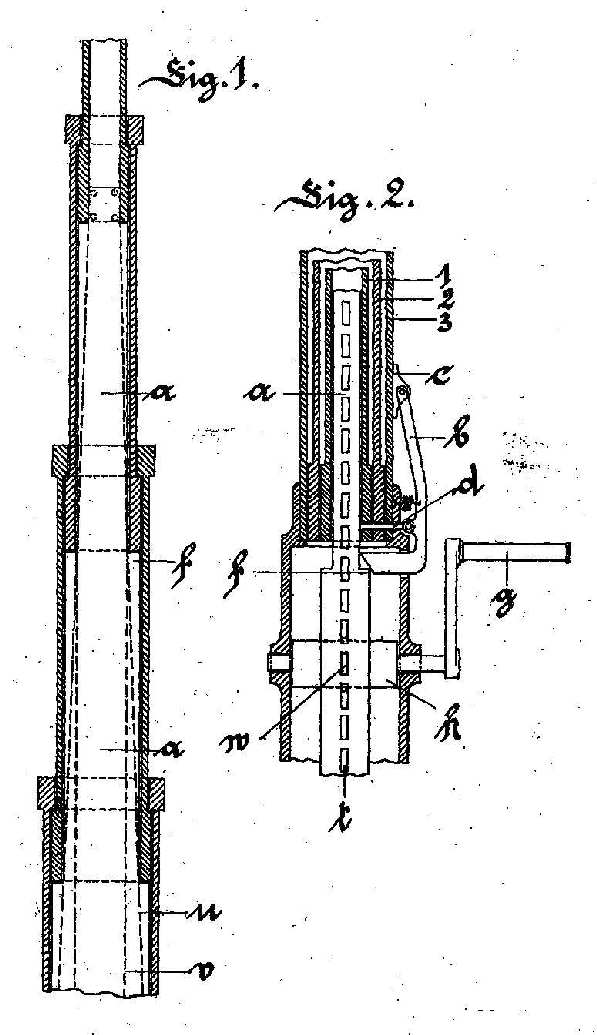
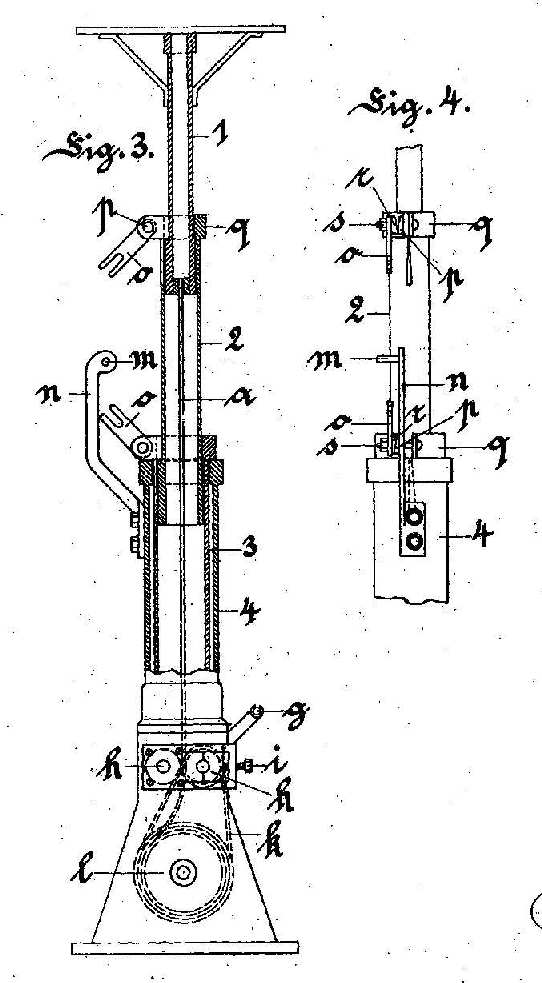
A tubular mast formed from longitudinal steel bands tensioned together by transverse plates or clamps. The bands are wound on drums and driven by cranks or motors, allowing the mast to be extended or collapsed in sections. Portable versions use spring drums and wheels; larger versions use hoisting devices. The design emphasizes strength, low weight, and rapid deployment.
Principles
- Modular tubular construction using steel bands
- Tension-based rigidity of the band
- Incremental extension via drums, cranks, or motor-driven hoisting
- Automatic locking of sections with clamps, pawls, or pins
Scientific Domains
Materials
- Steel
Mechanisms of Action
- Band tension creates a rigid tube
- Drums wind/unwind the band to raise or lower sections
- Clamps or pawls lock each section in place once extended
- Rotary or linear cranks provide manual or motor power
Energy Sources
Applications
- Signal and semaphore masts
- Searchlight and lamp supports
- Antenna for wireless telegraphy
- Rescue and fire-department equipment
- Military reconnaissance and communications
- Temporary observation posts
Claimed Performance
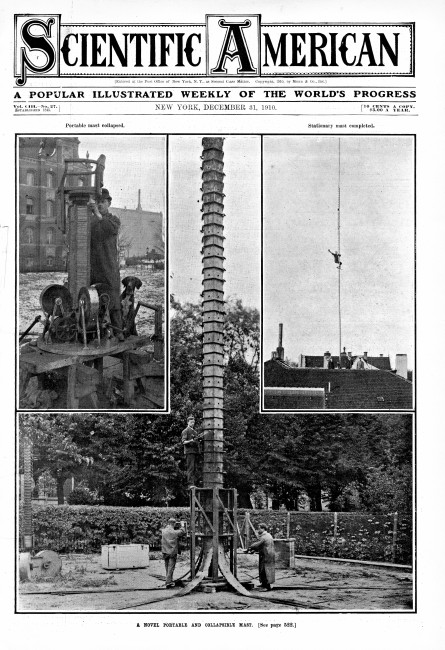
Portable masts 6-130 ft tall can be erected in a few minutes; a 100-ft stationary mast can be raised in about four hours. The structure is strong, lightweight, and can support loads such as searchlights, antennas, and rescue equipment.
Experimental Evidence
Prototypes were built and demonstrated in the 1910 Scientific American article, showing erection times, height ranges, and various applications.
Replication Status
No explicit reports of independent replication; the invention was offered for rent by manufacturers.
Limitations
- Manual operation required for many sizes
- Load capacity limited by steel band strength and clamp design
- Complexity of assembling transverse plates or clamps