Goal
Convert sunlight into chemical fuel (hydrogen) by mimicking photosynthesis.
Problem
Need for a cheap, clean, renewable energy source and a method to store solar energy for use when the sun is not shining.
Concept Summary
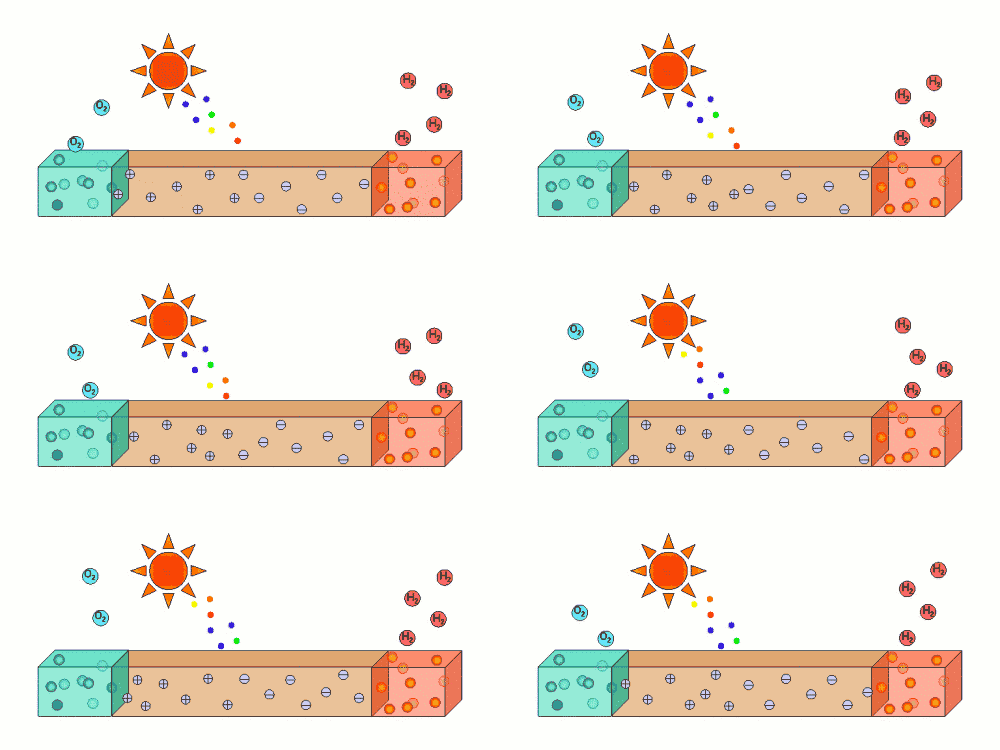
A molecular photocatalyst based on cobalt-phosphate (and earlier rhodium compounds) absorbs sunlight and catalyzes the splitting of water (or hydrohalic acid) into hydrogen and oxygen gases, providing a solar-driven fuel generation cycle.
Principles
- Photochemistry
- Catalysis
- Solar energy conversion
- Molecular inorganicysis
Scientific Domains
Materials
- cobalt
- phosphate
- platinum
- rhodium
- hydrochloric acid
- water
Mechanisms of Action
- Photon absorption by the catalyst
- Electron transfer to water/hydrohalic acid
- Bond cleavage to generate H_2 and O_2 (or halogen)
- Self-assembly of catalyst film under applied voltage
Energy Sources
Applications
- solar-driven hydrogen fuel production
- energy storage for off-grid or nighttime use
- fuel-cell power generation
Claimed Performance
Operates at room temperature, neutral pH; described as a highly efficient and inexpensive process for solar-driven water splitting.
Experimental Evidence
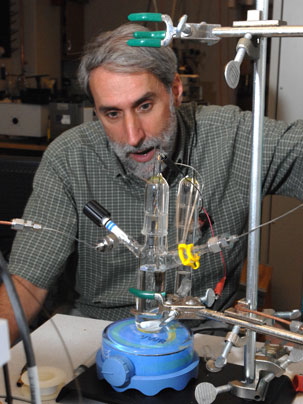
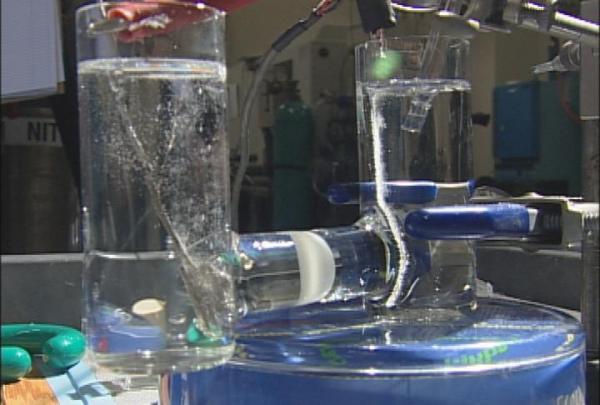
Reported in the August 31 2001 issue of *Science* and US Patent 6,863,781; laboratory demonstrations of hydrogen generation from hydrohalic acid and later water splitting using cobalt-phosphate catalyst.
Limitations
- Catalyst stability over long periods
- Dependence on expensive platinum for hydrogen evolution
- Scaling up from laboratory to industrial scale
- Integration with photovoltaic systems not yet demonstrated