Goal
Generate a clean, stable hydrogen-oxygen fuel from water that can be stored and used in engines, torches and power plants.
Problem
Dependence on petroleum fuels, difficulty storing pure hydrogen, safety hazards of conventional oxy-hydrogen mixtures.
Concept Summary
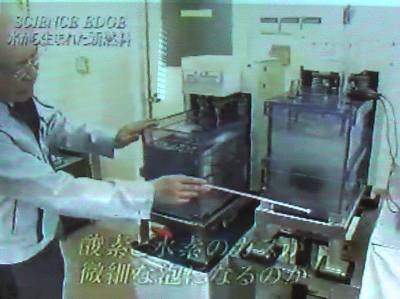
Water is subjected to low-frequency mechanical vibrations that break surface tension, producing nanobubble-laden water. Electrolysis of this "broken-surface-tension" water yields a stable H_2-O_2 nanobubble gas (OHMASA-GAS) containing hydrogen, oxygen, atomic hydrogen and traces of deuterium. The gas does not explode under pressure, liquefies at -178 deg C, burns at ~700 deg C and can vaporize tungsten. It is claimed to run engines and torches cleanly, emitting only water vapor.
Principles
- Low-frequency vibrational agitation to reduce water surface tension
- Electrolysis of nanobubble-laden water
- Formation of stable H_2-O_2 nanobubble clusters
Scientific Domains
Materials
- Water
- Hydrogen
- Oxygen
- Deuterium (trace)
Mechanisms of Action
- Electrolysis
- Vibrational cavitation
- Nanobubble formation and stabilization
Energy Sources
Applications
- High-energy fuel cells
- Large-scale power plants (including gas turbines)
- Aircraft and marine propulsion
- Welding torches
- Alternative fuel for internal-combustion engines
Claimed Performance
Gas stable for >2 years in pressurized cylinders; liquefies at -178 deg C; burns at ~700 deg C; vaporizes tungsten in ~1 s at 220 deg C; powers a motorbike and a small engine; claimed high-energy density comparable to Brown's gas.
Experimental Evidence
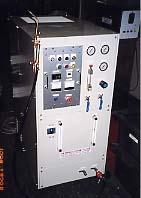
Video demonstrations of a motorbike running on OHMASA-GAS, tungsten vaporization, and a small engine test (July 2009). No peer-reviewed data provided.
Limitations
- No independent peer-reviewed validation
- Exact molecular structure not disclosed
- Scalability and economic viability not demonstrated
Red Flags
- Claims of zero-point energy contribution
- Reliance on anecdotal video evidence
- Lack of reproducible, independently verified data