Goal
Kill cancer cells without harming healthy cells using oleocanthal
Problem
Cancer treatment - selective destruction of tumor cells
Concept Summary
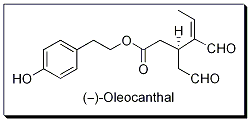
Oleocanthal, a phenolic compound from extra-virgin olive oil, punctures lysosomal vesicles in cancer cells, releasing enzymes that cause rapid cell death while sparing normal cells. A patented chemical process enriches oleocanthal extracts to >=30 % (up to >90 % purity) using bisulfite complex formation, selective precipitation and solvent extraction.
Detailed Description
Laboratory studies showed that applying oleocanthal to human cancer cell lines caused cell death within 30-60 minutes by rupturing lysosomal vesicles, leading to uncontrolled enzyme activity. Healthy cells were only temporarily halted in their cycle. The invention describes a multi-step extraction and enrichment method: (1) prepare an olive-oil extract containing oleocanthal; (2) form a bisulfite adduct by mixing the extract with sodium bisulfite (or other alkali/alkaline-earth metal bisulfites) to bind aldehydic components; (3) remove unreacted derivatives via liquid-liquid extraction; (4) deprotect the bisulfite adduct in acidic, basic or silylating conditions (e.g., chlorotrimethylsilane) to release pure oleocanthal; (5) optionally precipitate the bisulfite complex before deprotection to increase purity; (6) final solvent washes (hexane, dichloromethane, ethyl acetate, methanol, ethanol, acetone, etc.) and evaporation yield a dry extract with >30 % oleocanthal, potentially >90 % purity. The process can use hydrocarbon solvents (hexane, cyclohexane, heptane) and water-alcohol mixtures (methanol, ethanol, isopropanol) for phase separation.
Principles
- Lysosomal membrane rupture
- Enzyme-mediated cell death
- Bisulfite adduct chemistry
- Selective precipitation
- Solvent extraction
Scientific Domains
Materials
- Oleocanthal
- Sodium bisulfite
- Methanol
- Water
- Ethanol
- Hexane
- Cyclohexane
- Dichloromethane
- Acetonitrile
- Acetone
- Ethyl acetate
- Chlorotrimethylsilane
- Alkyl acetates
- Ethers
- Ketones
Mechanisms of Action
- Rupture of lysosomal vesicles in cancer cells
- Release of lysosomal enzymes causing necrosis/apoptosis
- Bisulfite complex formation to isolate oleocanthal
Applications
- Cancer therapy
- Nutraceutical supplements
- Functional foods
Claimed Performance
Extract containing at least 30 % oleocanthal by weight, with optional purity >90 % after selective precipitation; cancer cells die within 30-60 minutes in vitro.
Experimental Evidence
In vitro study reported cancer cell death within 30-60 minutes after oleocanthal exposure; patent examples describe extraction yields of 30 %-90 % oleocanthal purity.
Limitations
- Very low natural oleocanthal concentration in olive oil (0.002-0.02 % w/w)
- Need for animal and clinical studies to confirm in-vivo efficacy
- Complex multi-step extraction may be costly at scale