Goal
Make a two-stroke gasoline engine behave like a diesel by reducing NOx emissions while preserving performance.
Problem
High NOx emissions from two-stroke engines caused by oxygen-rich exhaust that deactivates reduction catalysts.
Concept Summary
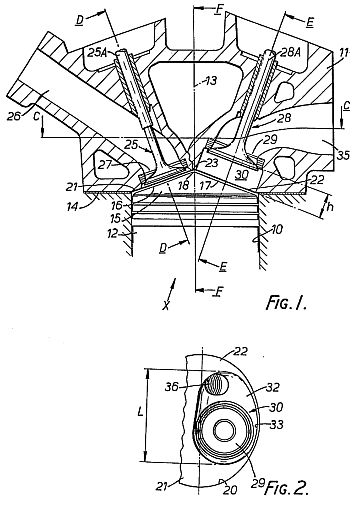
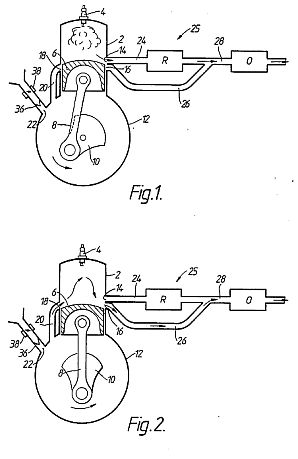
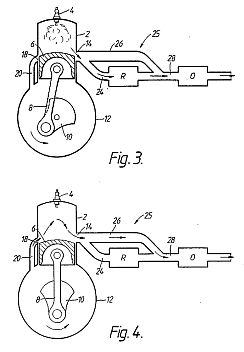
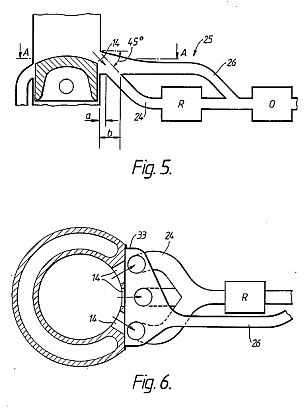
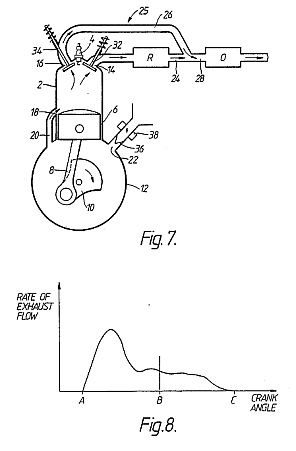
The invention routes the initial high-pressure exhaust surge through a reduction catalyst (NOx reducer) before atmospheric oxygen enters the exhaust stream, then directs the later, oxygen-richer exhaust around the reduction catalyst and through an oxidation catalyst. Two parallel exhaust flow paths with different flow resistances and timed exhaust-port opening achieve this sequencing.
Principles
- Catalytic reduction of NOx
- Selective oxidation of unburnt hydrocarbons
- Flow-path resistance control
- Timed exhaust-port opening
- Parallel exhaust routing
Scientific Domains
Materials
- Porous ceramic or metal substrate
- Rhodium coating (reduction catalyst)
- Platinum or palladium coating (oxidation catalyst)
- Metallic exhaust manifold
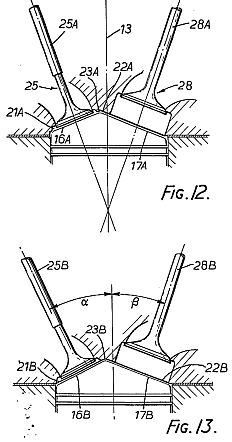
- Piston crown (chamfered or domed)
Mechanisms of Action
- Reduction catalyst (e.g., rhodium-coated ceramic) reduces NOx in oxygen-poor exhaust surge
- Oxidation catalyst (e.g., platinum/palladium-coated ceramic) oxidizes unburnt fuel in later exhaust
- Higher flow resistance of reduction-catalyst path forces most later exhaust through oxidation path
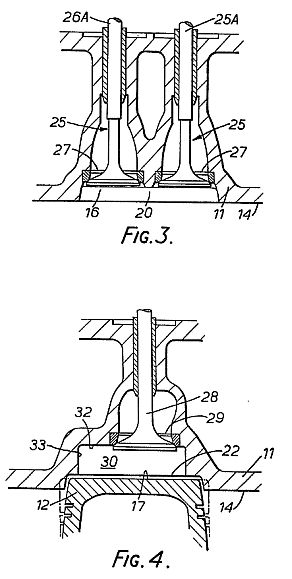
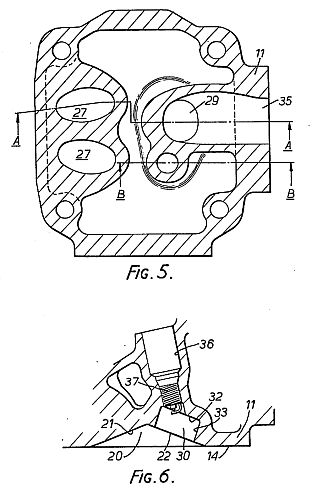
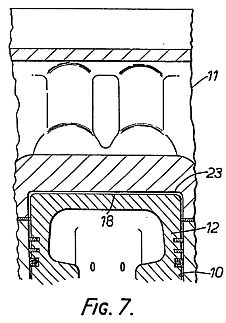
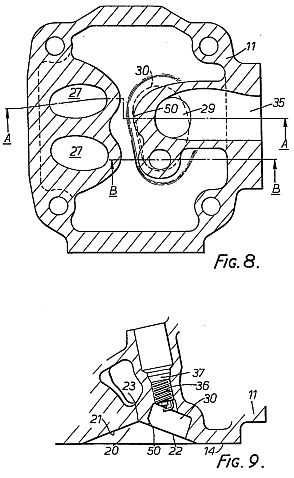
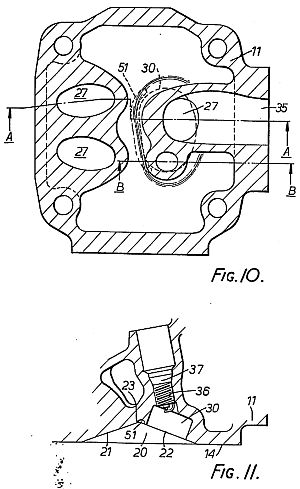
- Exhaust-port geometry and valve timing control the sequence of gas flow
Applications
- Emission control for two-stroke motorcycles
- Small engines (e.g., chainsaws, outboard motors)
- Portable generators
Claimed Performance
The system enables the engine's exhaust gases to meet the desired emission-control standard for NOx reduction.
Experimental Evidence
Qualitative observation that, in practice, a sufficient proportion of the exhaust volume passes through the reduction catalyst to achieve the required emission standard.
Limitations
- Requires precise timing of exhaust-port opening or additional valves
- Complex exhaust manifold with parallel flow paths
- Potential increase in manufacturing cost and maintenance