Goal
Produce hydrogen fuel on demand from salt water for clean energy applications.
Problem
Dependence on fossil fuels, air and water pollution, and the need for a clean, renewable fuel source.
Concept Summary
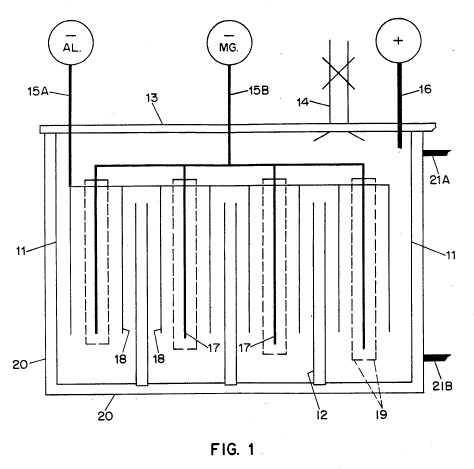
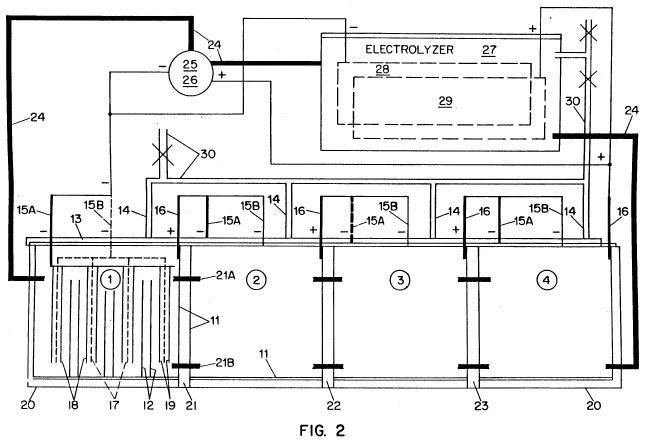
The Pacheco Generator combines three simple chemical principles: (a) the use of active metals (such as aluminum and magnesium) to react with water and release hydrogen, (b) the galvanic potential between two dissimilar metals to generate an electrical current, and (c) the use of that current to electrolyze water, thereby producing additional hydrogen. The device is claimed to generate hydrogen continuously from salt water without external power.
Detailed Description
In a sealed glass vessel containing salt water, strips of active metal (aluminum or magnesium) are immersed. The metal reacts with the water, producing hydrogen gas and a galvanic voltage due to the differing electrochemical potentials of the metals used. This voltage drives a small electrolysis cell, further splitting water into hydrogen and oxygen, increasing the hydrogen output. The generated hydrogen can be fed directly to burners, internal-combustion engines, or fuel-cell-type loads. Demonstrations reported include boiling water, running a motorcycle, powering a 26-foot boat for nine hours, and operating a 3-hp alternator. The system is said to produce electricity and thermal energy as by-products of the reaction.
Principles
- Active metal corrosion producing hydrogen
- Galvanic cell voltage between dissimilar metals
- Electrolysis of water using generated voltage
Scientific Domains
Materials
- Aluminum
- Magnesium
- Salt water (electrolyte)
- Metal electrodes
Mechanisms of Action
- Metal-water chemical reaction
- Galvanic electricity generation
- Water electrolysis
Energy Sources
Applications
- Portable hydrogen fuel for vehicles
- On-site hydrogen generation for power tools
- Small-scale electricity generation
Claimed Performance
Powered a 26-foot power boat for nine hours using seawater; boiled water; ran a motorcycle; operated a 3-hp alternator; produced on-demand hydrogen for burners and a lawn-mower engine (the latter choked due to excess fuel).
Experimental Evidence
Demonstrated at the Green Energy Conference (Canada), International Hydrogen Energy Conference (Hawaii), a 9-hour boat run (1974), 60 Minutes TV segment (1980), and passed tests at New Jersey Gollob Analytical Service Labs (1973, 1979). Independent analysis by Nan Waters (Aesop Institute) concluded the device should work as described.
Replication Status
Tested and passed at New Jersey Gollob Analytical Service Labs (1973, 1979); multiple public demonstrations reported, but no independent commercial replication documented.
Limitations
- High cost and consumption of aluminum/magnesium metals
- No quantitative efficiency data provided
- Scalability and long-term durability not demonstrated
- Safety concerns related to hydrogen handling
Red Flags
- Claims of "inexhaustible" fuel despite metal consumption
- Lack of peer-reviewed publications or independent third-party verification
- Anecdotal evidence and reliance on media demonstrations
- High metal cost cited as a reason for patent abandonment