Goal
Provide low-cost, biologically based pest control in wastewater/compost while simultaneously producing valuable cannabinoids.
Problem
Harmful insects, bacteria, fungi and other pests in sewage, wastewater, compost piles and disaster-site sludge; need for biodegradable, low-impact pest control and rapid toxin remediation.
Concept Summary
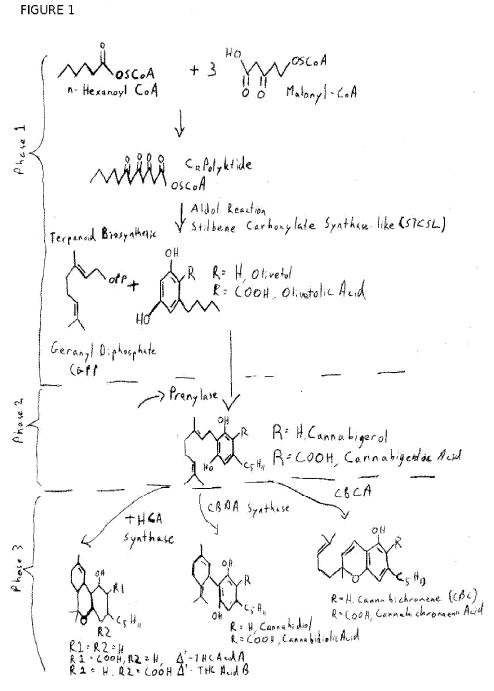
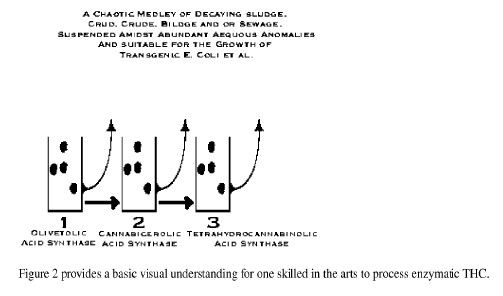
The invention uses transgenic microbial or plant vectors (e.g., engineered E. coli, tobacco root hairs) that express a suite of enzymes to synthesize cannabinoid acids (THCA, CBGA, CBMA, etc.). These cannabinoids act as insect repellents, bactericides and fungicides. The vectors are equipped with bioluminescent/off-switch proteins for controllable expression. The system can be deployed in floating root-embedded platforms within wastewater, converting toxic sludge into enriched compost and producing cannabinoids that can be harvested or thermally converted to THC for neuroprotection.
Detailed Description
The patent describes a modular, extensible genetic platform comprising several transgenic enzymes (TSCSL, TOAP, TCAs, TCBAs, TTAs, TCBMs) that together synthesize the full cannabinoid pathway from olivetolic acid to THC. Vectors are engineered to be motile in liquid media, allowing them to disperse throughout sewage or bilge water. A bioluminescent reporter and lethal "off-switch" enzymes provide containment and monitoring. Floating systems with root structures support the vectors, enabling continuous conversion of waste into nutrients and cannabinoids. In emergency scenarios, heat (sunlight or flame) can decarboxylate THCA to THC, which is claimed to offer neuroprotective effects.
Principles
- Genetic engineering
- Enzymatic catalysis
- Bioluminescent control switches
- Bioremediation
- Motile microbial vectors
Scientific Domains
Materials
- E. coli (engineered strain)
- Tobacco root hair tissue
- Olivetolic acid
- THCA, CBGA, CBMA, CBG, CBD
- Luciferase or other bioluminescent proteins
- Nucleic acids (DNA constructs)
- Enzymes TSCSL, TOAP, TCAs, TCBAs, TTAs, TCBMs
Mechanisms of Action
- Transgenic microbes produce cannabinoid acids that act as insect repellent, bactericide, and fungicide
- Bioluminescent proteins signal activity and enable off-switch control
- Motile vectors disperse enzymatic activity throughout liquid waste
- Thermal decarboxylation converts THCA to THC for neuroprotection
Energy Sources
Applications
- Wastewater and sewage treatment
- Disaster-site sanitation
- Biological pest control
- Medicinal THC production
Claimed Performance
The system can produce several tons of THC within two to three days and provide rapid, low-cost pestilence control in contaminated water and compost environments.
Limitations
- Requires advanced genetic engineering expertise
- Regulatory barriers for release of transgenic organisms
- Potential ecological impact of GMO spread
- Scalability and yield consistency not demonstrated
Red Flags
- Use of THC as a repellent may conflict with drug regulations
- Potential uncontrolled spread of genetically modified microbes
- Claims of rapid, high-volume THC production lack supporting data