Goal
To collect electrical energy from the atmosphere (ether) and provide usable electric power without conventional generators.
Problem
Dependence on conventional power generation and the desire for a free, ambient source of electricity.
Concept Summary
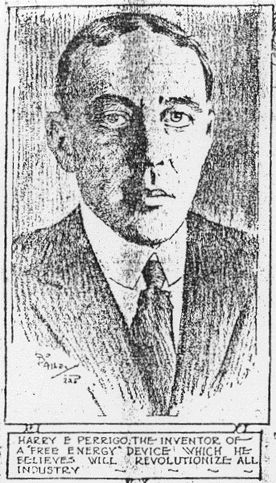
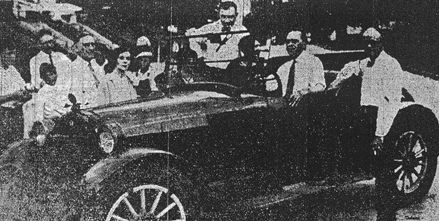
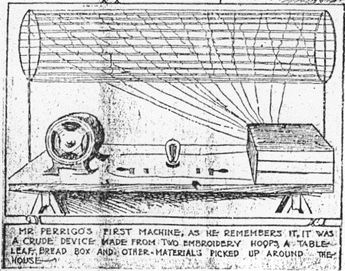
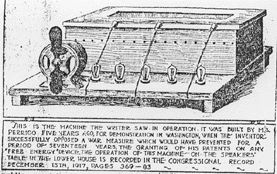
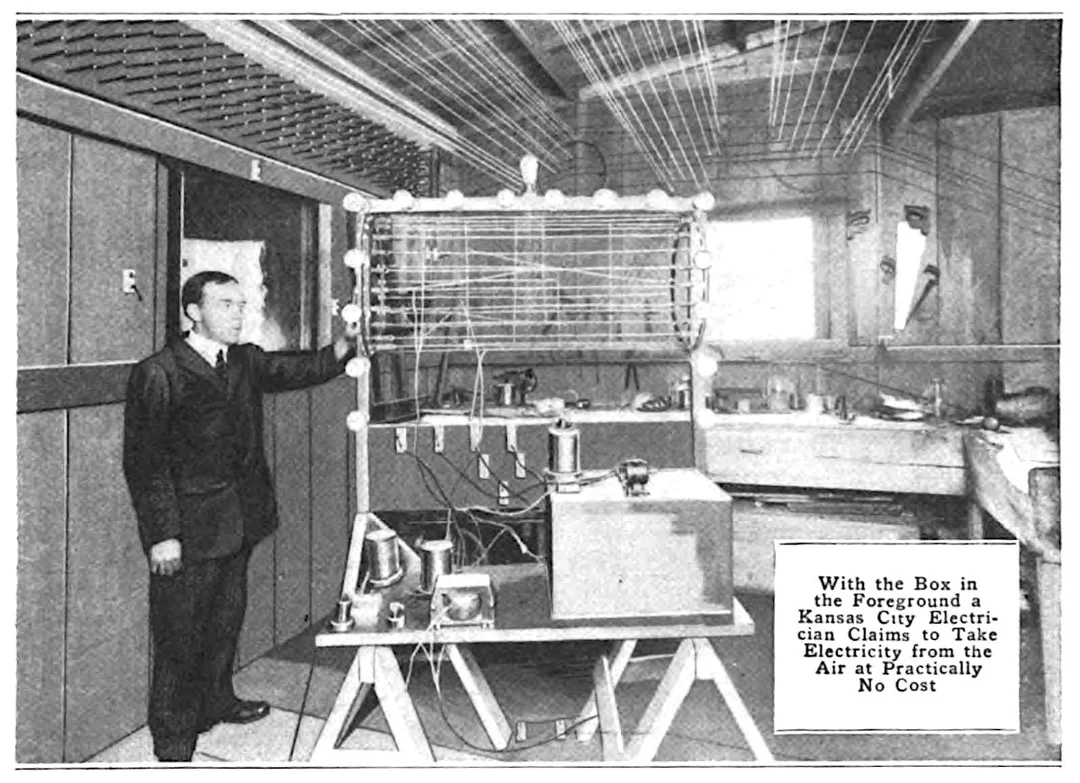
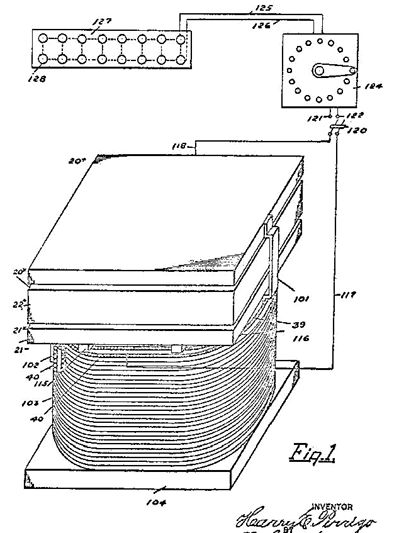
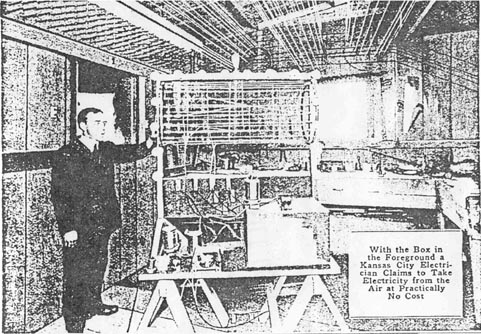
Perrigo claimed to have built a device that harvests ambient electromagnetic radiation from the atmosphere (the so-called ether) using a specially arranged antenna of nails and fine wire, stores the collected charge in a pair of accumulator plates with protruding knobs and coils, and then steps the voltage up with a transformer to supply usable electricity. Demonstrations were reported of lighting houses, powering a car, and operating a handheld unit.
Detailed Description
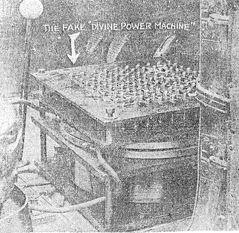
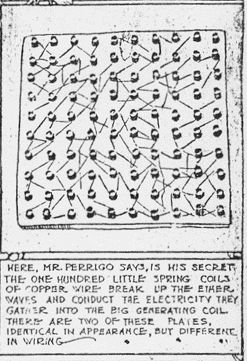
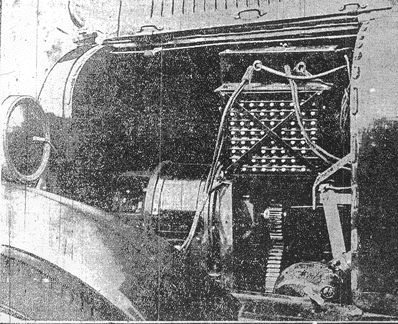
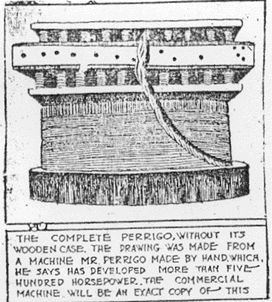
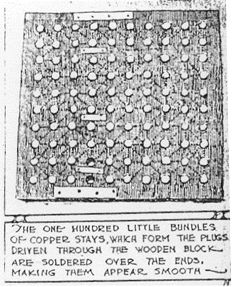
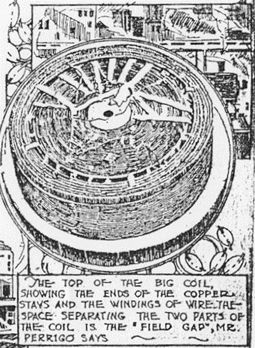
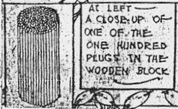
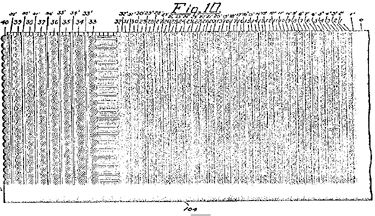
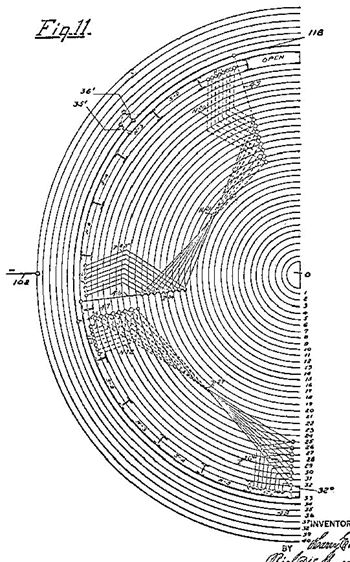
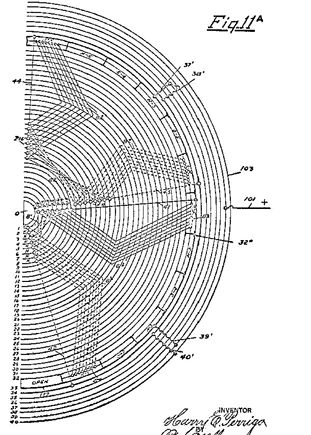
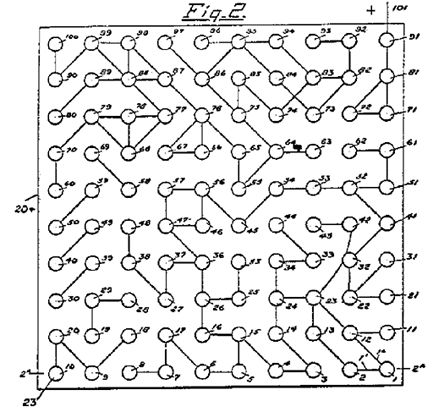
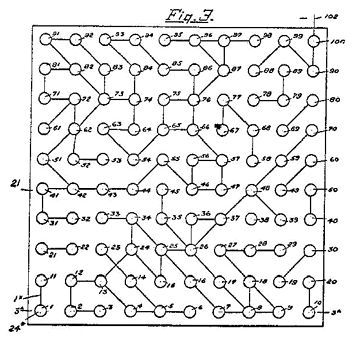
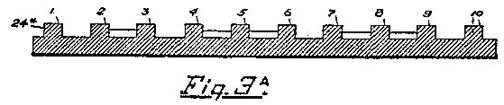
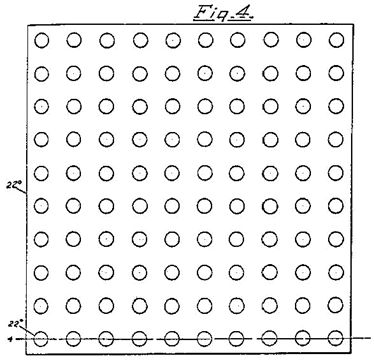
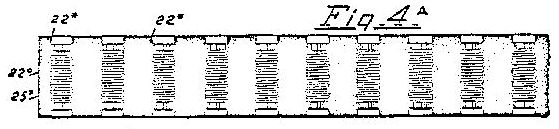
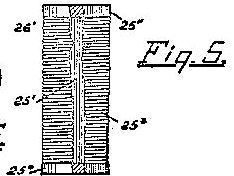
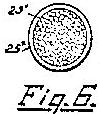
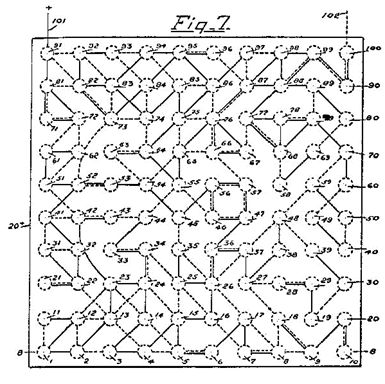
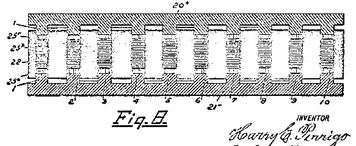
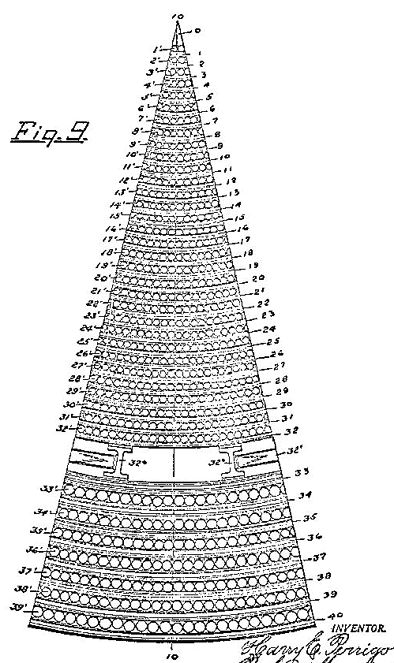
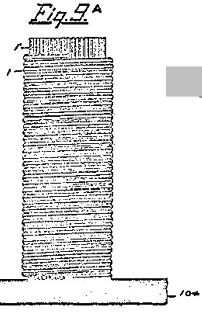
The invention consists of three main parts: (1) an antenna array made from roofing nails partially driven into a board, each nail wrapped with fine wire to form a small electromagnet; (2) two accumulator plates each bearing a 10 x 10 array of protruding knobs (material unspecified, possibly metal, lead, galena, wood, or a composite) with matching holes in an insulating sheet; in each hole a coil is wrapped around a bundle of wires, and the plates are sandwiched together with the insulator between them, creating a measurable voltage between points AA and BB; (3) a complex transformer attached to the plates that further intensifies the voltage. The claimed operation is that the antenna collects ambient "etheric wave" energy, the coil-plate assembly stores and steps up the voltage, and the transformer delivers a high-voltage, low-current output that can light bulbs, run a house, or power a vehicle.
Principles
- Harvesting of ambient electromagnetic (etheric) radiation
- Resonant antenna collection
- Electromagnetic induction via coils and electromagnets
- Voltage step-up using transformer
Scientific Domains
Materials
- Roofing nails (metal)
- Fine copper wire
- Metal or composite plates with protruding knobs
- Insulating material (unspecified, possibly wood, lead, galena)
- Coils of wire
Mechanisms of Action
- Antenna collects atmospheric electromagnetic waves
- Coils convert collected wave energy into electrical charge
- Accumulator plates store charge and provide voltage potential
- Transformer amplifies voltage for usable output
Energy Sources
Applications
- Domestic lighting
- Automotive power
- Portable electrical devices
Claimed Performance
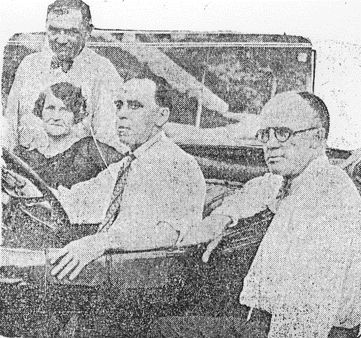
Produced a constant current of 1500 V down a wireless mast; lit an 8-room house; powered a car converted to run on the device; handheld unit lit bulbs; claimed to supply any desired voltage with appropriate transformer.
Experimental Evidence
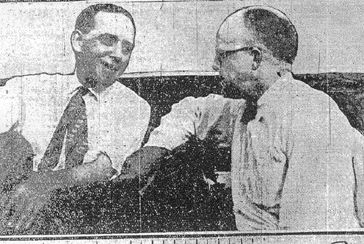
Newspaper reports (Kansas City Star, 1916) described the device lighting a house and shocking the inventor; congressional demonstration in 1917 before a federal judge and patent commissioners; multiple eyewitness accounts of the device operating, but no quantitative data or independent peer-reviewed testing.
Limitations
- No reproducible experimental data
- Unclear material composition of plates and insulator
- Potential safety hazards from high voltage
- Historical allegations of fraud
Red Flags
- Claims of free energy from the atmosphere without conventional input
- Classification under "Perpetual Motion Machines & Other Impossible Inventions"
- Lack of peer-reviewed validation
- Historical reports of inventor injury and possible fraud