Goal
Generate usable thermal energy from nuclear reactions between hydrogen (or its isotopes) and a transition-metal core, preferably nickel.
Problem
Difficulty achieving repeatable, controllable excess-heat generation in Ni-H systems and scaling the process for industrial use.
Concept Summary
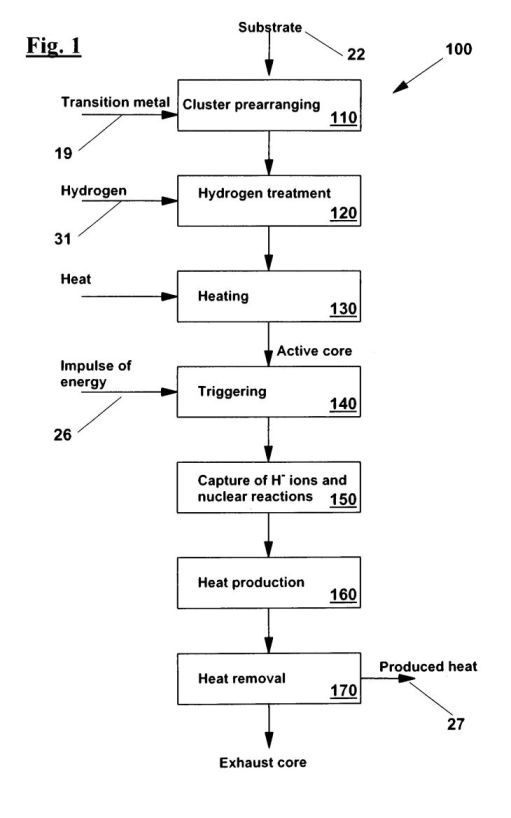
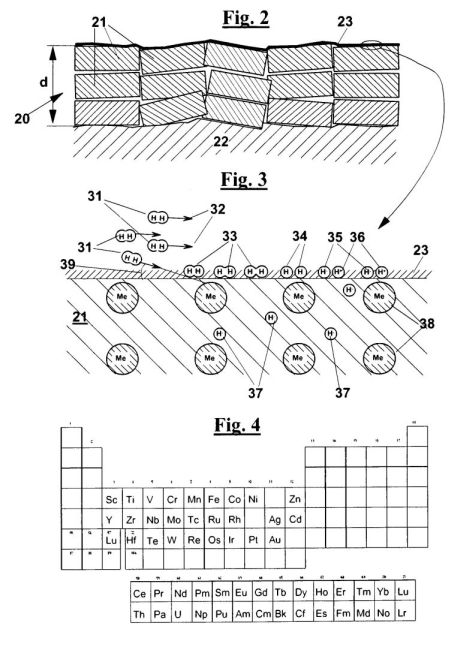
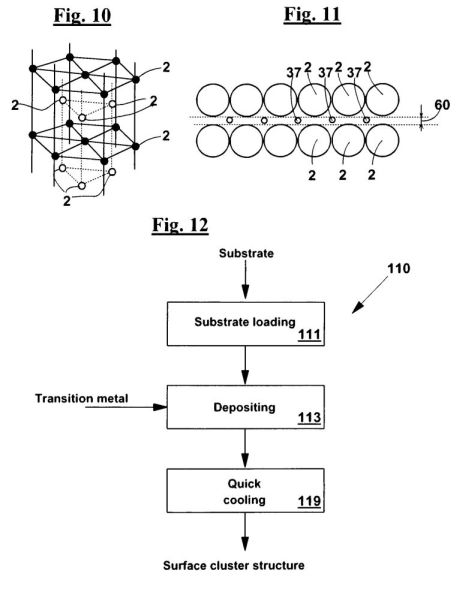
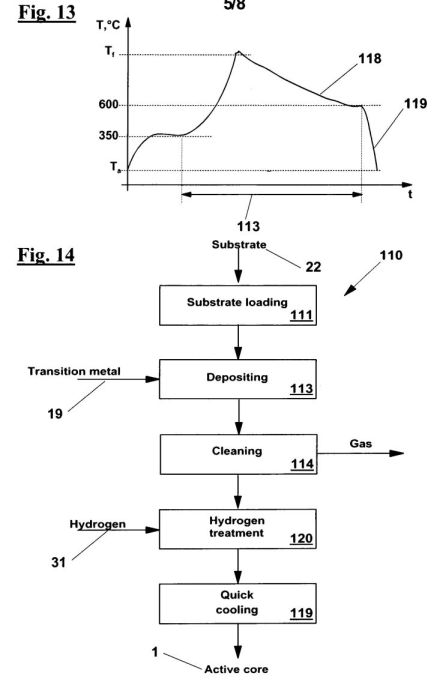
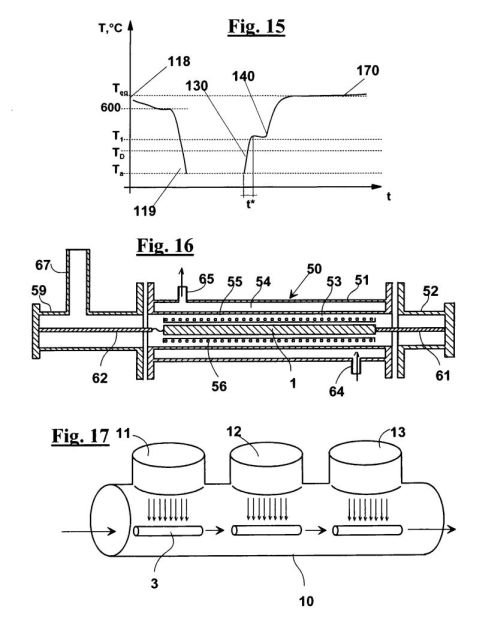
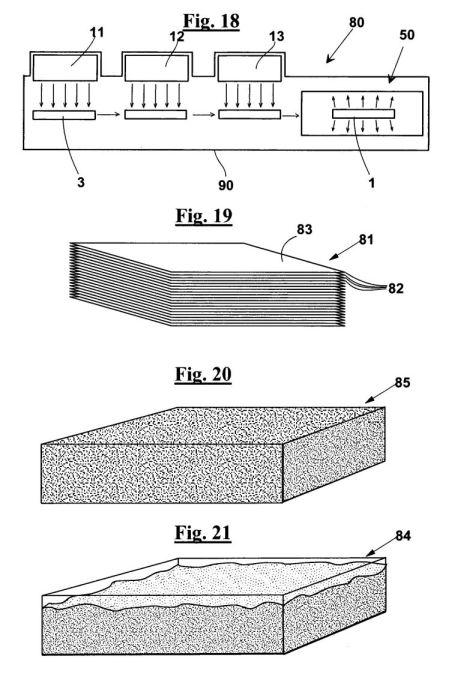
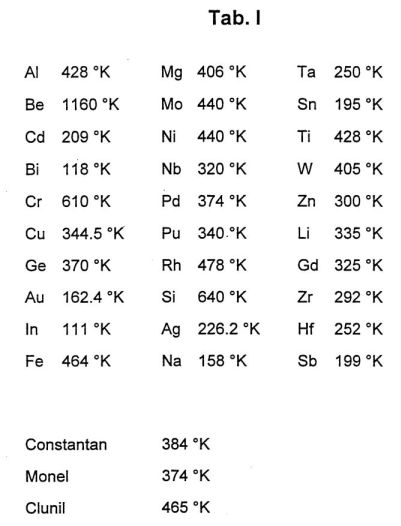
The invention describes a method in which micro-/nanometric clusters of a transition metal (preferably nickel) are prepared, hydrogen (or deuterium/tritium) is adsorbed as H^- ions, and the active core is then triggered by a rapid mechanical, thermal, ultrasonic, electric or magnetic impulse. The impulse causes the metal atoms to capture the H^- ions, initiating low-energy nuclear reactions that release heat. The system maintains the core temperature above the metal's Debye temperature and removes the generated heat while optionally applying magnetic/electric fields to stabilize the reaction.
Principles
- Low-energy nuclear reactions (LENR)
- Hydrogen adsorption as H^- ions
- Anharmonic vibrational stimulation
- Magnetic/electric field assistance
- Heat extraction above Debye temperature
Scientific Domains
Materials
- Nickel
- Other transition-metal clusters (e.g., Ti, Fe, Pd)
- Hydrogen gas (H_2)
- Deuterium
- Tritium
Mechanisms of Action
- Adsorption of hydrogen (or isotopes) onto micro-/nanoclusters
- Formation of H^- ions within the metal lattice
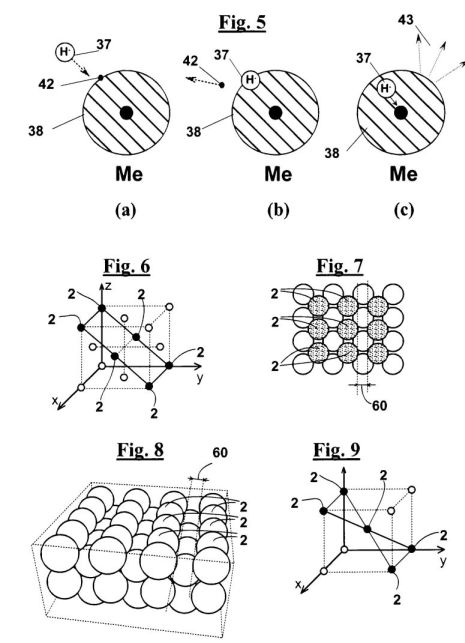
- Impulse-induced capture of H^- by metal atoms
- Release of nuclear binding energy as heat
- Maintenance of temperature above Debye temperature
Energy Sources
Applications
- Stationary power generation
- Industrial heat supply
Claimed Performance
Excess heat generation beyond the chemical energy of the supplied hydrogen, implying overunity or net positive energy output.
Experimental Evidence
The patent references prior reports of large excess heat in Ni-H systems (e.g., Il Nuovo Cimento 1998) and describes laboratory-scale demonstrations, but provides no quantitative data or peer-reviewed results.
Limitations
- Reproducibility of the nuclear reaction is not independently verified
- Precise control of nanocluster size and distribution required
- Lack of peer-reviewed quantitative data
Red Flags
- Claims of nuclear energy release without peer-reviewed evidence
- Potential for overunity claims that conflict with established physics
- No independent replication reported