Goal
Improve engine performance while reducing fuel consumption and emissions.
Problem
High fuel consumption, elevated CO_2 and hydrocarbon emissions, and sub-optimal combustion efficiency in gasoline engines.
Concept Summary
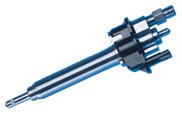
A piezo-electric actuator driven injector that delivers precise, high-pressure gasoline spray directly into the combustion chamber near peak pressure, enabling spray-guided stratified combustion and up to 20 % fuel-economy improvement.
Principles
- Piezoelectric actuation
- Direct fuel injection
- Spray-guided stratified combustion
- High-pressure fuel atomization
Scientific Domains
Materials
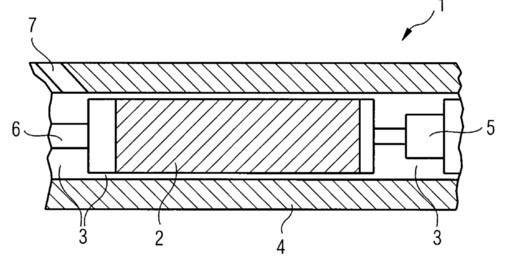
- Steel housing
- Stainless-steel diaphragm
- Piezoelectric ceramic
- Inert electrically insulating thermally conductive fluid
Mechanisms of Action
- Piezoelectric actuator moves injector needle within 0.2 ms
- Fuel injected at ~200 bar, producing 15 um droplets
- Precise timing creates a combustible mixture near the spark plug
- Multiple injection pulses enable lean, stratified charge
Energy Sources
Applications
- Automotive gasoline engines
- Fuel-efficient vehicle powertrains
- Emission-control technologies
Claimed Performance
~= 20 % reduction in fuel consumption and emissions; injection needle full stroke in 0.2 ms; fuel droplet diameter ~= 15 um; injection quantity deviation <= 2 %.
Experimental Evidence
Continental reports a 20 % reduction in fuel consumption and emissions for gasoline engines using the system; injection pressure ~200 bar; needle stroke 0.2 ms; droplet size 15 um; deviation between injected quantities 2 %.
Replication Status
Mass-produced; first generation diesel injectors in 2000, gasoline injectors in 2006; commercial sales target EUR25 bn in 2008.
Limitations
- Requires high-pressure fuel pump (~= 200 bar)
- Complex electronic control for piezo actuation
- Higher manufacturing cost versus solenoid injectors