Goal
Suspend objects in mid-air and counteract the pull of gravity using electrostatic fields.
Problem
Inability to overcome gravitation for levitation and interplanetary communication; need for a method to neutralize weight.
Concept Summary
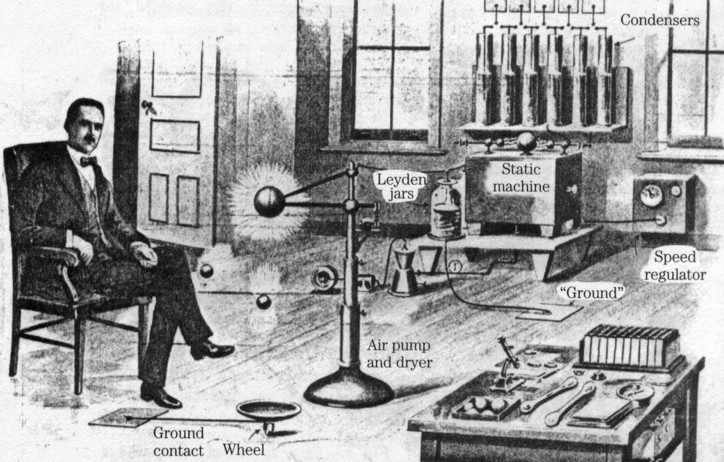
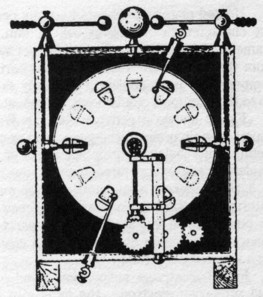
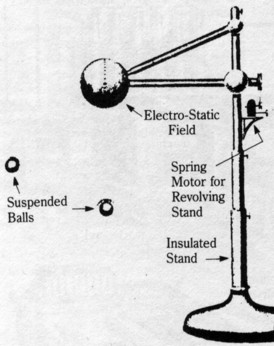
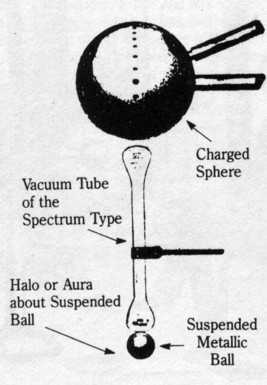
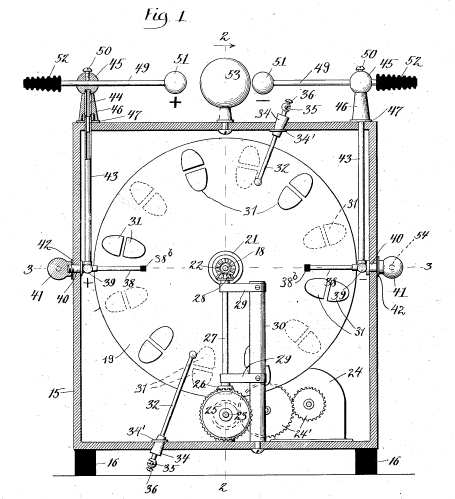
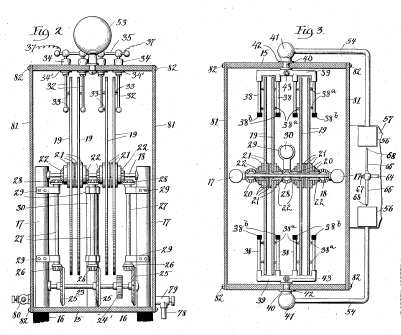
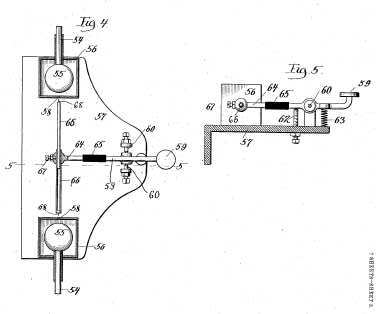
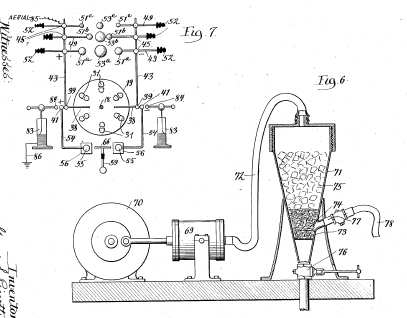
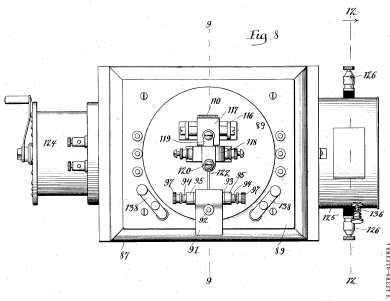
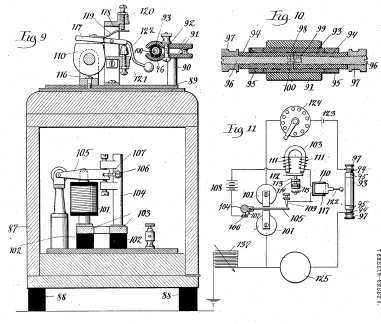
A powerful electrostatic generator creates a strong electric field that induces charge on a metallic or dielectric object. The induced charge interacts with the field gradient, producing alternating attraction and repulsion that can hold the object aloft for a short period. The effect is accompanied by a dark "belt" around the object and a faint blue aura observed in a high-vacuum tube.
Principles
- Electrostatic attraction and repulsion
- Charge induction on objects
- Field-gradient force
- Hypothesised electro-gravitational interaction
Scientific Domains
Materials
- Silver balls
- Copper balls
- Cork
- Wood (maple)
- Water globules
- Insulating plates (glass, ceramics)
- Vacuum tube glass
- Dry air
- High-pressure carbon-dioxide gas
Mechanisms of Action
- Induced charge on suspended object
- Interaction of induced charge with strong static field gradient
- Possible modification of local gravitational field (hypothetical)
Energy Sources
Applications
- Levitation and handling of small objects
- Space telegraphy (high-voltage signaling)
- Experimental studies of electro-gravitic interactions
Claimed Performance
Suspended a 1.3 g silver ball (11 mm diameter) at ~25 cm from the field centre; required ~=0.25 kW input power and ~=500 kV static voltage; objects remained aloft for 1-1.25 s after the generator stopped rotating; levitation distances up to 1 mm from the electrode centre.
Experimental Evidence
The author describes visual observations of objects moving back and forth, a dark belt seen in a vacuum tube, and a faint blue aura. Measurements of voltage (~=500 kV), power (~=0.25 kW), and suspension times (1-1.25 s) are reported, but no independent replication or quantitative force data are provided.
Limitations
- Requires extremely high voltage and precise electrode geometry
- Suspension time is very short (~=1 s)
- Only small, lightweight objects can be levitated
- No demonstrated scalability or practical energy efficiency
Red Flags
- Claims of gravity modification without peer-reviewed evidence
- Lack of independent replication
- Potential safety hazards due to >500 kV static fields
- Historical context suggests possible exaggeration