Goal
Generate usable mechanical or thermal energy with efficiency greater than conventional engines, potentially achieving perpetual-motion-type performance.
Problem
Low efficiency of existing steam engines, heat pumps and refrigeration cycles; desire for a source of excess energy to address the world energy problem.
Concept Summary
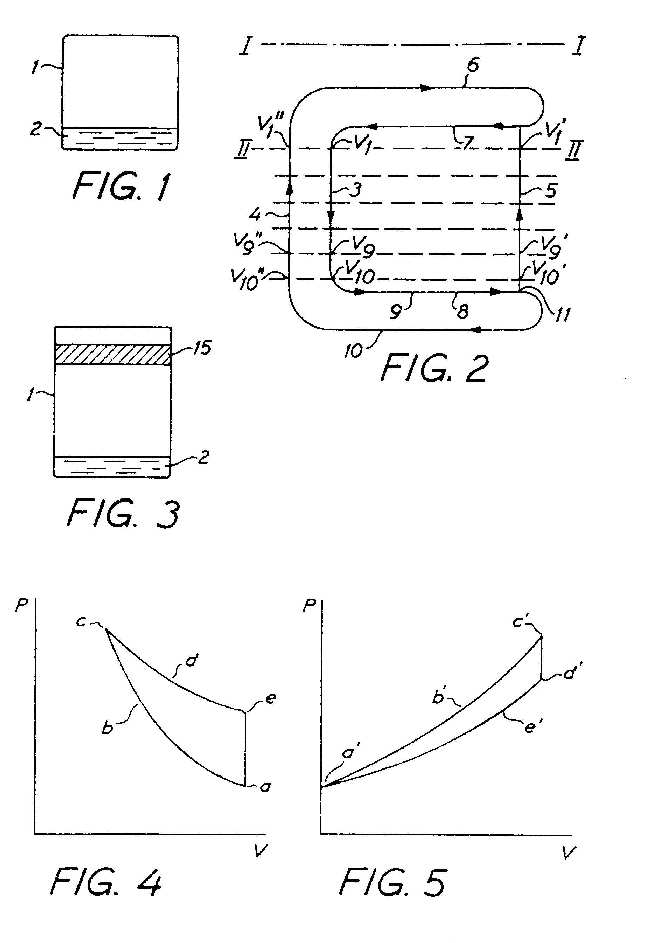
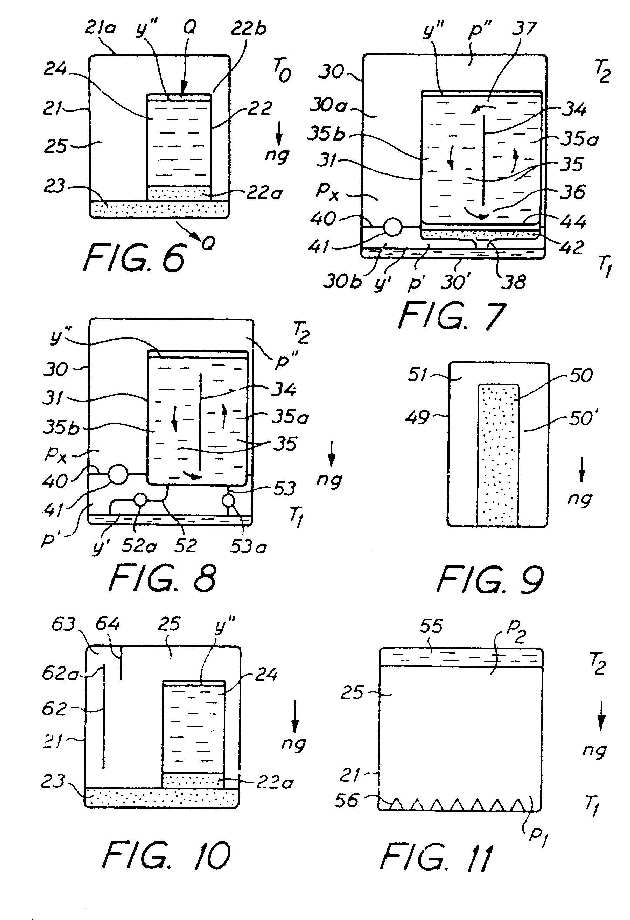
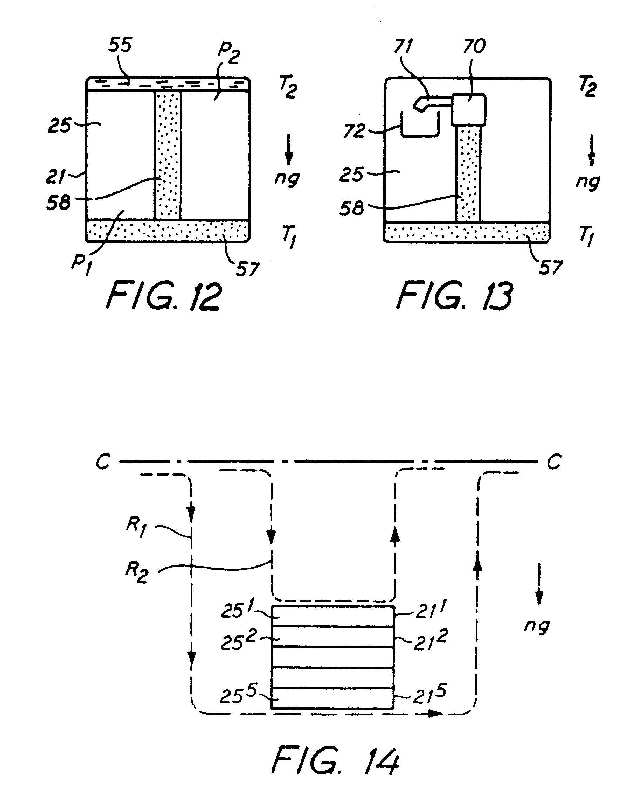
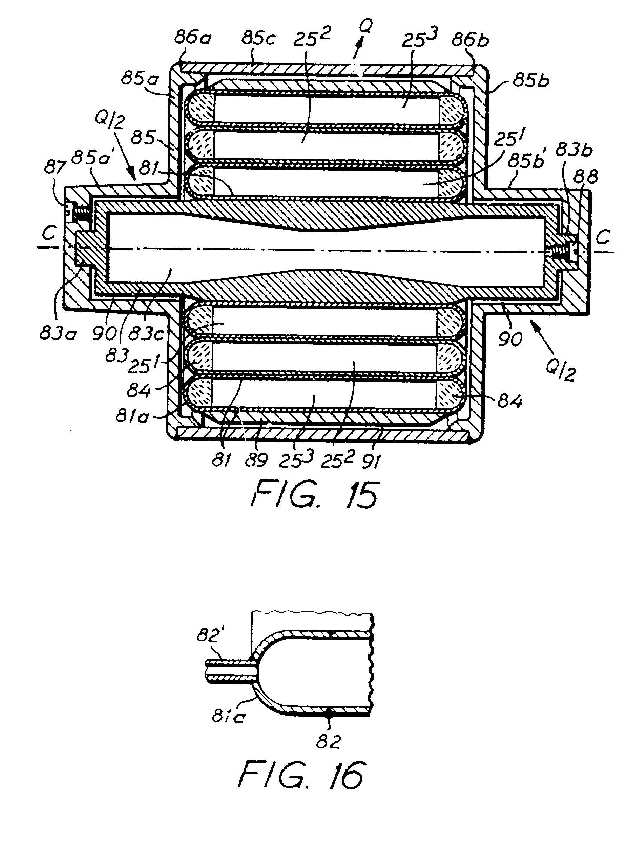
The invention proposes a cyclic thermodynamic process in which two substances (e.g., ammonia and an inert gas such as nitrogen, or ammonia and a salt) are caused to diffuse into each other under high pressure. By regulating the total pressure and exploiting phase changes (evaporation and condensation) of substance A, a pressure differential is created that can drive a turbine or heat pump. The process is claimed to combine an entropy-reducing (work-producing) step with an entropy-increasing (destructive) step so that the net result is a significant efficiency gain, possibly exceeding the input energy.
Principles
- Cyclic thermodynamic process
- Diffusion-driven pressure differential
- Phase-change (evaporation/condensation) of ammonia
- Use of high-pressure inert gas (nitrogen) as solvent
- Mechanical work extraction via turbine
Scientific Domains
Materials
- Ammonia
- Nitrogen
- Gold foil
- Salt (dissolved in ammonia)
- Propane (example substance A)
- Heavy gas mixture (example substance B)
Mechanisms of Action
- Evaporation of liquid ammonia into nitrogen reduces system pressure
- Diffusion of ammonia into nitrogen creates a pressure gradient
- Pressure differential drives a turbine or heat pump
- Condensation of ammonia releases heat at a second location
Energy Sources
Applications
- Power generation for vehicles, homes, aircraft
- Industrial heating
- Refrigeration
- Heat-pump cogeneration
Claimed Performance
The patent claims that the resulting steam engine, refrigeration plant or heat pump would have "significantly greater efficiency" than any existing machine, with some commentators noting possible excess energy outputs in the range of 2-5 times the input.
Limitations
- No experimental data or peer-reviewed validation presented
- Claims conflict with the second law of thermodynamics
- High-pressure equipment required (hundreds to thousands of atmospheres)
- Potential scaling and material-stress issues
Red Flags
- Perpetual-motion and overunity claims
- Lack of quantitative experimental results
- Reliance on theoretical arguments rather than demonstrated prototypes