Goal
Provide a cheap, easily transportable, simple-to-fly introduction to sport gliding using sailboat-style control surfaces.
Problem
Need for a lightweight, portable glider that can be controlled without a conventional rudder, using minimal control mechanisms.
Concept Summary
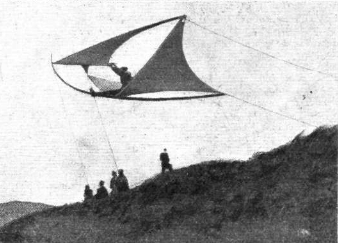
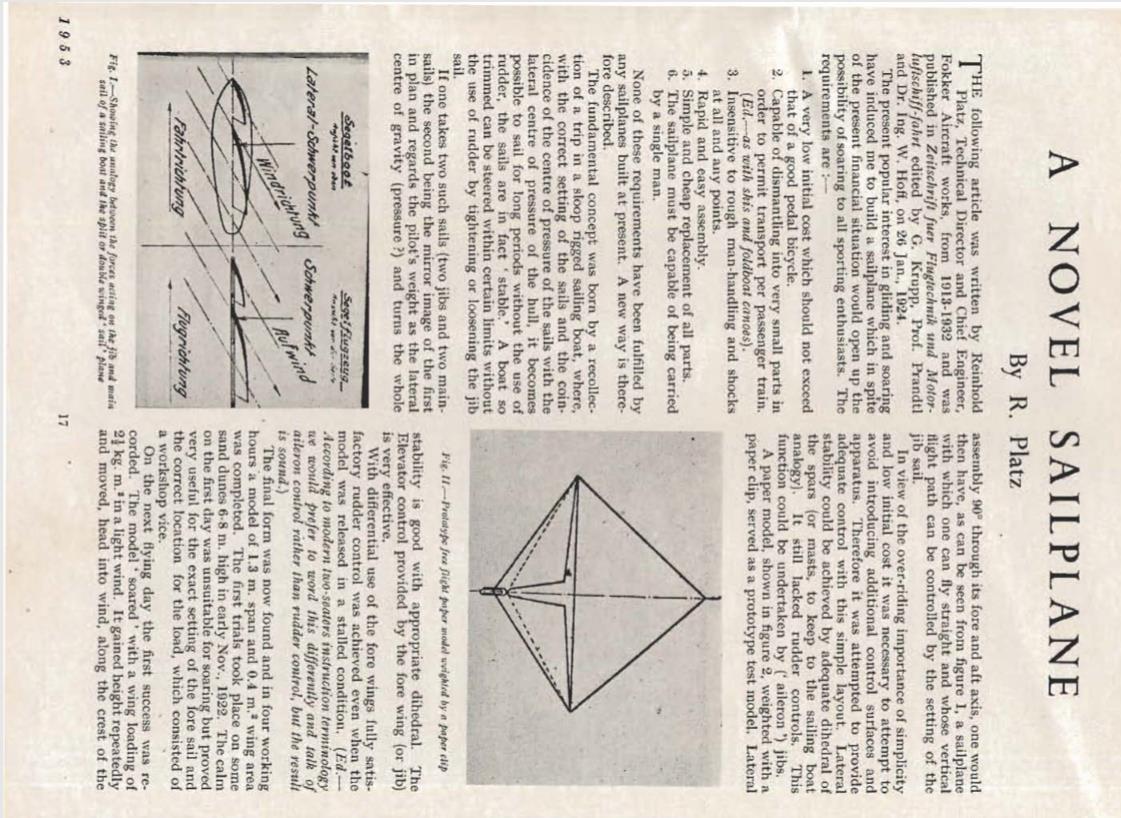
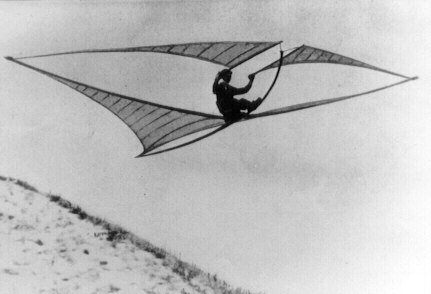
A low-aspect-ratio, canard-type glider with a fore-plane (jib) that is hinged and trimmed like a sloop sail. The fore-plane angle controls pitch and, theoretically, yaw. The wing has strong dihedral for lateral stability and a cantilever structure made from wooden booms, steel tube, and canvas sails.
Detailed Description
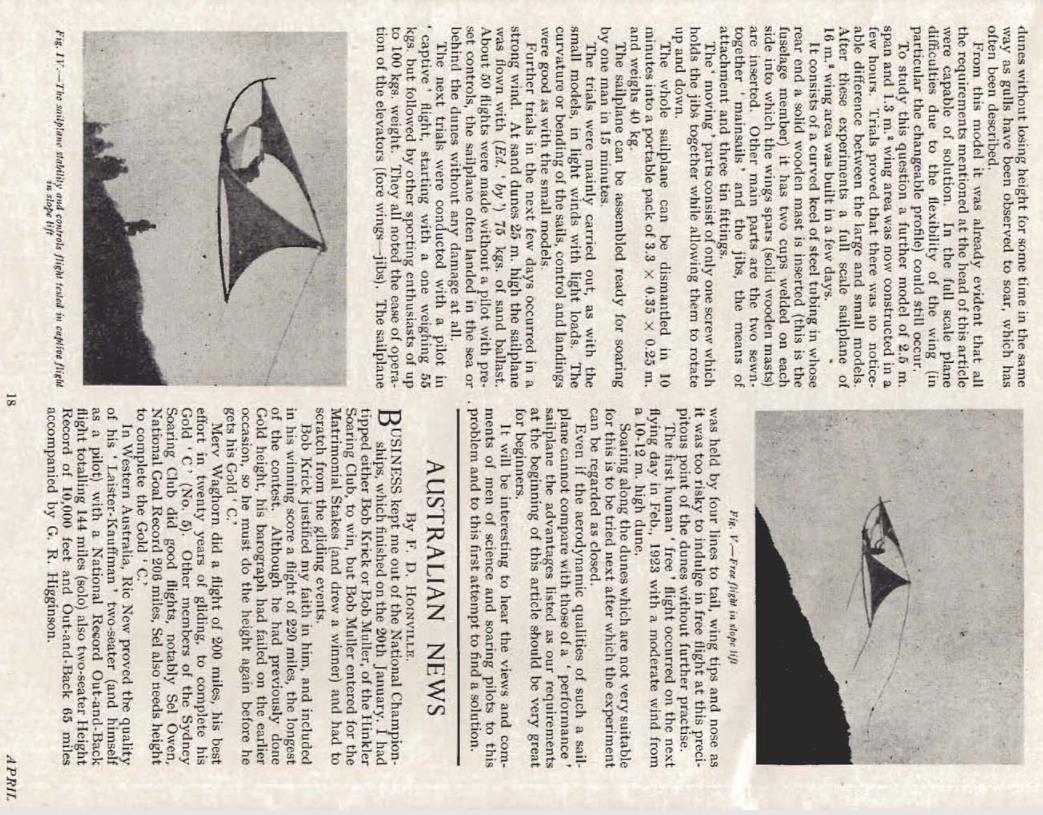
The Platz Glider consisted of a central steel tube keel with a wooden boom inserted, supporting a cantilever wing of 6.6 m span and 16 m^2 area. Two fore-plane sails (jibs) were hinged near the leading edge and could be trimmed by the pilot to control angle of attack and turning. The aircraft had no tail fin; stability was achieved through dihedral. Early models used paper and cloth; the final version used canvas sails, wooden spars, and iron hardware, weighing about 40 kg. Flight tests in 1922-1923 included tethered lifts with a 100 kg load and free flights over dunes, demonstrating basic lift and controllability, though turning authority was limited without a rudder.
Principles
- Aerodynamic lift
- Canard (fore-plane) control
- Dihedral for roll stability
- Sailboat rigging analogy
Scientific Domains
Materials
- Canvas (sail material)
- Wooden booms and spars
- Iron hardware
- Steel tube
Mechanisms of Action
- Lift generated by wing camber shaped by airflow
- Pitch and yaw controlled by adjusting fore-plane (jib) angles
- Stability from dihedral and cantilever wing structure
Applications
- Sport gliding
- Portable aviation training
- Recreational ultralight aircraft
Claimed Performance
Tethered loading with a 100 kg pilot demonstrated sufficient lift; free flight achieved over dunes with a 40 kg glider; wing span 6.6 m, area 16 m^2, dihedral provided stability.
Experimental Evidence
Prototype models tested from dunes (1922-1923); tethered lift tests with 100 kg load; free flight trials in February 1923 over 8 m-high dune stretch.
Replication Status
Historical prototype tested in 1923; no known modern replication.
Limitations
- Limited turning authority without a rudder
- Low lift compared to conventional gliders
- Control relies on pilot hand-trimming of fore-planes
- Historical materials (canvas, wood) limit performance