Goal
Remove ammonia from wastewater efficiently and reduce the cost of sewage treatment.
Problem
Conventional lagoon systems fail to remove ammonia, leading to pollution violations and high capital costs for mechanical treatment plants.
Concept Summary
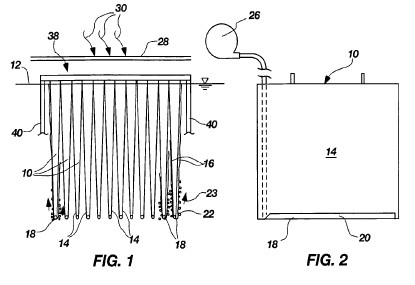
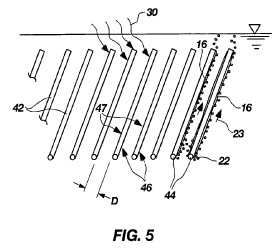
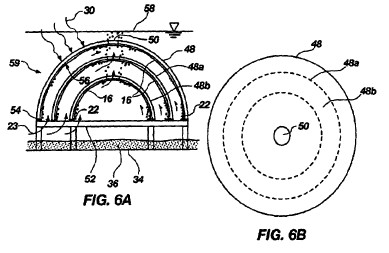
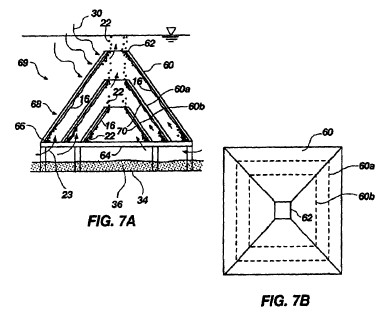
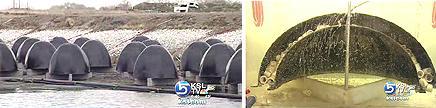
A submerged, non-vertical panel system coated with a bio-film of nitrifying bacteria. Aeration creates air bubbles that travel along the panels, providing oxygen, circulating water, and shielding the bio-film from sunlight to enhance nitrification and ammonia removal.
Detailed Description
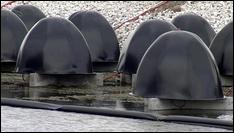
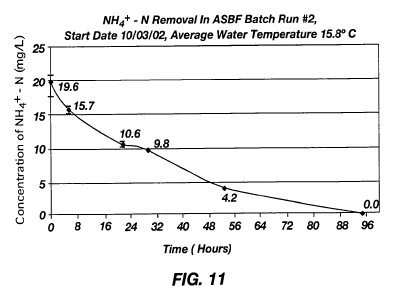
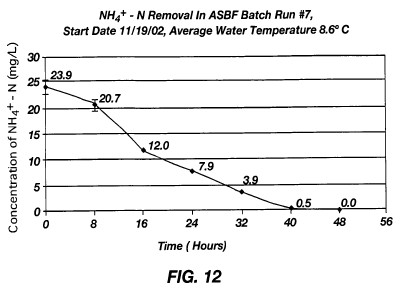
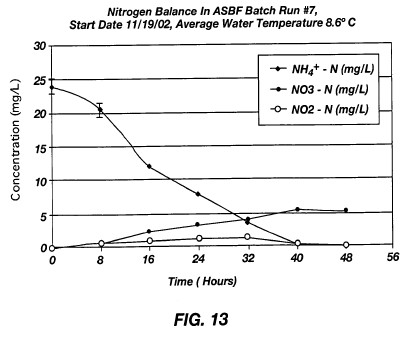
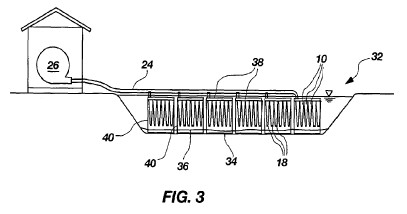
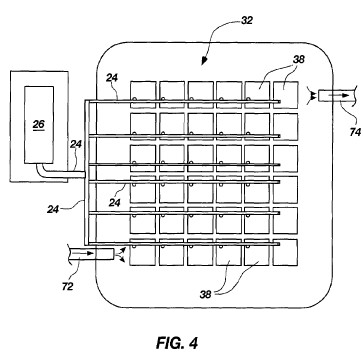
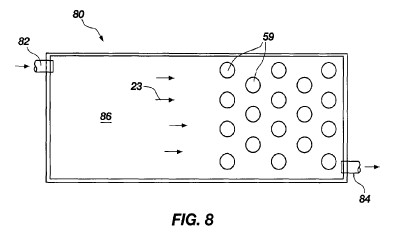
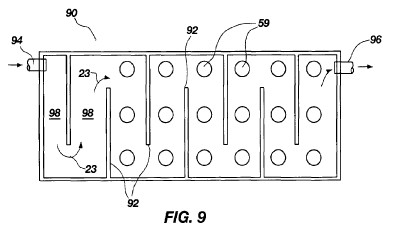
The invention consists of a series of submerged surfaces (panels, hemispherical or pyramidal modules) placed in a wastewater lagoon. The surfaces are oriented to block direct sunlight and are colonised by nitrifying bacteria that convert ammonia (NH_4^+) to nitrate. An aeration system injects air at the lower end of the panels; bubbles rise along the surface, creating aerobic conditions and inducing water circulation. This design increases the available surface area for bacterial growth, improves oxygen transfer, and reduces algae competition, resulting in faster and cheaper ammonia removal compared with traditional lagoons. Laboratory batch tests demonstrated measurable ammonia reduction over time, and a pilot installation in Plain City, Utah, is projected to cost roughly $100,000 versus a $13 million conventional plant.
Principles
- Bio-film attachment
- Nitrification
- Aeration
- Surface-area maximisation
- Sunlight shielding
Scientific Domains
Materials
- plastic
- foam
- metal
Mechanisms of Action
- Nitrifying bacteria oxidise ammonia to nitrate under aerobic conditions
- Air bubbles provide oxygen and induce water flow over the bio-film
- Shading reduces algae growth that would otherwise out-compete nitrifiers
Energy Sources
Applications
- Municipal wastewater treatment
- Rural lagoon upgrades
- Animal feedlot wastewater management
Claimed Performance
Significant ammonia reduction; treatment cost projected at $100,000 versus $13 million for a conventional plant; faster treatment cycles allowing reduction of lagoon count by half.
Experimental Evidence
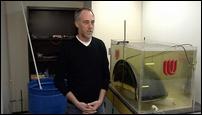
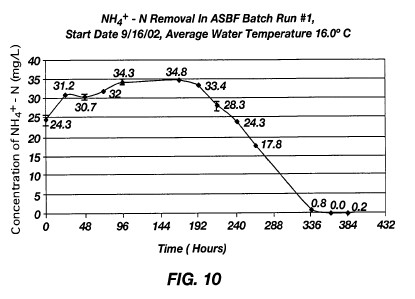
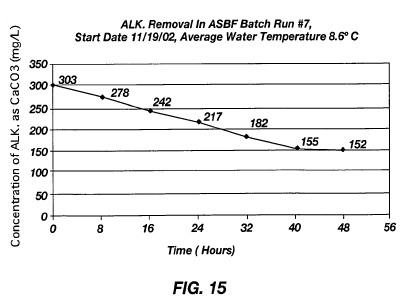
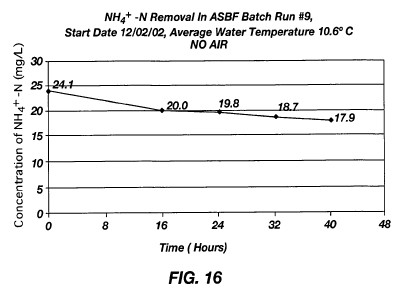
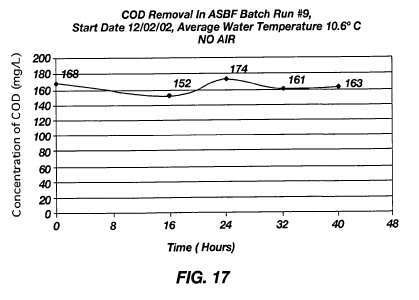
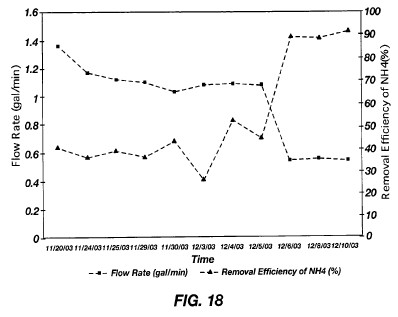
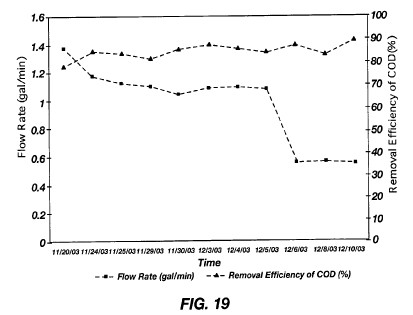
Laboratory batch tests (Figures 10-11) showed ammonia concentration decreasing over time; a full-scale pilot in Plain City, Utah, is being filled and observed.
Replication Status
Lab-tested and pilot-scale demonstration; no independent commercial replication reported.
Limitations
- Requires continuous aeration power
- Performance dependent on temperature (>11 deg C)
- Potential fouling of panel surfaces
- Scaling to large lagoons may need extensive panel infrastructure