Goal
Drill deep boreholes for geothermal energy using hydrothermal spallation to achieve faster penetration and reduced wear.
Problem
Conventional mechanical drilling in hard rock suffers from low penetration rates, rapid bit wear, high cost, and limited depth capability.
Concept Summary
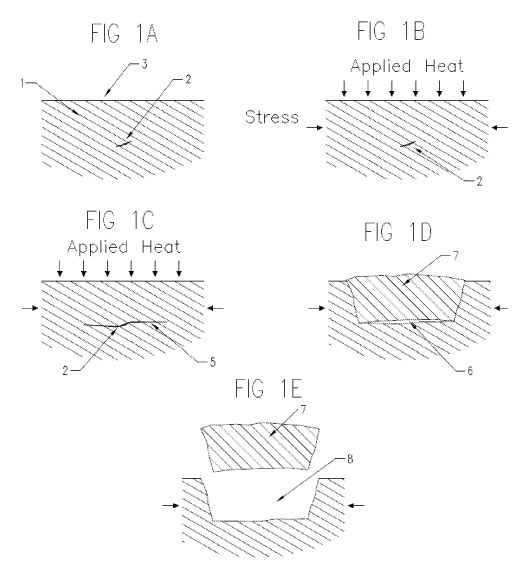
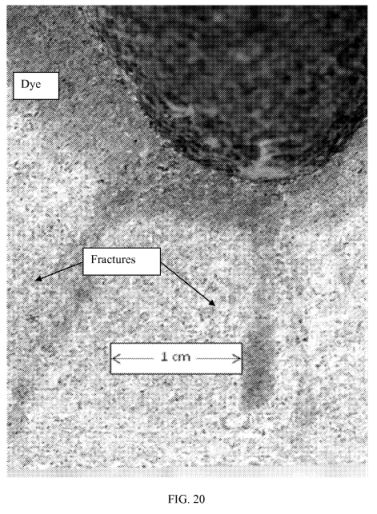
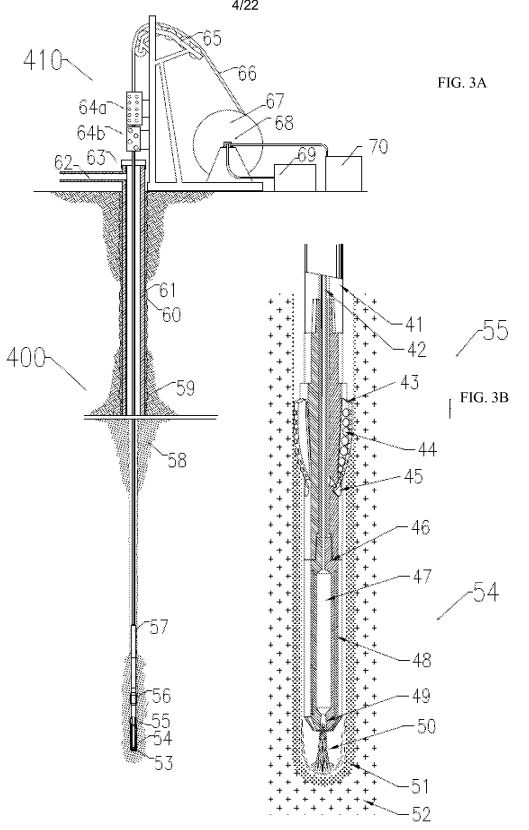
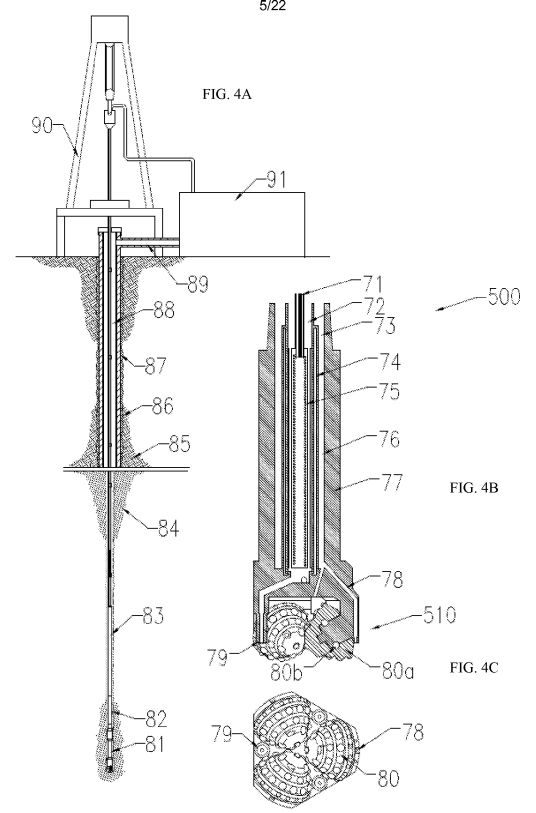
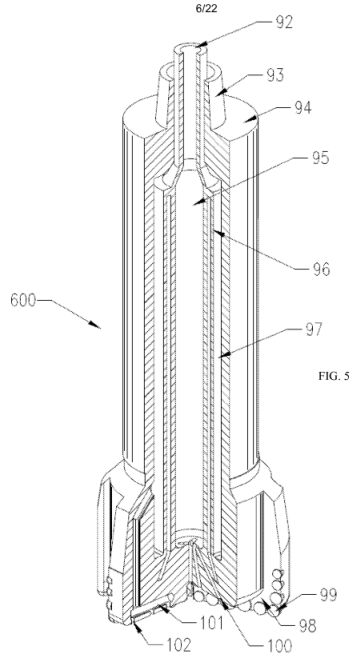
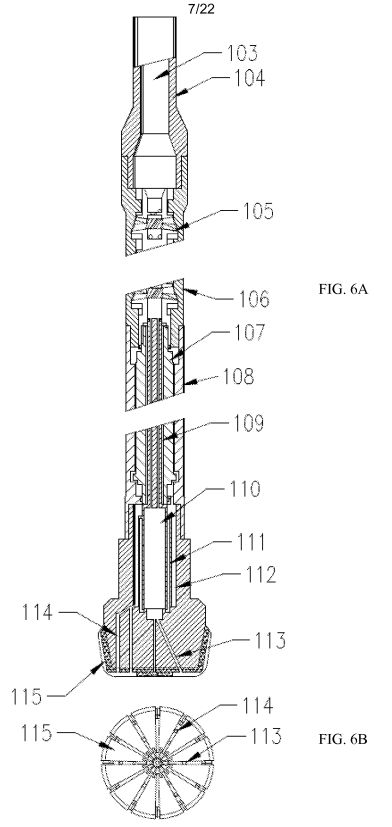
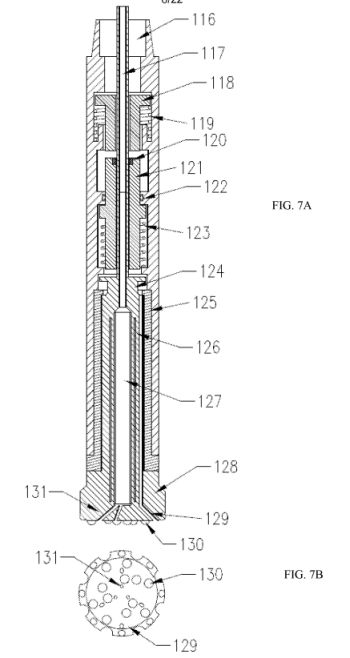
The technology uses a high-intensity hot fluid (hydrogen-heated water or super-heated hydrogen) directed through a nozzle into a water-filled borehole. A catalyst converts the fluid into a reacted high-temperature fluid that causes micro-fracturing and spall ejection from the rock surface, enabling rapid, non-contact drilling to depths of 12,000-30,000 ft.
Detailed Description
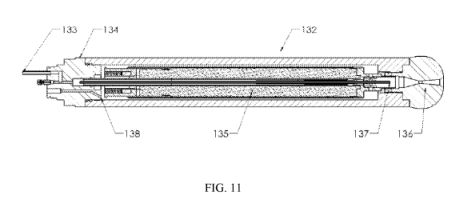
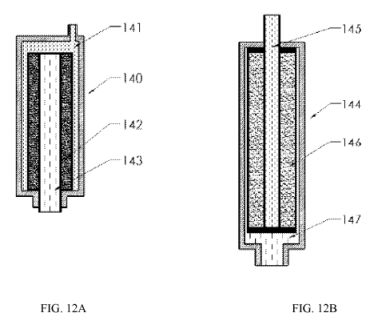
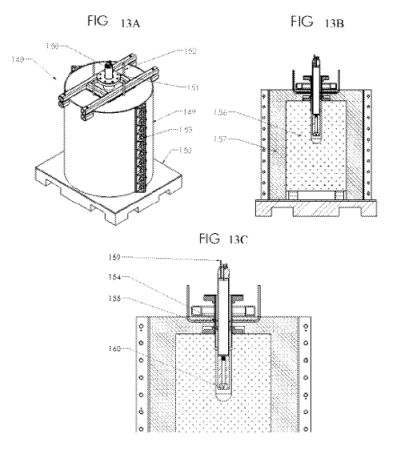
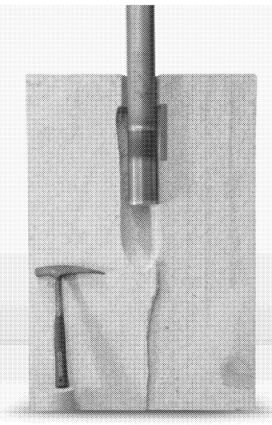
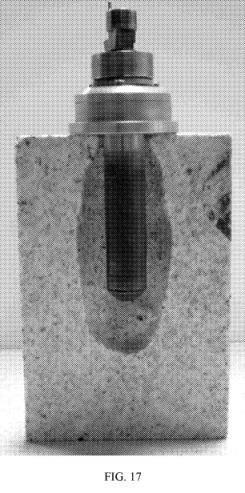
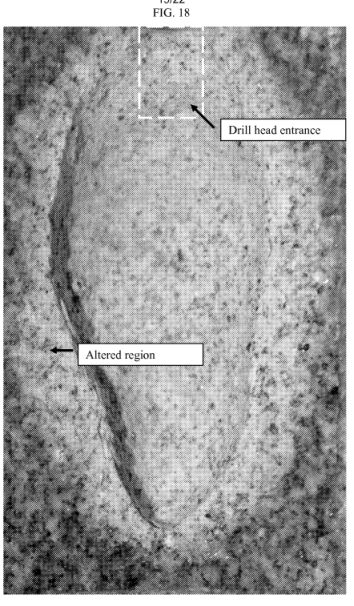
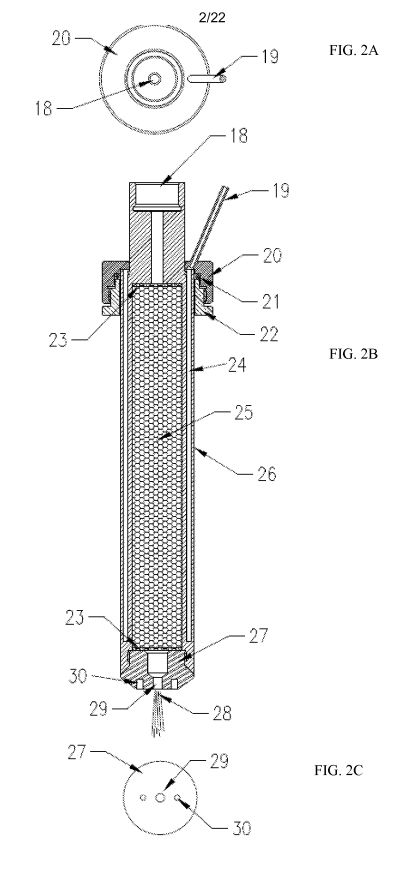
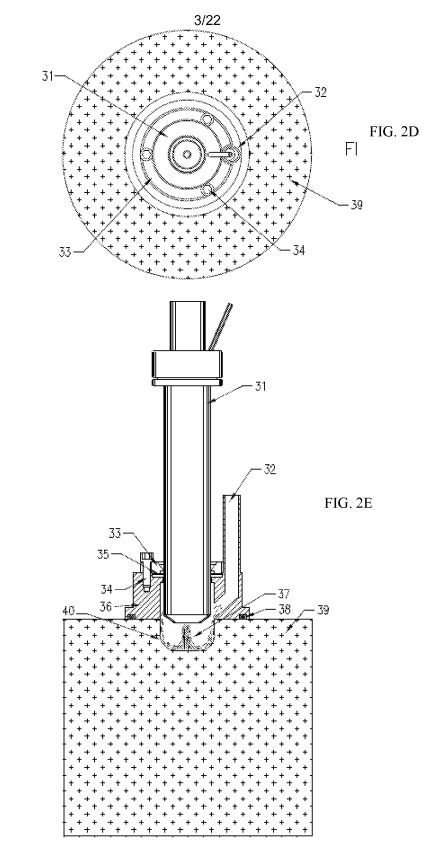
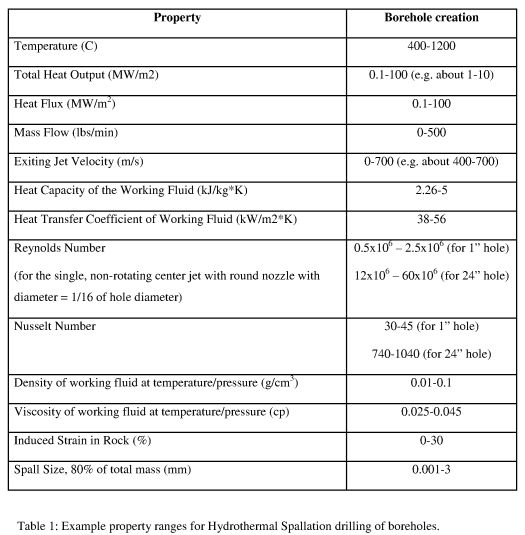
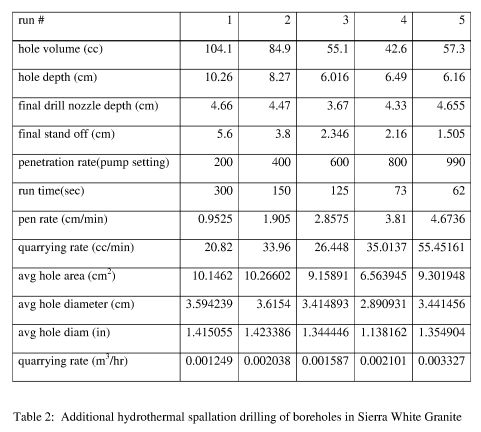
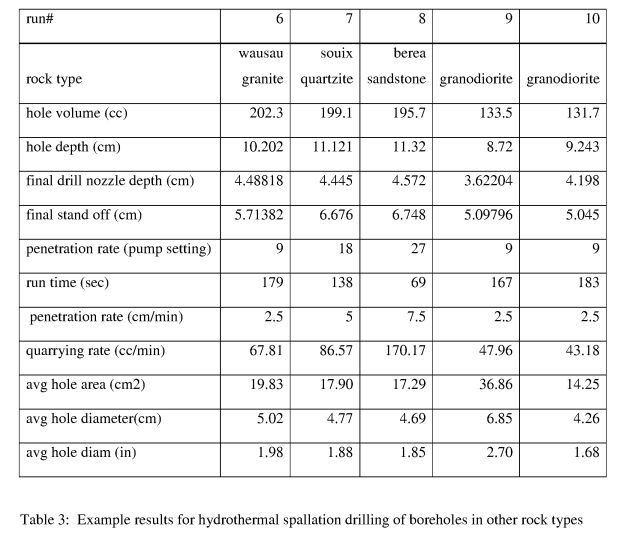
A housing contains a reaction chamber with a transition-metal catalyst (e.g., platinum, nickel) on an alumina support. Unreacted fluid (water, hydrogen peroxide, alcohols, or hydrocarbon fuels) is introduced and reacts over the catalyst, producing a hot reacted fluid (~=500-1100 deg C). The fluid is expelled through a jet nozzle toward the rock, creating spalls that are carried upward by the surrounding fluid. The process can be powered by super-heated hydrogen (~=3200 deg F) or a water jet heated to ~=7200 deg F. Prototypes (Flame Jet Drill, Hydrothermal Drill) have demonstrated rates up to 20 ft hr^-^1 for 8 in holes and 0.5 in min^-^1 for 1 in holes.
Principles
- Thermal spallation
- Catalyst-mediated exothermic reaction
- Hydrothermal fluid jet
- Non-contact drilling
Scientific Domains
Materials
- Water
- Hydrogen peroxide
- Methanol
- Ethanol
- Hydrocarbon fuels (methane, propane, gasoline, diesel)
- Transition metals (platinum, palladium, nickel, cobalt, copper, etc.)
- Alumina support
Mechanisms of Action
- High-temperature fluid jet induces micro-fractures in rock
- Catalyst converts fuel/oxidant mixture into hot reacted fluid
- Fluid-borne spalls are removed upward by buoyancy
Energy Sources
Applications
- Geothermal well drilling
- Deep mineral exploration
- Extended-reach directional drilling
Claimed Performance
Drilling rates up to 5x conventional rates; 8 in borehole at >=20 ft hr^-^1; 1 in borehole at ~=0.5 in min^-^1; non-contact operation eliminates drill-head wear.
Experimental Evidence
Prototype tests reported 20 ft hr^-^1 penetration for 8 in holes and 0.5 in min^-^1 for 1 in holes; prior air spallation achieved >50 ft hr^-^1 in granite at shallow depths.
Replication Status
Patented and prototype demonstrated; no independent third-party replication reported.
Limitations
- Requires generation of extremely high-temperature fluids downhole
- Catalyst durability under high pressure and temperature
- Energy efficiency of fluid heating not yet quantified
Red Flags
- Performance claims (5x speed) lack independent verification
- High-temperature fluid handling poses safety and material challenges