Goal
Increase swimming speed and metabolic efficiency for combat and recreational divers while reducing effort.
Problem
Human swimmers convert only ~3 % of muscular effort into forward thrust; fins improve this to ~10-15 % but still cause rapid fatigue.
Concept Summary
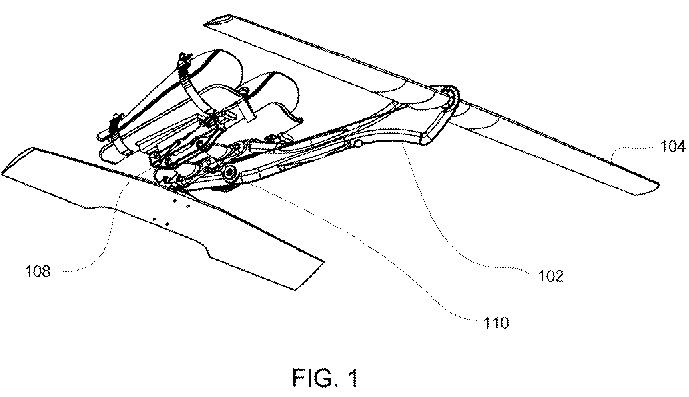
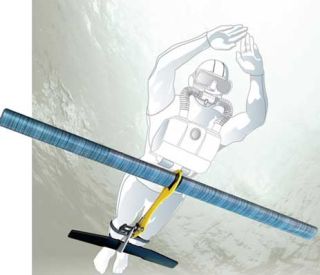
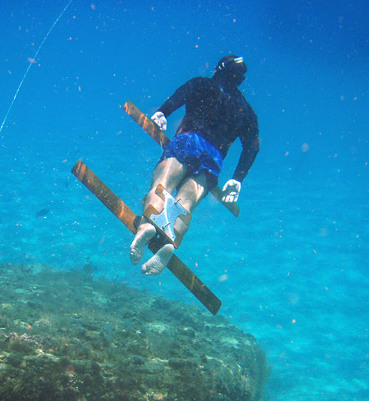
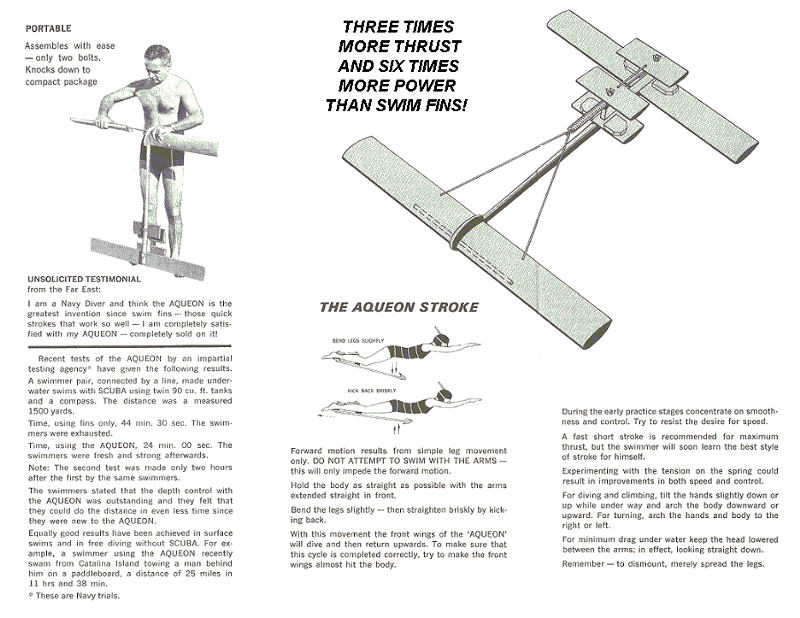
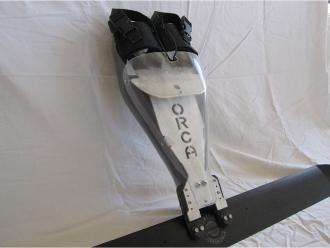
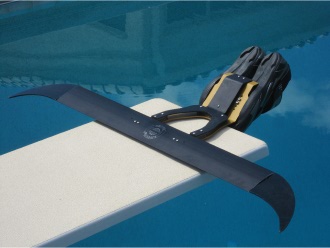
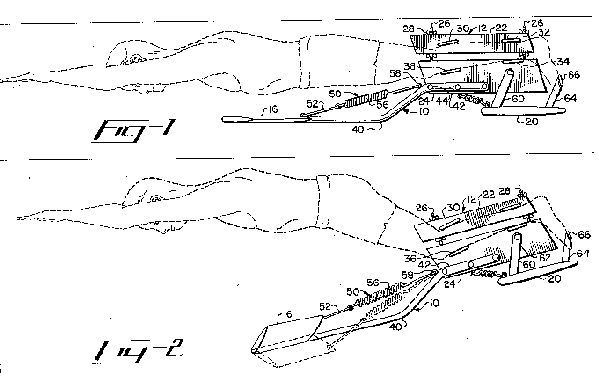
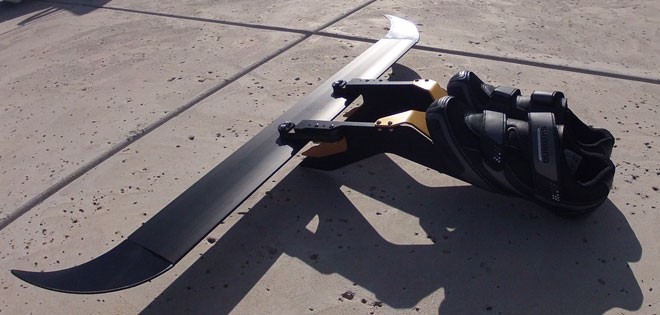
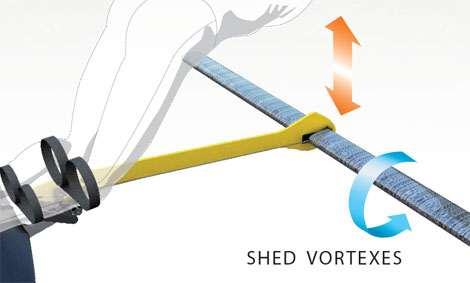
PowerSwim uses hinged, oscillating foil pairs (a front "propulsor" foil and a rear foil) mounted on the diver's shins. The diver's leg undulation drives the foils, generating lift and thrust via vortex shedding, similar to dolphin or penguin fin motion. The device claims >80 % conversion efficiency, enabling speeds up to 5-6 mph (~=2.5 m/s) and 150 % faster travel compared with conventional fins.
Principles
- Oscillating foil propulsion
- Hydrodynamic lift and thrust generation
- Vortex shedding for thrust augmentation
- Biomechanical muscle group optimization
Scientific Domains
Materials
- Lightweight composite (e.g., carbon-fiber or fiberglass)
- Aluminum alloy hinges
- Rubber/elastic straps for shin attachment
Mechanisms of Action
- Foil oscillation creates lift and thrust via shed vortexes
- Redirects effort from small kick muscles to larger gluteal and quadriceps groups
- Operates outside the diver's wake cone for higher efficiency
Energy Sources
Applications
- Combat diver propulsion
- Recreational high-speed swimming
- Underwater rescue and recovery
- Military reconnaissance
Claimed Performance
Up to 150 % faster than fins; >85 % conversion of human motion to thrust; speeds up to 5.5 knots (~=6 mph) with < 500 USD cost.
Experimental Evidence
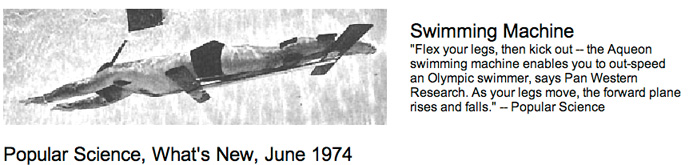
Aqueon tests reported 87 lb static thrust and 5.5 knots speed; PowerSwim claimed 150 % faster travel and >80 % efficiency in DARPA demonstrations; packaging stage reported in 2009 with production within a year.
Replication Status
Not independently replicated; DARPA reports prototype testing and packaging stage.
Limitations
- Requires training to master undulating motion
- Bulkier than conventional fins
- Performance depends on swimmer's strength and technique
- No motorized assistance; limited to human power