Confidence
0.90
Practicability
0.70
Evidence
0.60
Fringe Score
0.20
Risk
0.10
TRL
4
Goal
Harvest water from fog or ambient moisture for human use and industrial water-saving.
Problem
Water scarcity and high water loss from cooling towers in arid or water-stressed regions.
Concept Summary
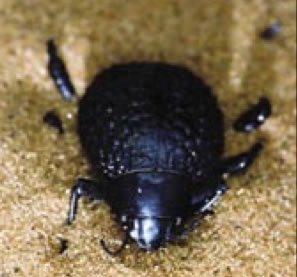
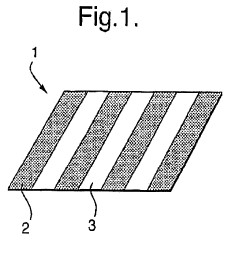
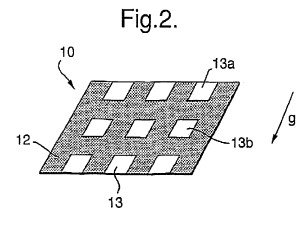
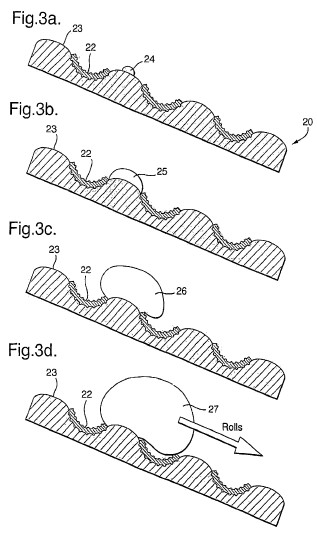
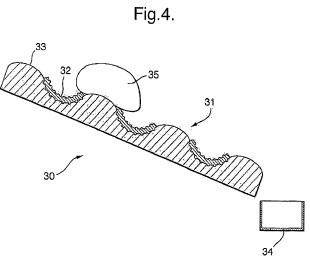
A surface that mimics the Namib Desert beetle's wing scales, combining superhydrophilic bumps with superhydrophobic channels, to condense, coalesce and funnel microscopic droplets into collection points.
Principles
- Biomimicry
- Superhydrophilic / superhydrophobic patterning
- Condensation and droplet coalescence
- Capillary and gravity-driven runoff
Scientific Domains
Materials
- Glass spheres (poppy-seed sized)
- Warm wax layer
- Silica nanoparticles
- Charged polymers
- Teflon-like hydrophobic coating
- Substrate (unspecified metal or polymer)
Mechanisms of Action
- Fog droplets nucleate on hydrophilic bumps
- Hydrophobic channels repel water, guiding droplets
- Gravity pulls coalesced droplets into collection troughs
- Surface tension assists droplet release at defined size
Applications
- Water harvesting in arid regions
- Cooling-tower condensate recovery
- Self-watering tents
- Micro-fluidic lab-on-a-chip devices
Claimed Performance
Initial tests showed a 10 % recovery of water lost from cooling towers; droplets as small as 15-20 um can be harvested.
Experimental Evidence
Trials on cooling-tower condensers demonstrated a 10 % return of lost water and a measurable reduction in energy bills.
Replication Status
Pilot-scale trials have been conducted; no commercial scaling reported.
Limitations
- Requires sufficient ambient fog or humidity
- Durability of coating under harsh weather unknown
- Scaling to large industrial surfaces may be costly
- Performance depends on wind speed and temperature gradient